The concepts of post-cinema and post-continuity have become particularly well-known since Steven Shaviro described them. In particular, in the Post-Continuity chapter of POST CINEMA Theorising 21st-Century Film(2016) by Shane Denson and Julia Leyda, Matthias Stork’s Chaos Cinema and David Bordwell’s critique of cinematography and editing in contemporary digital cinema, Steven Shaviro states that we need to think in new ways.
So what are these concepts of post-cinema and post-continuity? Simply put, it is about editing and structuring a film on a completely different level from existing film codes. It is, for example, quite different from the style that Bordwell presents in his Film Art: An Introduction(2008). The film is to be edited and composed on an entirely different level. Take, for example, the Japanese film “Shin Godzilla”. The general director is Hideaki Anno, originally an animation director. It may be easier to understand if we say that he was regarded as the successor to Hayao Miyazaki, the director of Studio Ghibli. His “Shin Godzilla” shows various post-cinematic elements. Not only cinema cameras but also iPhones and GoPros were used in the filming, and a post-cinematic sense of realism pervades the scenes where humans flee from Godzilla and the monsters (e.g. scenes 3:25-3:55). The film is edited by Atsuki Sato, who has been editing film trailers for many years, including the Japanese trailer for “The Blair Witch Project”. Matthias Stork stated in chaos cinema that digital cinema imitates trailers, but ironically, the leading post-cinematic films in Japan are made by editors who have worked on editing trailers.
Furthermore, as is characteristic of this film, most of the scenes are taken in meeting rooms and are composed of bust shots of people. This is an unusual composition for a special effects film. Of course, budgetary constraints could be a factor, but this kind of composition is also a feature of streaming and post-streaming since smartphones. Close-up shots are becoming more and more common as it is challenging to recognise Long shots when viewing on a small screen such as a smartphone. It is said that more than half of the shots in the film “Jackie” were close-ups.

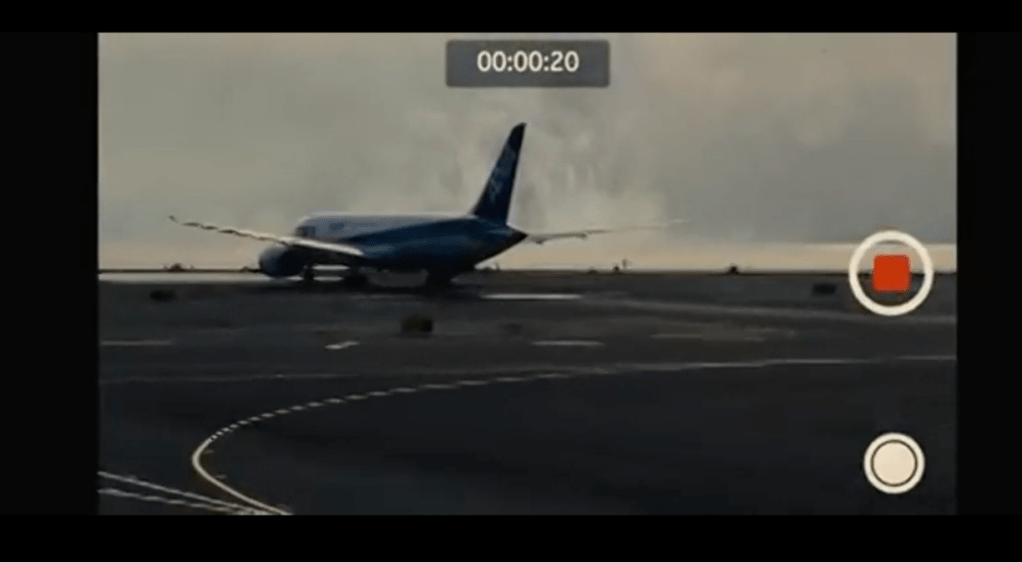
Hideaki Anno has updated Japanese classic SFX films (“Shin Ultraman”, “Shin Kamen Rider”) and his own “Evangelion” films by adding ‘Shin’ to them. This ‘Shin’ can also be translated as Post. In short, it could be said that Anno Hideaki himself is updating his post-cinematic works by using digital technology in addition to updating the story. In The language of new media(2002), Lev Manovich states that digital cinema has finally become just one particular case of animation, and it could be said that Anno Hideaki is the very embodiment of this.
References
- Denson, S. and Leyda, J. (2016) Post-cinema: Theorizing 21st-Century film. Falmer: REFRAME Books.
- Bordwell, David, and Kristin Thompson, Film Art : an Introduction, 8th ed.. (Boston: McGraw Hill, 2008)
- Hollywood’s extreme close-up (2017) The Wall Street Journal. Dow Jones & Company. Available at: https://www.wsj.com/articles/the-close-up-close-up-1485000003 (Accessed: October 25, 2022).
- Manovich, Lev., and American Council of Learned Societies, The Language of New Media, 1st MIT Press pbk. ed.. (Cambridge, Mass.: MIT Press, 2002)
Kenji Shimada 24/10/2022
 Digital Audiovisual Media Class Blog
Leave a comment