
Figure 1
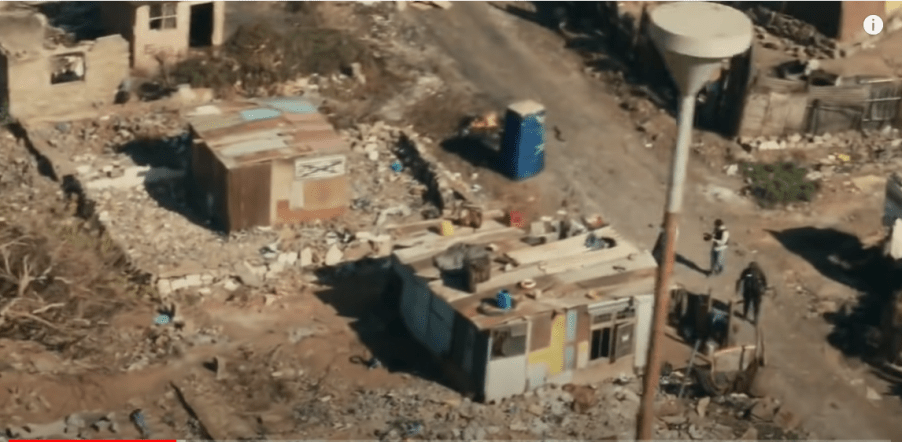
Figure 2
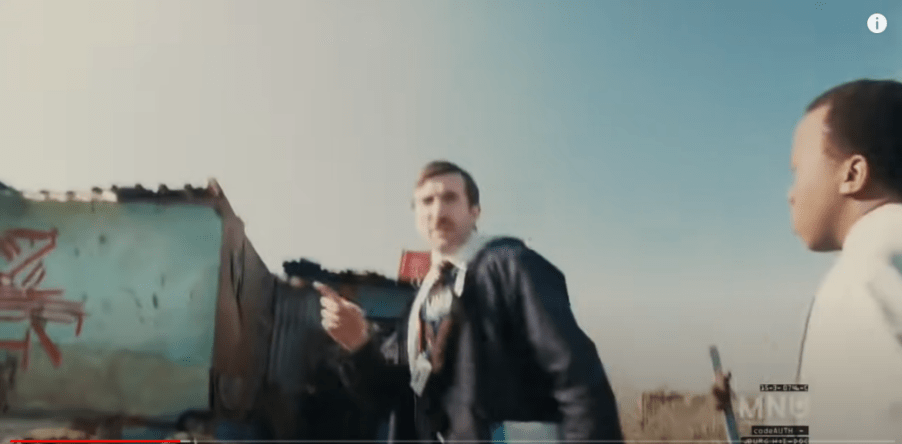
Figure 3
While watching the post-cinematic HD movie “District 9”, the viewers come across a low-resolution hand-held camera used in the shape of news reportage. The above scenes show similar footages, in which case, the camera itself seems to appear as a separate character with discoloured images. Why a separate character, because it seems like the footage comes from somewhere outside of the movie, as if some news reporter or a news channel intrudes in and suddenly starts showing its own footage. Aesthetically speaking, the scenes take us from the post-cinematic digital cinema of the 21st century to the old cinema of the 20th century. Shane Denson (2016) calls these “crazy cameras” which do not seem to know their position regarding the separation of non-diegetic and diegetic planes of reality. Further, these hand-held cameras leave the viewers in a disturbing situation as they suddenly deviate from the latest high-resolution camera scenes to the low resolution.
Conversely speaking, these low-resolution footages might help create more realistic, natural-world scenes by switching between the interplay of a high and low resolution. The viewers might become more attentive due to a quasi-objective scene and start looking through the scene as a token or sign of “realisticness”. The paradox is that the camera itself comes as a new character, signifying the importance of a “close-to-reality” scene and occupying both objective and subjective positions for the viewers. Overall, this kind of cinematography where a hand-held camera appears as a separate character and closer to reality might not be a crazy camera, but rather another realistic representation of the post-cinematic movie scenes. This might relate to social realism, a ‘slice of life’ (Hayward, 2006). These post-cinematic camera scenes do not blur the lines between digital cinema and the old cinema films. But rather, joins them to create a hybrid kind of a new perception, a split between digital cinema reality and the reality proposed by hand-held cameras.
References:
Denson, S. (2016). Crazy Cameras, Discorrelated Images, and the Post-Perceptual Mediation of Post-Cinematic Affect.
Hayward, S. (2006). Cinema Studies: the Key Concepts, (tr. 2012). Seoul, Hannarae.
Written by Yihan Xu (33675720) 13/11/22
 Digital Audiovisual Media Class Blog
Leave a comment