Technology has enormously evolved the cinema industry, from the ways films are made, to how they are edited, and to the ways audiences watch them. In the recent 20 years or so, film production has been intensely transformed by the advancement and improvement of digital technology. Most mainstream shows are now shot on digital formats with subsequent processes, such as editing, splicing, and special effects, undertaken on computers. The majority of the cinema industry has advanced with digital projection facilities capable of producing screen images that rival traditional film projection’s sharpness, detail, and brightness. Leaving out only a small fraction of cinemas that have retained film projection equipment.
There has been a revival of interest in 3D features, sparked by the availability of digital technology. As an example, I would like to talk about one of the most popular films of all time, Avatar (2009), which is known to be a record-shattering hit. The concept of Avatar began with James Cameron’s treatment for the movie back in 1994, however, Cameron had to put the project on hold when he realized the technology at that time would not do the story justice. Finally, in 2006 Cameron was able to develop new motion capture animation technologies in order to bring his dream into reality.
Avatar has made numerous innovations, as CGI was still new back in 2009, actors wore special bodysuits and skull caps fitted with a tiny camera positioned in front of the actor’s faces, which were spotted with dots to allow the computers to capture and translate their facial expressions and eye movements. Nearly, 60% of the film was computer generated, full of CGI animated and VFX.
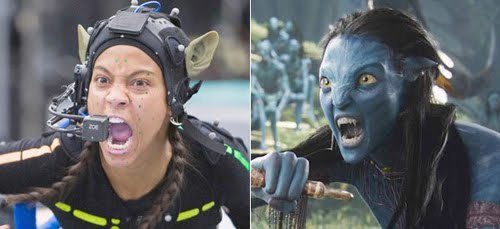
James Cameron’s Avatar showcases a variety of cutting-edge films, from special effects to animation techniques, it acted as a rallying point to get the cinema industry to transition, 90 percent of the movies had gone digital by 2015.
Therefore, the digitalization of the film industry has led to more technology-driven movies such as Marvel and DC.
References:
Film Studies 2270 Introduction to Film Studies. (2014). The Evolution of Animation to CGI (Computer-Generated Imagery) and the Impact of James Cameron’s Avatar. [online] Available at: https://filmstudies2270.wordpress.com/animation/the-evolution-of-animation-to-cgi-computer-generated-imagery-and-the-impact-of-james-camerons-avatar/ [Accessed 23 Nov. 2022].
Shane Denson and Julia Leyda, ‘Perspectives on Post-Cinema: An introduction’, Post-Cinema: Theorising 21st Century Film, pp. 1-19, Available here: reframe.sussex.ac.uk/wp-content/uploads/2019/05/POST-CINEMA_LO_RES.pdf]
Panchmi Aswani- 23/11/2022
 Digital Audiovisual Media Class Blog
Leave a comment