In a digital audiovisual era, simply passing on feelings through audio is not enough. Singers and artists usually make music videos for their music to enhance the emotions of the topic of their work. Therefore it is a sophisticated work to simulate the framing, art design, camera movement, visual effects and many other details to make a perfect masterwork.
“The technological transformations from mechanical to electronic modes of reproduction, and from analog to digital media, have accomplished what avant-garde cinematic practices could not: they have altered the balance between images and sounds, and instituted a new economy of the senses.”(Shane Denson & Julia Leyda)
Style by Taylor Swift is a massive hit from her Grammy-winning album, 1989 (2015). Not only is it a massive influence on the music industry, but with the help of its music video, direted by Kyle Newman, its context also brings Taylor’s art to the next level, another genre. This article will break down the structure of the music and the aesthetic vision of the music video that made it an iconic artwork.
“Style” is one of the top hits from her sixth recording album, 1989, which was identified as her first “pop album” when her previous works were classified as country music. She paid respect to the late 1980s music, especially with the “boom-clap” drums and kicks in this song that represents the rhythm of that age. Applying these features to this era’s music gives a soft pop-rock, nastolgic vibe, and sets the scene of celebrating her ex-lovers as they were in he old days.
Walter Benjamin famously wrote that “it is another nature which speaks to the camera as compared to the eye. . . . It is through the camera that we first discover the optical unconscious” (266)
The visual effects and the camera shots of this music video are pretty mythical and intimate, establishing her statement of becoming an adult, becoming a mature artist. The most significant differences from her previous videos are the darker scenes and the increased skin and body shots. These images are tantalizing yet not provocative, which gives the audience the notion that she is not the teenage country star she used to be. She has grown into a woman and could be sexual in her personal life.
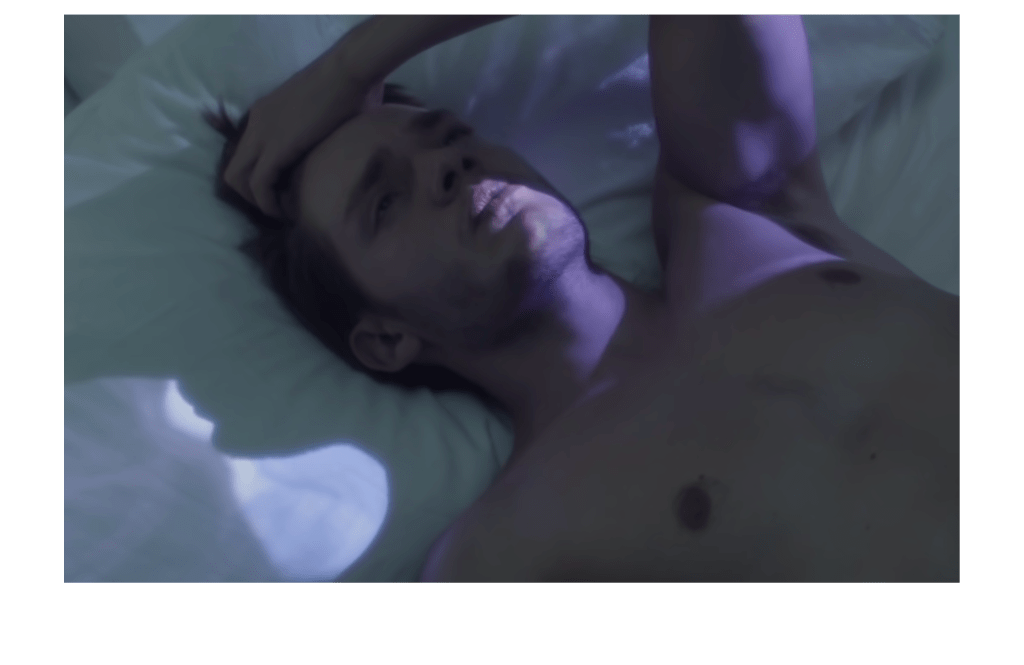
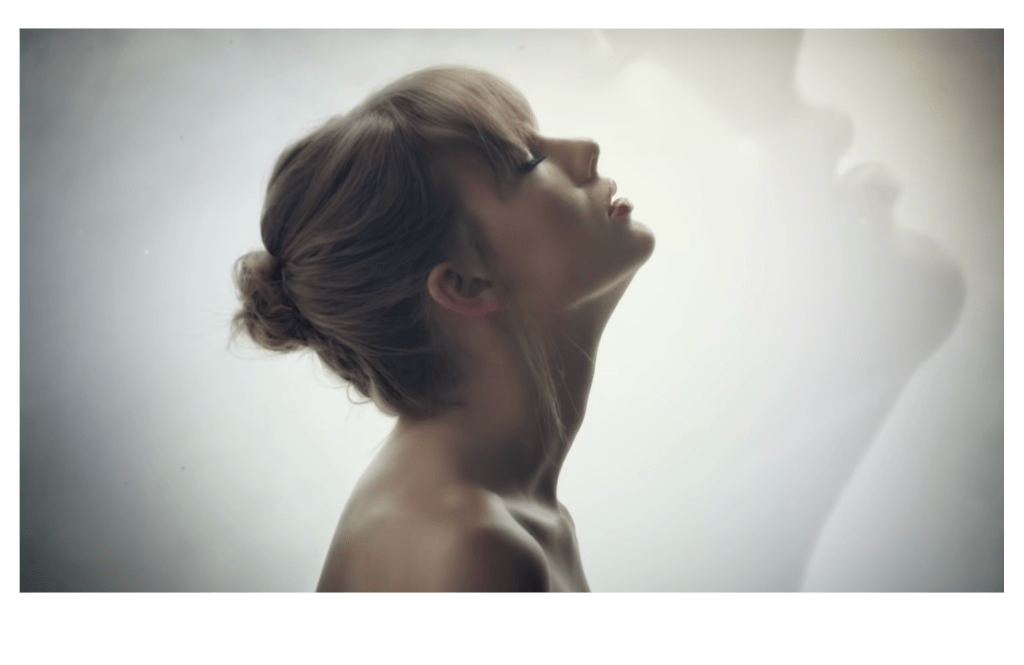
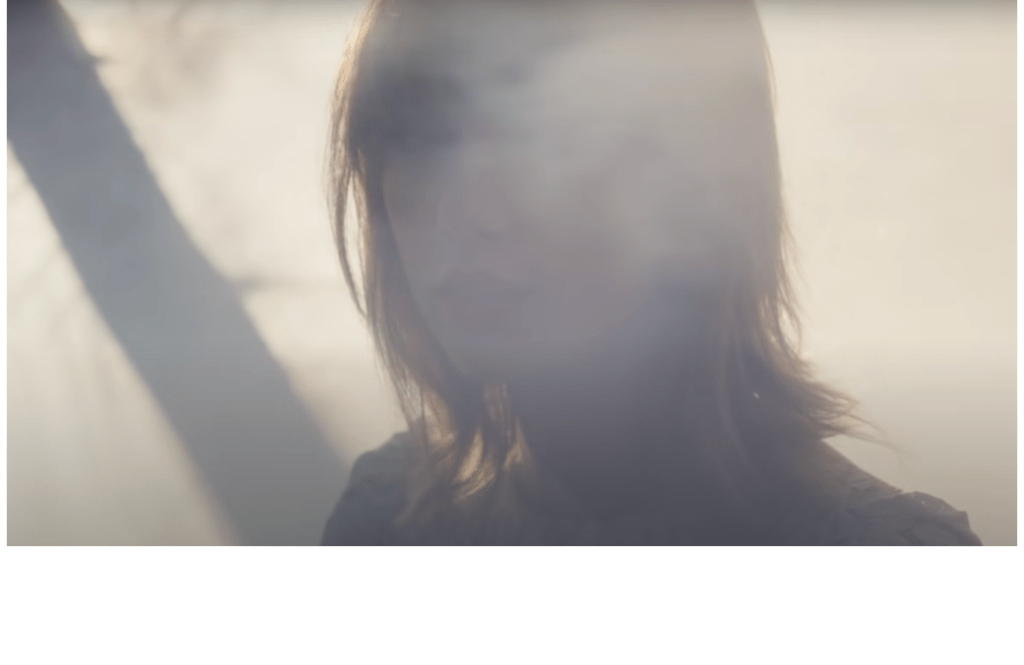
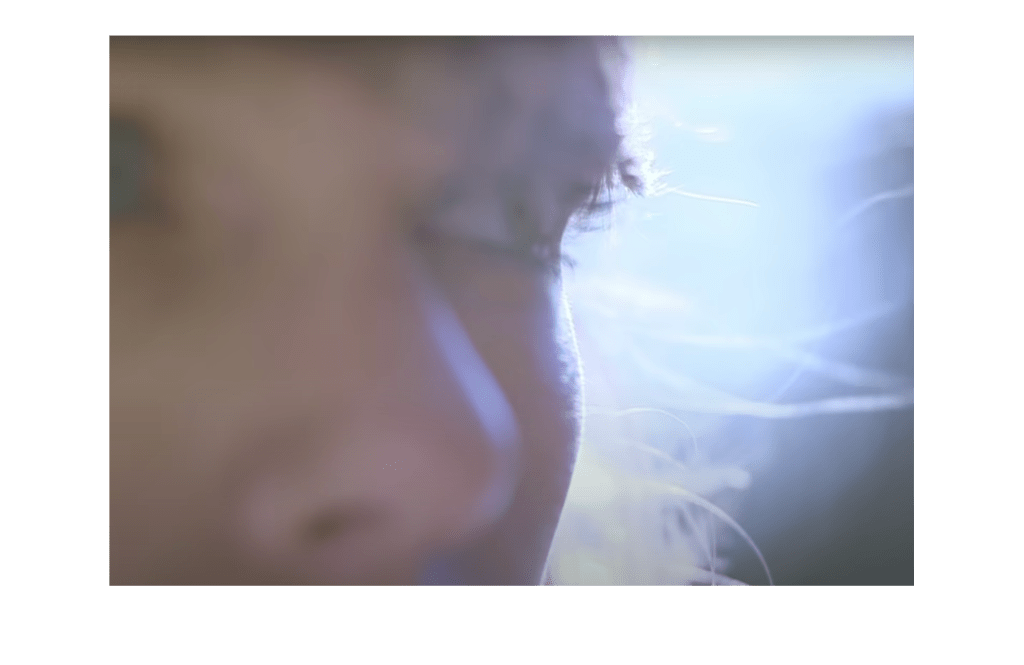
As the song is a reference to her past relationships, it accentuates the inquiry and the doubt of them. Several close-up shots were used in the video and only showed part of the face. The forest scenery is covered with fog, and the astigmatism focus shot blurring the figures in the scene insinuates the hesitation and unclear of both parts of the relationship.
“assembling together a number of elements to create a singular
seamless object. . . . Where old media relied on montage, new
media substitutes the aesthetics of continuity. A film cut is
replaced by a digital morph or digital composite.” (139; 143)
The most iconic aesthetic features in this music video are the abstract images projected on fluttering objects and the characters’ reflection in the mirrors that covers up the person in the central position. This music video does not elaborate a linear story, but with these visual effects, the visionary projecting on the primary objects implies the story in another space and time. The audience might not experience the same story of what she has been through, but with the flashing figures alongside the lyrics,” you got that James Dean daydream look in your eyes”, we could vividly have coherence with her tempting love affair, and what she must have felt like when the relationship was on.
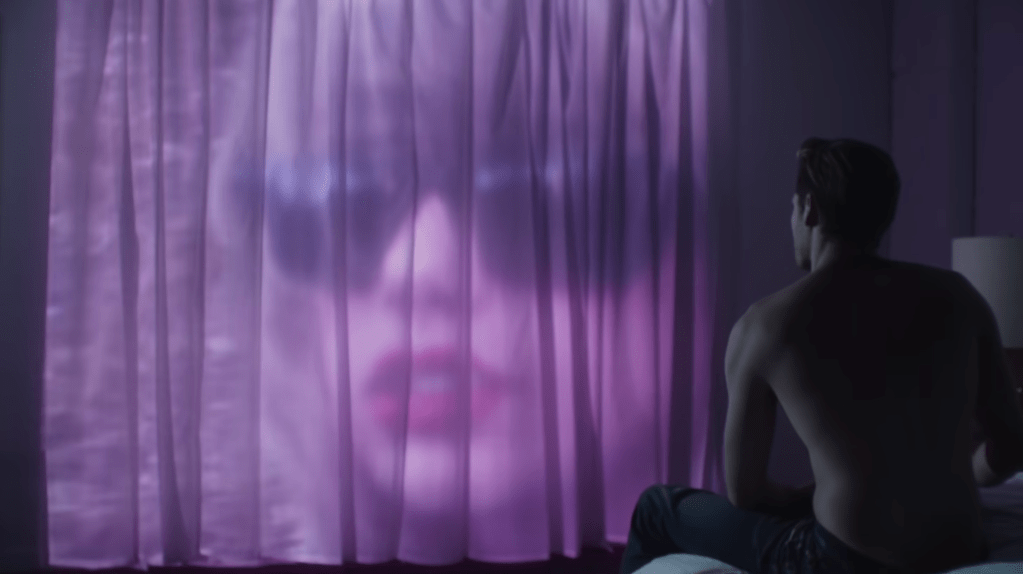

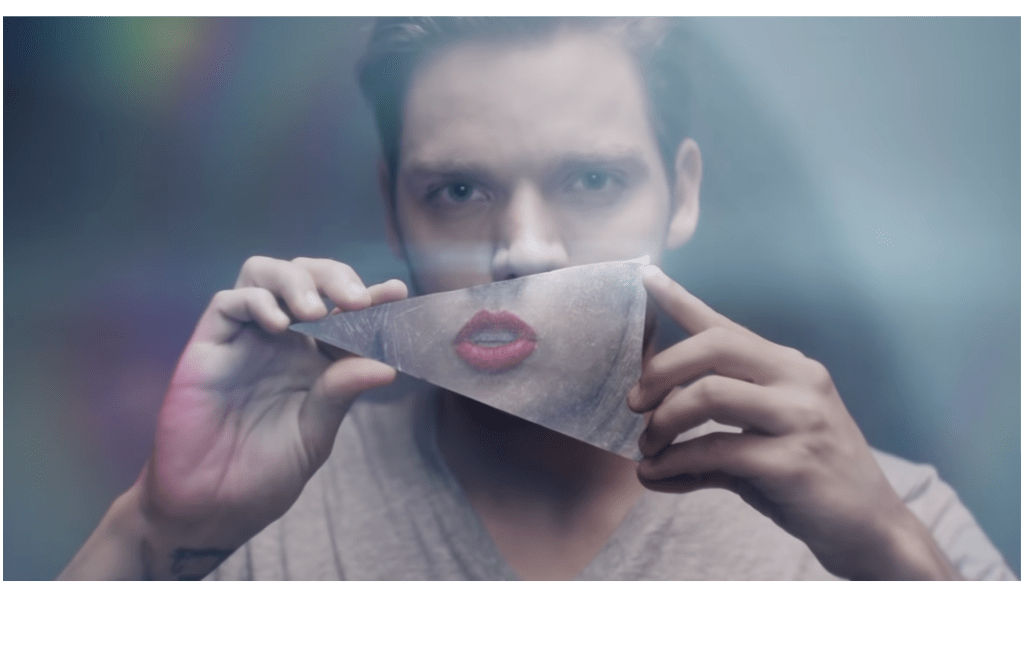

We could see the same special effects used in the tile sequence og ” True Detective”(2014) and the Rihanna’s music video “What now?” (Darren Craig, Jonathan Craven, Jeff Nichols, 2013), which give a mystifying and chaotic sense.
With the effects that take the audience to experience her romantic relationship and give us a peek at the most intimate parts of it, it is a genuine artwork that compliments the song itself.
written by Shih-Kai Yang
 Digital Audiovisual Media Class Blog
Leave a comment