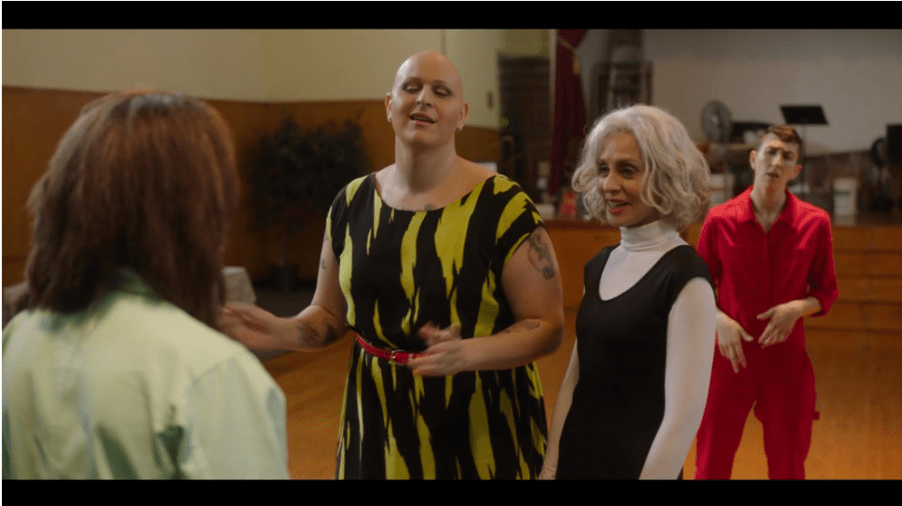
Figure 1 Transparent Movie Musical Finale
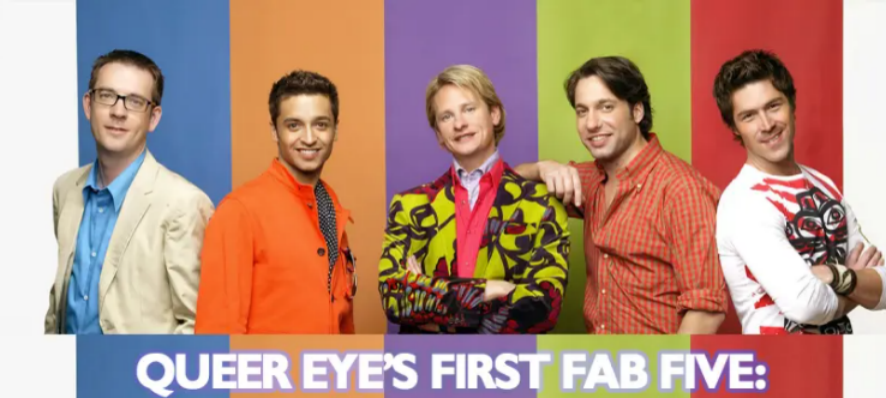
Figure 2 Queer Eye for The Straight Guy
Goddard and Hogg (2018) indicate that “Trans television” appears to be a potentially more queer representation of television. This approach can be seen in the American comedy-drama series “Transparent”, where Jeffrey Tambor (male actor) played the role of Maura. While Alexandra billings (Davina) performed the role of her friend, her role also reinforces transgender manifestation in supporting roles.
Despite showing inclusion and diversity, the family members of Jeffrey Tambor seemed to be more focused on revealing their responses regarding his transgender appearance than the character of Maura itself. It can be said that the transgender representation of Tambor is rather weak. This is because Maura’s role seems to be appeasing the other family members (dominant group) as a non-dominant member of the family. This creates a dichotomy because, in the same way how transgender members in society try to show their noteworthy existence, Tambor tries to show his existence as Maura in a similar fashion. It can be argued that the Trans tv show indirectly reinforces the solidarity of heteronormativity rather than consolidating queers’ representation.
Critically speaking, a more solid representation of queers can be manifested if many characters are shown queers in a single show. For example, the show “Queer Eye for the Straight Guy” (2003-2007) can be taken as an example where five gay men characters are shown as make-over guys. This representation might have the potential to show dominancy, or at least normality of queers in society. It can be said that the Trans Tv needs to work more and produce more shows with transgender visibility on TV. Transparent show is aesthetically a good show for Trans TV, and it tries to signal the importance of transgender queers, yet it is problematic in manifesting the dominancy or normality of these representations.
References:
Goddard, M. N., & Hogg, C. (2018). Introduction: Trans TV as concept and intervention into contemporary television. Critical Studies in Television, 13(4), 470-474.
Written by Yihan Xu (33675720)
 Digital Audiovisual Media Class Blog
Leave a comment