The directors are willing to practice new technology in the music video because music videos trait fewer constraints or lower budget requirements than that films. At the same time, Carole Vernallis doubts that such high-profile digital effects employed mainly amuse visuals and play a role in aural novelty, which is consistence with Chion’s thought that images in music video supply a sense of joy and please audiences’ eyes. The intensive debate further inspires me to think about the aesthetic of music videos and the audio relationship within the development.
Before music videos dispersed in digital commercial websites became ubiquitous, such as YouTube, Vevo, or Hulu, I used to watch them on TV channels with specific satellite services or play physical albums. In that case, Vernallis’s assumption that we should consider a music video presents an amalgam rather than an independent object. It tends to be an adhesive to connect performance, rhythm, image, and fragmented elements altogether. Although digital morphs help directors devise stunt effects in their projects, I appreciated story-alike music videos. In The Name Of The Father, produced by Huang Junlang, articulates how to make music videos like a poem by juxtaposing visual objects and audio.
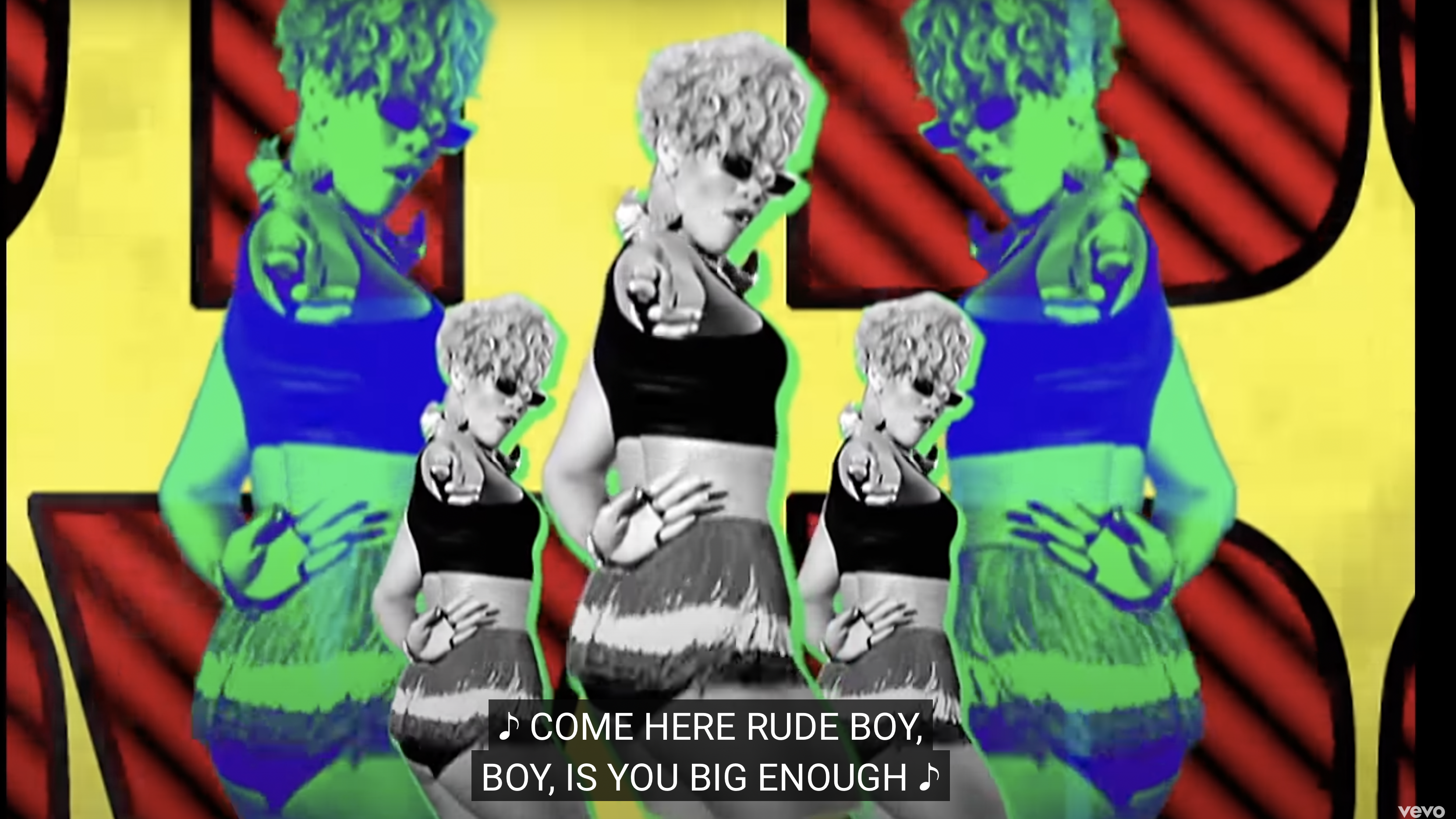
The image from “Rude Boy“

This music video was published in the spring of 2013, just a few years after Lady Gaga’s “Paparazzi”(2009) and Rihanna’s “Rude Boy(2010)”, which were complimented as sensational videos; while there are distinctly two different styles in terms of the audio-visual relationships. In Paparazzi and Rude Boy, the directors applied many novelties and digital gimmick effects, for example, kaleidoscope and digital camera, to pack the frame with extremely contrasting colors in cloths. To some extent, the striking visual effects outweigh other music video constitutions. On the opposite, “In The Name of The Father” seems more conservative with digital technologies employment.
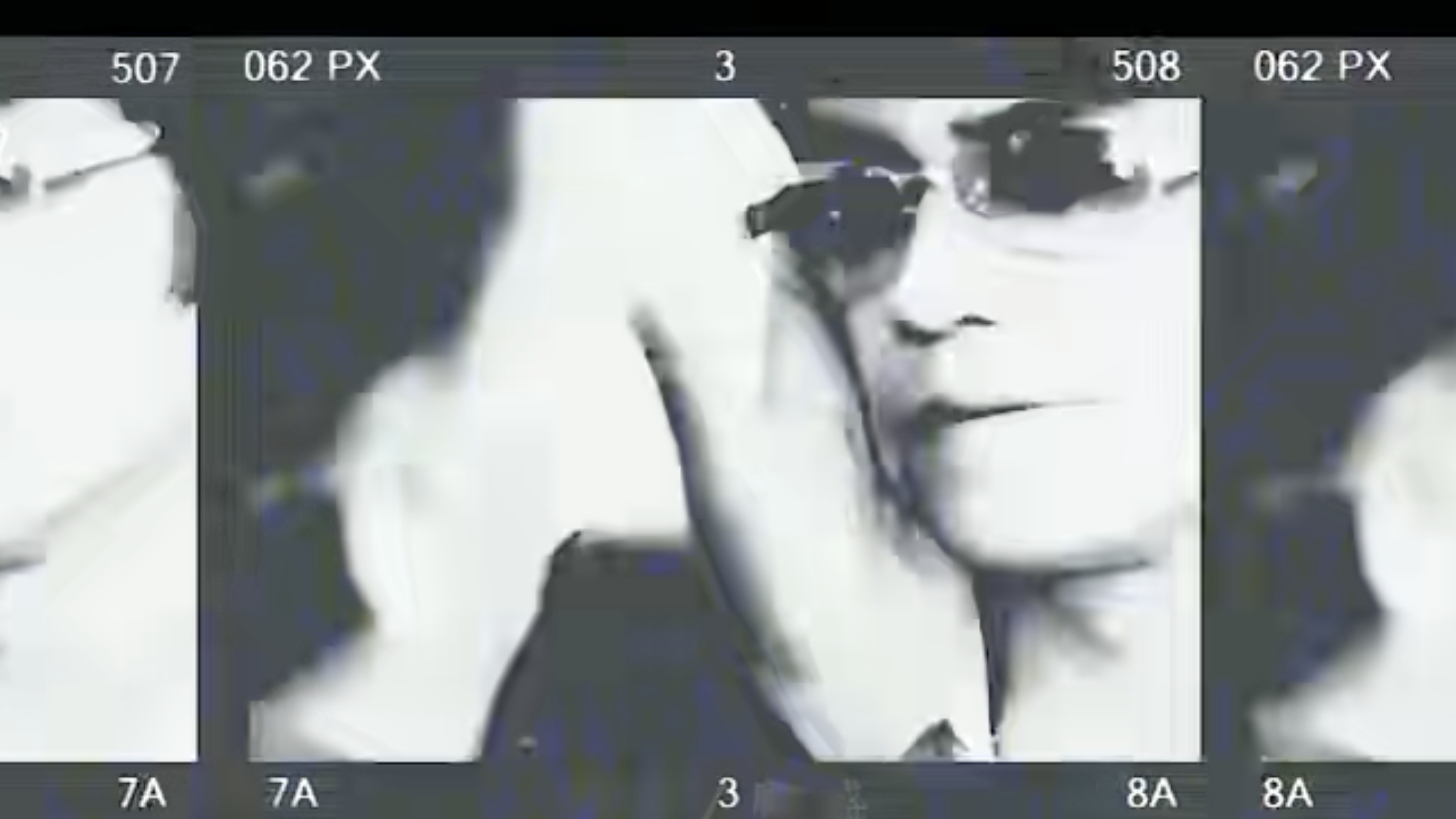
The image from “In The Name of The Father“
The director deployed prisms and cooperated montage editing to seduce audiences in a retro but technological world. The background setting salutes to the film, “The Godfather”, so directors relied on black-and-white effects, increasing the index of grain and noises in the image and fading the colors and tones to create an analog film phenomenon. In the first few minutes of the music video, the iconic and discontinuous scene captures flashed in rapid succession in the way of film strips, which generally laid a suspenseful and emotional severe tone for the whole music video. During the playback of these clips, an orchestra, the Italian monologues, and the soprano layered from time to time, constantly pushing the audience’s emotions forward to new climaxes. What’s more, due to these three soundtracks’ traits so characterized to identify, audiences are able to “see” the textural layering among them. Instead of explaining the story, the lyrics serve as steps to associate timbre, flash-frames, and discontinuous shots and then leave space for audiences to have a breath from narrations, similar to the function of separated phrases in poems.
In Jay chou’s music video, visual and audio segments interweave into a closed relationship, and they remedy each other in order to complement the project. It echoes Carole Vernallis’s suggestion that audio and visual elements are intricately copresent in the music project, working like partners.
Reference
- Steven Shaviro, ‘Splitting the Atom: Post-Cinematic Articulations of Sound and Vision’, Post-Cinema: Theorising 21st Century Film, 384-397
- Carole Vernallis, ‘Music Video’s Second Aesthetic’, Unruly Media: YouTube, Music Video, and the New Digital Cinema, 207-233
- https://www.youtube.com/watch?v=d2smz_1L2_0&t=124s
- https://www.youtube.com/watch?v=e82VE8UtW8A
- https://www.bilibili.com/video/BV1JK4y1u7KH/spm_id_from=333.337.search-card.all.click&vd_source=267d9601984d97f4f19f93f1806a022f
- https://www.youtube.com/watch?v=9q7JOQfcJQM
Duan Huaijiang 27/11/2022
 Digital Audiovisual Media Class Blog
Leave a comment