While crowds are lamenting the disruption of the previous network model by Internet Distributed TV, Netflix as the most successful streaming media of the 21st century has now attracted over 223 million paid subscribers. Netflix’s success in becoming the world’s most successful streaming company in a relatively short period of time from its humble beginnings as a small DVD rental company is the result of a combination of factors.
An important factor that has enabled Netflix to succeed is that it has followed the ‘long tail’ internet business model (McDonald, 2016). When Netflix had initially accumulated enough data and capital, the company’s founders started the business of filming on their own, and over the years, high-rated quality videos such as House of Cards, Black Mirror, The Kingdom and Extracurricular have continued to emerge. This is why, in 2020, when the epidemic is in full swing and Hollywood is starting to go downhill, Netflix has managed to succeed. With the epidemic under control and unable to leave the house, Netflix’s vast original content resources have attracted a lot of subscribers worldwide. Also, because Netflix follows the HBO and AMC model to a large extent, viewers can get more content for less because there is no middleman (McDonald, 2016).
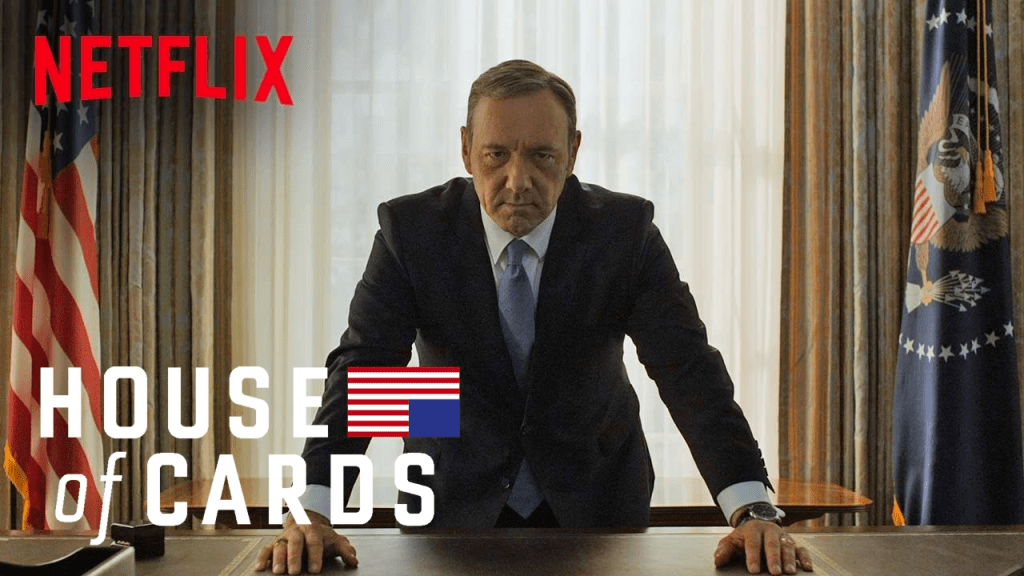
Another reason for Netflix’s success is that it is a streaming platform that offers a global subscription service with, as Lotz suggests, “non-linear viewing” (2017) characteristics. Viewers can choose when, where, and on what equipment they want to watch a TV series or movie, completely personalized and without restrictions. With the viewer in control, Netflix launched another film and TV strategy that also needs to be mentioned as Binge-watching. House of Cards was the starting point for this strategy, and the fact that it did not force viewers to wait for new episodes every week, but released them all at once, made Netflix a success and therefore retained more subscribers. However, Binge-watching the show has some negative implications for the TV series as well; when Netflix is released after the first or second week of the initial release, the buzz around the show fades until a new season is released again, so it is likely that there will not be as many subsequent viewings as those shows that are gradually updated each week as the buzz slowly drains away.
Overall, sites like Netflix differ from the previous online model in that there is more variety in what can be watched and gives viewers more power to choose how, when and what to watch. Although binge viewing has reduced the viewership of some programs, I think it is still closely related to the content of the program. If a program is really good, then its popularity will not be affected by binge viewing.
References
Lotz, A.D. (2017). Portals : a treatise on internet-distributed television. Ann Arbor, Mich.: Maize Books, An Imprint Of Michigan Publishing.
Mcdonald, K. and Smith-Rowsey, D. (2016). The Netflix effect : technology and entertainment in the 21st century. New York: Bloomsbury Academic, An Imprint Of Bloomsbury Publishing Inc.
Stoll, J. (2022). Number of Netflix subscribers 2018 | Statista. [online] Statista. Available at: https://www.statista.com/statistics/250934/quarterly-number-of-netflix-streaming-subscribers-worldwide/.
Image Reference
Netflix (2016). House of Cards | Series Trailer [HD] | Netflix. Youtube. Available at: https://www.youtube.com/watch?v=8QnMmpfKWvo.
Video Reference
Techgumbo (2022). Top 10 Best Netflix Series to Watch Right Now! 2022. [online] http://www.youtube.com. Available at: https://www.youtube.com/watch?v=Ih-XBBGExiQ [Accessed 14 Nov. 2022].
YARUI XIAO
 Digital Audiovisual Media Class Blog
Leave a comment