A review of Nam June Paik and the reproduction of his aesthetics in current Korean Pop Music videos.
In the middle of the 1960s, video art emerged as a new media art. Known as the ‘father of video art’, Nam June Paik is a multimedia artist and an influential member of Fluxus. He experimented extensively with video art during the 1960s and 1980s, and his work combined media, music, dance, sculpture, performance and technology.
Nam June Paik is committed to making the digital audio-visual media embody more humanity and aesthetics, he “focus on the use of electronics, and specifically televisions”. (Savenko,2020) Paik has a unique understanding of television and the ability to transform this media installation. Meanwhile, he uses non-narrative images to construct a post-continuity and creates a unique personal visual style.
Influenced by John Milton Cage, Nam June Paik’s work is not limited to a specific medium. Paik used objects and prerecorded sounds in his compositions, which he called “action music.” (Wilson,2021) Trained in music, Paik often works with or refers to music and instruments. He believes that “music is the manipulation of time”. (Museum of Modern Art, 2004)
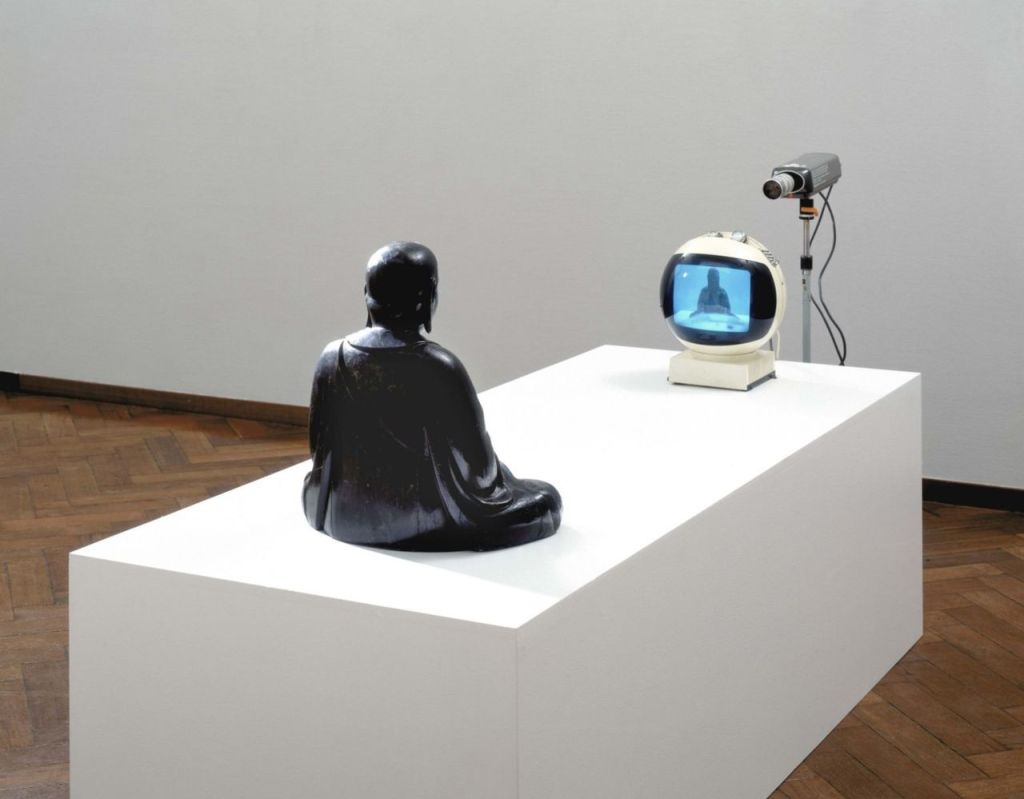
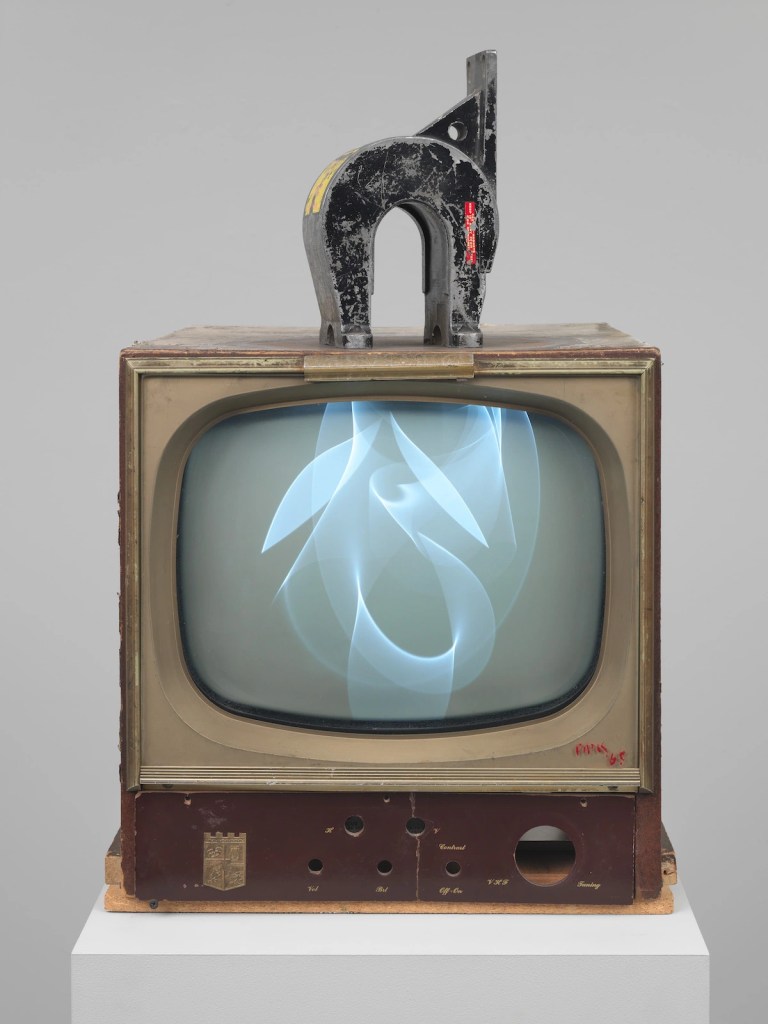
It is worth noting that his innovations in music and video art continues to inspire artists today, especially in Nam June Paik’s home country South Korea. Korean Pop (Kpop) Music continues to expand globally with new media platforms like YouTube and Instagram, and there are plenty of footages in Kpop music videos that reference and reproduce the visual languages of Paik’s artworks. Especially the use of fragmented images and several TV installations.
I will show some of the shots below:
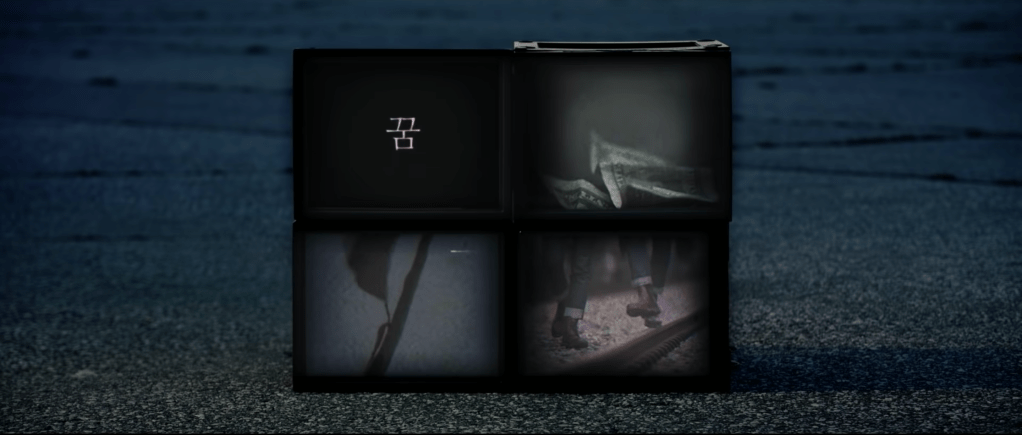
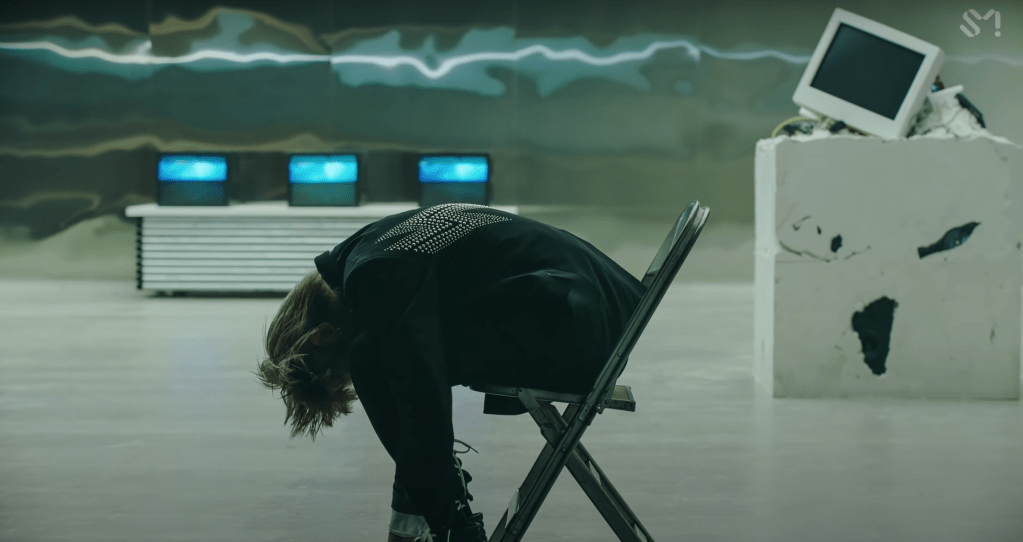
According to Carole Vernallis (2013) in ‘Music Video’s Second Aesthetic’, “In poems, words or phrases not normally placed together form new relations. The brain can experience a flooding, or an affective overload. In music, images serve the same function as words in poems, and the sense of overload becomes amplified by music’s affective qualities, forming a potent amalgam.”
For music videos, referencing Nam June Paik’s visual language of art is certainly a good approach to the irregular placement of images. Paik’s use of television reframe the image in one shot. And in the case of more than one television installation, the different images are always presented separately, leaving the viewer to ponder whether the relationship between the different images is accidental or inevitable, creating a poetic visual language and sensation.
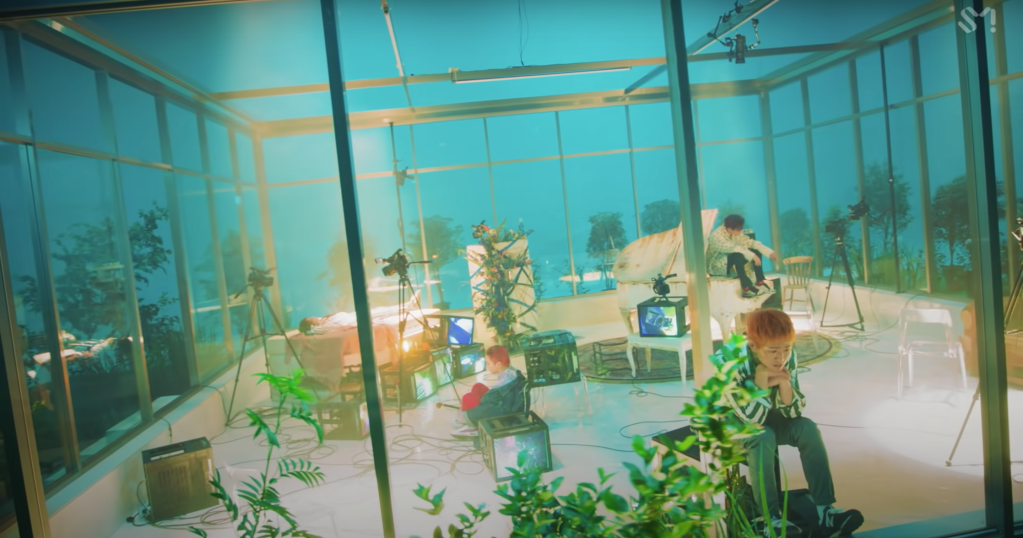
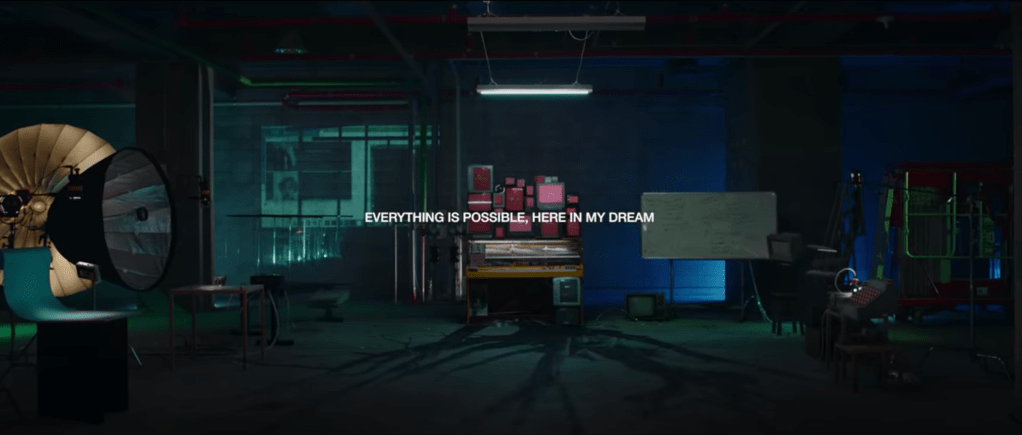
Among all the Kpop videos that reproduce Nam June Paik, the male group NCT’s work ‘NCTmentary’ (2018) is quite close to Paik’s work and develops its own worldview. In Figure 6 & 7, for example, they create an installation based on Nam June Paik’s work ‘Untitled (Piano)’(1993) and give it a new concept and meaning.
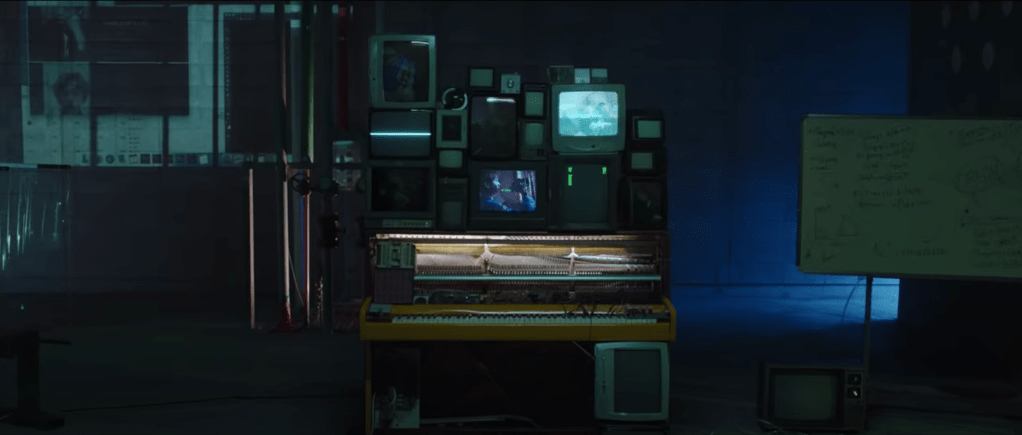
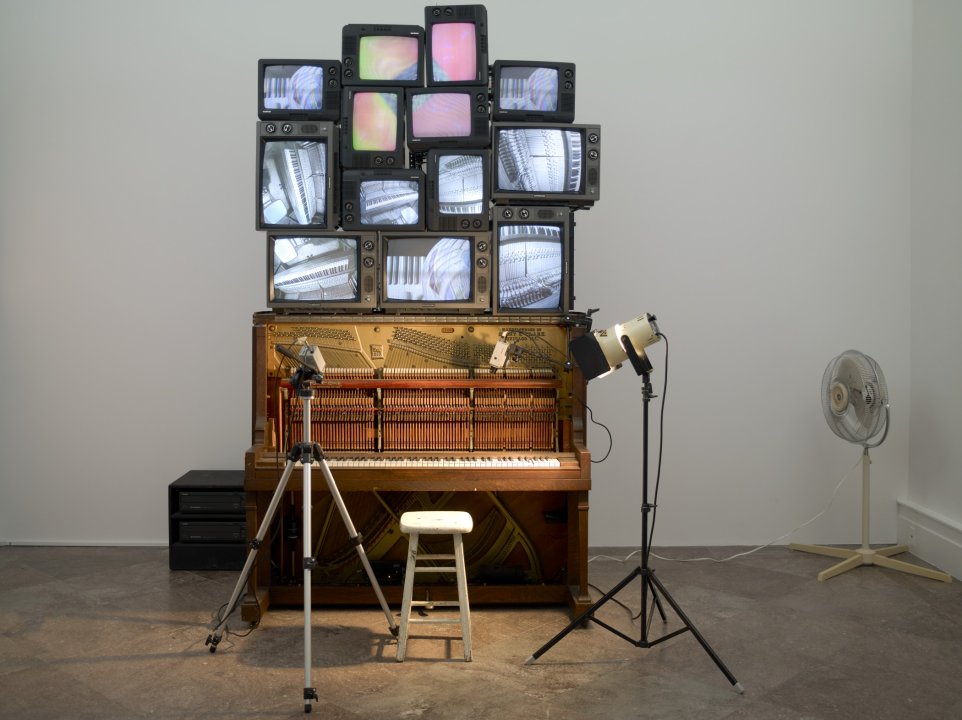
They call it a ‘visualizing apparatus’ and set it up as a machine to enter the members’ dreams. When the members play the piano, we go deeper into the dream world. The deeper dream is constructed by the images in dozens of TVs on the piano (see Figure 8). With the glitchy art effects, these seemingly unrelated and discontinuous fragmented images of spinning rings, running people, trees and so on, are presented in an unusual way through the irregularly placed TVs. This creates a poetic sensation, where the imagination is widened to an infinite extent. As the video says, “Everything is possible, here in my dream”.(see Figure 9)
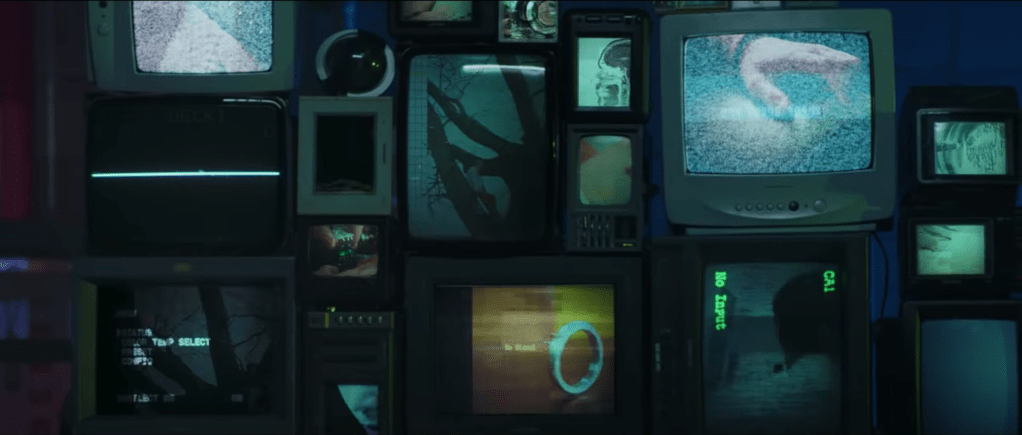
As the first artist to recognise the potential of television and video as an artistic medium, Nam June Paik’s work has opened up the exploration of media aesthetics in digital media art. His unique visual language will still provide a space for contemporary music videos and artwork to be traced and developed.
References:
- Museum of Modern Art (New York N.Y.) (2004). Moma highlights : 350 works from the museum of modern art new york (rev.). Museum of Modern Art. pp. 313. Available at : https://www.moma.org/collection/works/81152
(Accessed on: 20 November 2022). - Savenko,S. (2020) Nam June Paik: Here’s What To Know About the Multimedia Artist, The Collector. Available at: https://www.thecollector.com/nam-june-paik-artist/
(Accessed on: 20 November 2022). - Vernallis, C. (2013) ‘Music Video’s Second Aesthetic?’, Unruly Media: YouTube, Music Video, and the New Digital Cinema, in The Oxford Handbook of New Audiovisual Aesthetics. Oxford University Press. pp.228.
- Wilson,E. (2021) Nam June Paik and the Physicality of Music,Classical Voice. Available at: https://www.sfcv.org/articles/feature/nam-june-paik-and-physicality-music (Accessed on: 20 November 2022).
By YiXi Zhao (33659283)
First written on 20/11/2022
Re-edited on 27/11/2022
 Digital Audiovisual Media Class Blog
Leave a comment