In the field of audiovisual media, TV shows have been an extremely influential branch whether concerning advertising, cultural promotion, or entertainment. When it comes to drama series, the Korean drama (‘K-drama’ as the abbreviation) hit big, developing into a phenomenally cultural expansion. But it is enigmatic for people unfamiliar with K-dramas to understand its explosion so as to imitate its cultural application, and for those who adore them to analyse reasons for indulgence. Holding these purposes, this article is not concerned with practical filming techniques, but rather with the unique attributes of different types of K-dramas out of the study of hundreds of them over the past five years. This focus emphasizes the relationship between certain types and the audience’s mindset. To put it sequentially, there are four categories that could be described as the secrets of K-drama’s popularity.
- Dynamic and Imaginative Plots
A noticeable quality of K-dramas is the dynamic plots. Continuously converting the upright protagonist into a villain or vice versa enriches the plot with a sense of uncontrollable turmoil and exciting sensation. The unexpected display of seemingly irrational plots from which the dynamic tension grows does not impair its popularity. On the contrary, this feature provides audiences who felt themselves trapped in the daily dull convention a way to escape and enter a novel world where everything is suspicious and thrilling at the prospect of the next stage.
For instance, ranked the 3rd hottest drama for the first half of 2021, starring Lee Seung-gi ( 이승기) and Lee Hee-joon (이희준), Mouse (마우스) wined its high rating by the unceasingly changing storyline. While the audiences believed that they have distinguished the good and the bad, all of a sudden the boundary disappeared and they were shocked by discovering that the accepted upright cop might be the wickedest series killer. You never know what will happen in the next episode. It turns out that this kind of setting threw viewers into huge insecurity, just as in life, the blow of a friend’s betrayal is often more devastating than that of an enemy due to no psychological preparation. As a result, the huge contrast brings the same buzz of expectation, helping the dramatists grasp the audience’s attention.

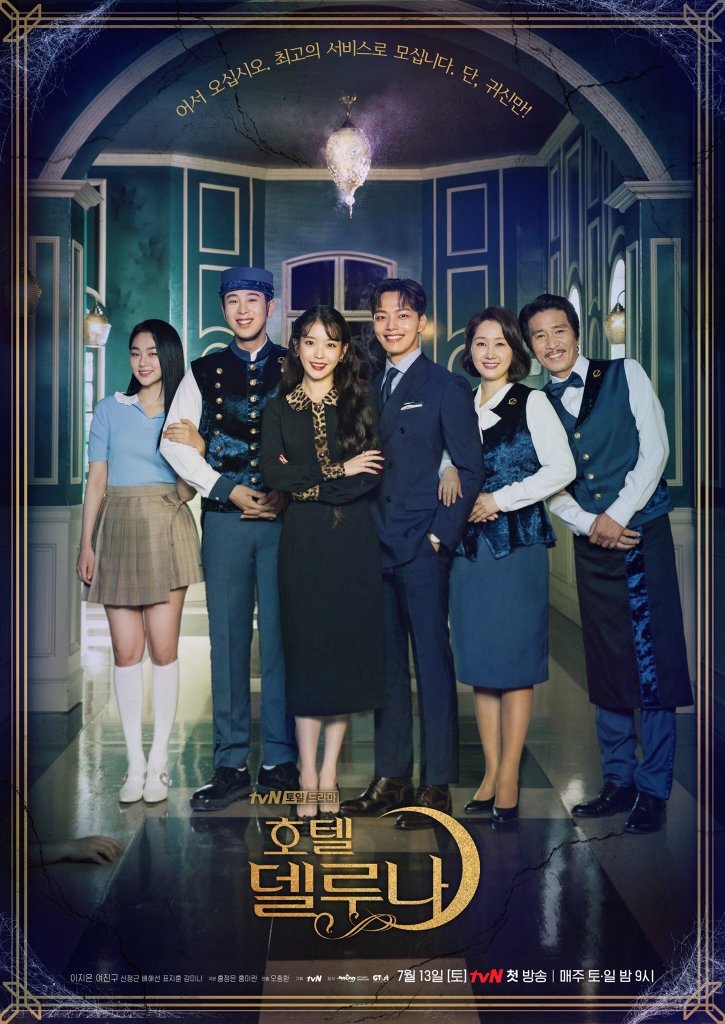
In addition to the ‘infinite reversal’ characteristic of the plot, the imaginative scene setting is also an attractive feature in K-dramas. To list a few, the background setting of Hotel Del Luna (호텔 델루나) is a luxury hotel fulfilling the wishes of the spirits waiting to reincarnate, a glamorous and cunning undead landlady and a human being of perfectionism. (Photo shown below)
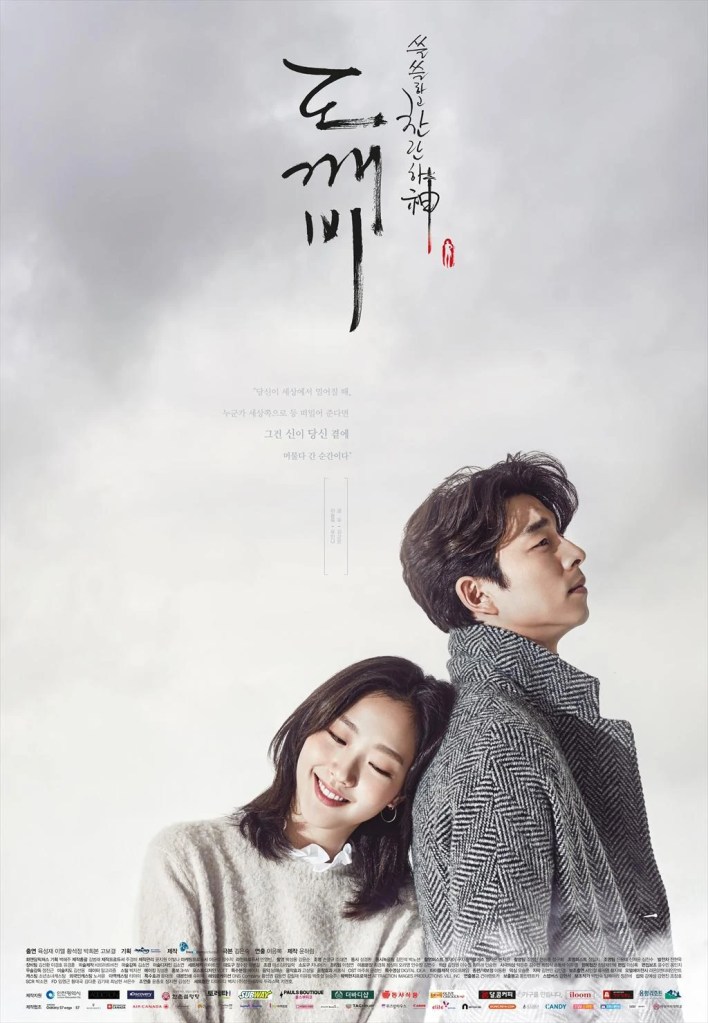
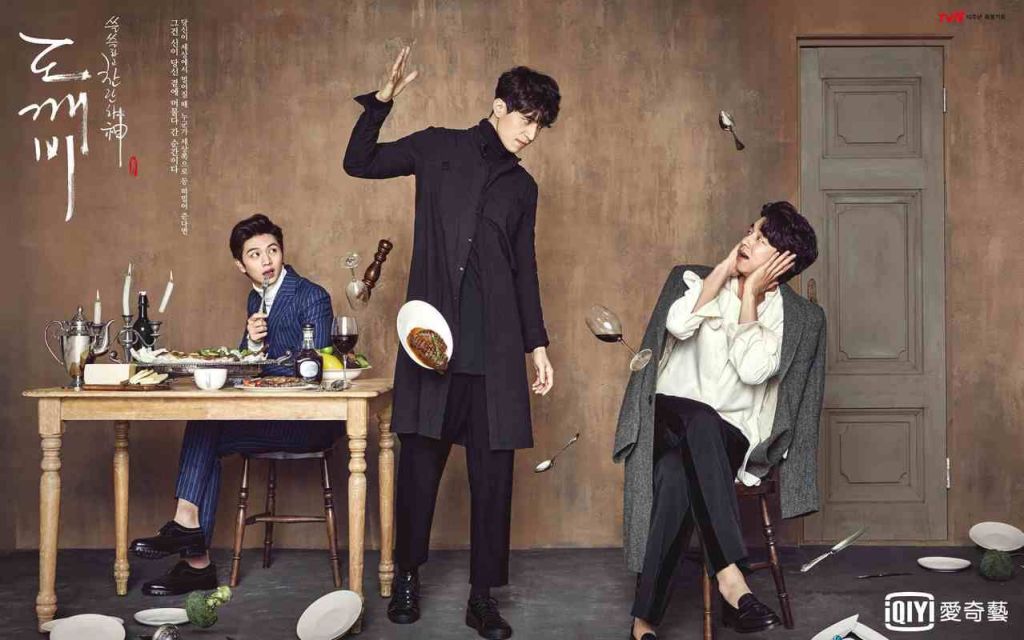
Guardian: The Lonely and Great God (쓸쓸하고 찬란하神 – 도깨비) tells the romantic and funny cohabitation experience of the two plus one – a high-school girl destined to be the god’s wife, a thousand-years-old god seeking the eternal death and an amnesic ghost whose job is escorting the dead to heaven or hell.
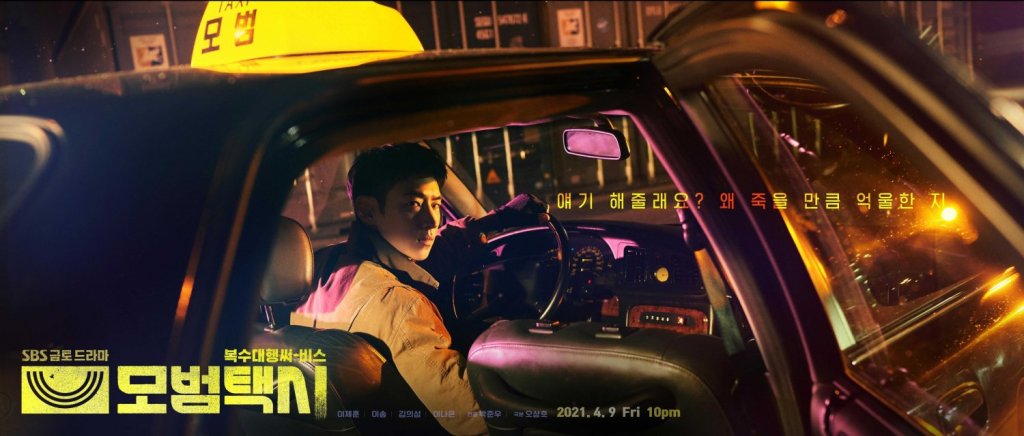
Taxi Driver (모범택시) is a revenge story of the families of victims using high-tech disguised as a taxi company to take revenge on villains who haven’t receive enough punishment due to their social wealth or intelligence. (Photo shown below)
Psychopath Diary (싸이코패스 다이어리) describes a timid man who loses his memory and unintentionally picks up a murderer’s diary after failing in his attempt at suicide. Mistakenly admitting himself a murderer, he started a hilarious and weird killing journey. (Photo shown below)
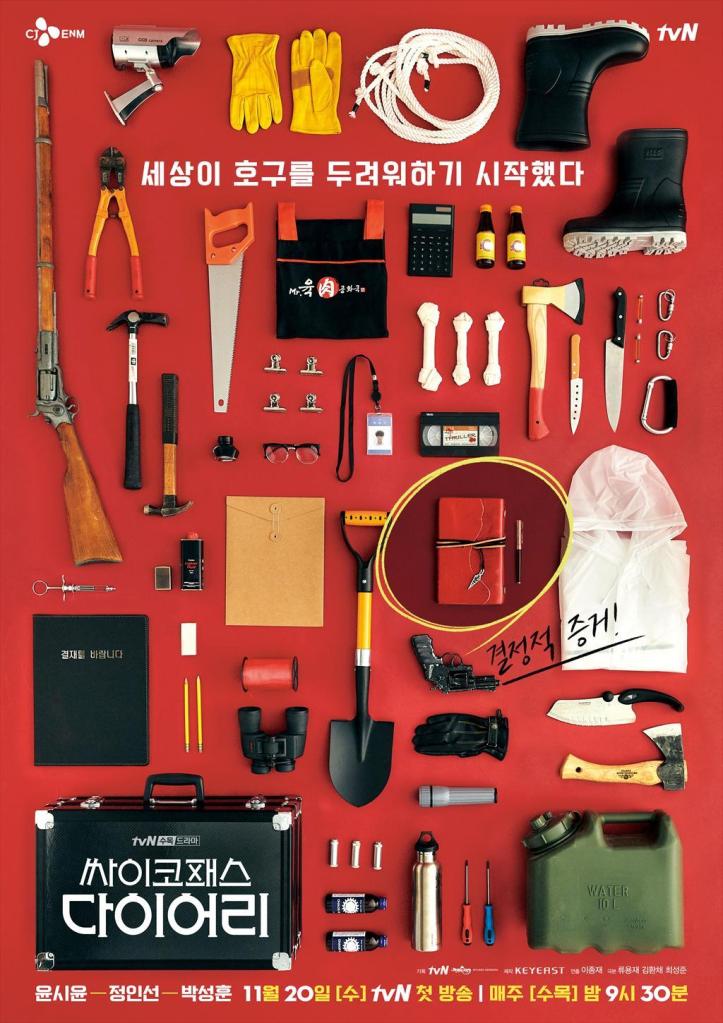
In short, the combination of imaginative plots and eccentric settings contribute to the boom of K-dramas highlighted itself as a remarkable characteristic in the world.
2. Resonance of Social Inequality
In South Korea, it is acknowledged that government policy has been heavily influenced by the lobbying of consortiums. Although the intimate relationship has done well for the civil economy in Korean history such as the Economic Development plan to foster companies after Korea’s independence in 1948 and the economic restructuring after the 1997 foreign currency crisis, people worried about their getting closer and closer. Conglomerates received conveniences from the government while repaying the party in power with monetary support. To the extent that some Koreans joke that South Korea is the Republic of Samsung. The assertion that the politicians, chairmen, and lawyers share their corruptibly interrelated interests generates the bourgeoisie’s negative feelings towards the upper class, and the powerlessness over the status quo accelerates hatred among proletariats.
As a result, most Koreans regard expressing political perspectives in the media as a necessity. Drama, then, serving for everyone as an efficient medium to give vent their discontentment toward the government and giant corporations. Especially in the past five years, the Progressive Party was in power, a party that stands for equality and regards criticising wealthy high-ranking people as a kind of justice. Compared with Conservatives, Progressives have stronger discourse power in culture and art areas. Increased Progressive tendency consequently influenced the filming industry to produce even more legal drama exploring combat against corrupted systems.
The acute criticism uttered in dialogues in conformity with the need to criticize the social imbalance, and the implementation of revenge resonates with people’s hatred of the powerful. This outlet permits an illusion that after countless pains and unfair treatments they are once again complete and satisfied.
In addition, complaining is a form of communication. It’s always easy for people feeling connected and validated by complaining together. If the wicked inequality is difficult to fix, at least celebrate their collapse in the drama. Therefore, K-drama takes advantage of people’s emotional needs — resonance with the woeful reality and the defeat of inequality — as an important factor to gain attention. The greater comfort, the more successful the drama.
Below is the screen recording of a satire dialogue from the 2021 big hit, Vincenzo (빈센조).
3. Warmth and Healing
Excepting for the thrilling plots, warmth healing quality also plays an important role in K-dramas. This type is characterized by a slow and peaceful rhythm. With a gentle tone like telling a bedtime tale, it unfolds gradually and smoothly. Such stories often focus on illustrating family and friendship, trying to awaken the softness within people’s inside.
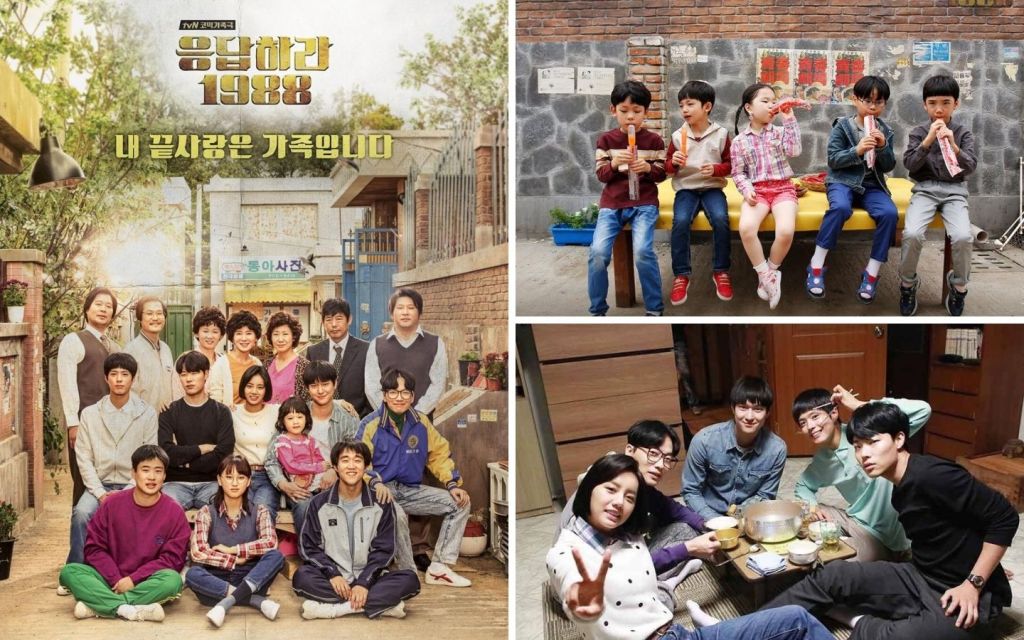
The representative is Reply 1988 (응답하라 1988), revolving around five friends and their families’ ordinary life in the same neighbourhood of Ssangmun-dong.
Looking at the logline, this kind of drama seems completely unappealing. However, it is through the vivid details of a simple life, backed by the appropriate atmosphere derived from photographic skills, the familiar experiences construct a healing time to remind audiences of the pleasant simplicity of life. Staying up late to study but falling asleep; The pass of examination after hard work; Failed confession of love; Being nagged by mom; Having meals with friends… These scenes serve as a spiritual vacation of a stress-free lifestyle for urbanites who constantly striving for more. The urgent modernists’ need leads this healing type to the third factor of K-drama vogue.
4. Ruritanian Romance
The last type is the ode to romance. In fact, this cannot be classified as an independent category, because romance is the indispensable theme of almost all K-dramas. Almost all the three categories mentioned above are bound to brace the enduring love between beautiful people (Please notice that being good-looking seems to become the prerequisite of having romance, which to some extent is discrimination but ironically unaware accepted. But let’s not diverge too much from the main point).
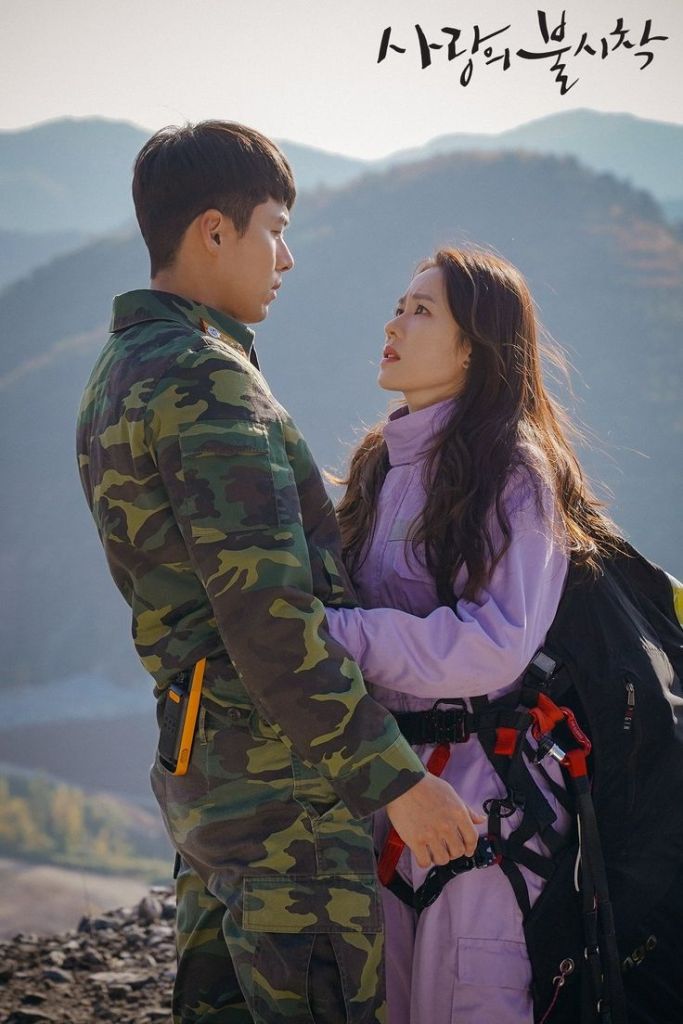
Acting as the vital element of K-dramas, its created ambiance is so tactical that anything irrational or unrealistic is ignored. For example, Crash Landing on You (사랑의불시착) articulates the daughter of a South Korean chaebol (재벌, plutocrat family) accidentally landed in North Korea while paragliding and met the son of a North Korea general who was performing an undercover mission on the border. With the blessing of love, the idealization of the typical upper-class life that is unlikely enjoyed by the common has drawn no attention, instead, people have been dazzled by the beautiful romance.
And in the Descendants of the Sun (태양의 후예), a soldier belonging to the Special Forces falls in love with a charming surgeon, this cliché of love doesn’t bother to have inventive plots or insights into social injustice, as long as the grand love exists between the handsome soldier and the attractive surgeon (Played respectively by Song Joong-ki and Song Hye-kyo, two famous actors in South Korea).
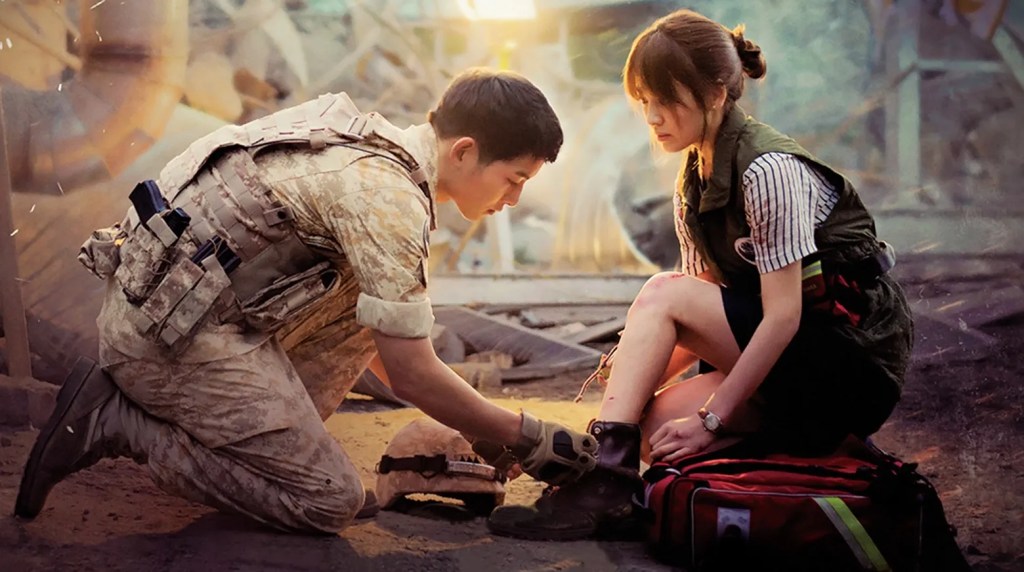
These two dramas were chosen as examples because the pair protagonists of both dramas got married after that. It can be described as the true realization of love, though ‘Song Song Couple’ (Song Joong-ki and Song Hye-kyo) divorced two years later.
People who love K-dramas are unable, or unwilling, to discover the obvious systematic construction of love. Both because during the drama the delicate progress of falling in love looks so elegant and touching, and after the drama the commercialization of love disguises itself perfectly as the post-service of love.
Nevertheless, let’s decompose the procedure into three stages. First the unexpected encounter and the deep impression upon each other, second many heartbeat moments during the gradual contact, and finally the sublimation of ordinary love to soul mingling after some life-and-death adventure. Each stage consists of many events completing the designed perfect love. Well, the sense always spoils sensibility, maybe it is better not to analyze during watching.After the show, there is responsible post-service, namely, the continue loving interactions between the fictional couple. This performing of love required by the film companies displayed in various audiovisual media platforms is so popular that it gained the term ‘pursuing the CP’. (Analogous to ‘shippers’ in the West, CP is a popular Internet slang in China, meaning infatuated with pairs of celebrities or drama characters whom people imagine to be in relationships) The artificially prolonged love relationship is essentially part of the drama acted in real life.
5. Conclusion
The explosion of Korean dramas has forged its own exclusive terminology in the filming field globally. The infinite reversal feature of the creative plots makes viewers unable to stop playing; The reflection and criticisms of both the economically and politically high-ranking families resonate with the public’s appeal; The warmth healing spirit takes care of those who yearn for a leisurely simplicity of life; The attractive sparking love intoxicates people. These four characteristics, through intertwined collisions, established K-drama’s distinctive style.
By: Jingya Yu (Olivia)
Student ID: 33764430
References
K-drama review: ‘Mouse’ thrills with its mind-blowing twisted story, https://kdramadiary.com/kdrama-review/mouse-tvn/
Lee Je-hoon in ‘Taxi Driver’, Refreshing as a ‘Taxi hero’, https://www.hancinema.net/lee-je-hoon-in-taxi-driver-refreshing-as-a-taxi-hero–149271.html
Michael J. Seth: South Korea’s Economic Development, 1948–1996, https://doi.org/10.1093/acrefore/9780190277727.013.271
Website for watching K-dramas, https://kissasian.video/watch/vincenzo-2021/episode-1.html
 Digital Audiovisual Media Class Blog
Leave a comment