In today’s digital era, the post-cinematic effect can also be observed in the music video industry, where some works no longer follow the traditional industry model of music television and there are more innovate practices begin to combine various media materials in one music video. One interesting case is Beyoncé’s “visual Album”, Lemonade, which originally released on HBO in a manner just like a film or TV show. This blog would like to focus on her music video All Night from this album and analyse its audiovisual practice based on visual style, editing strategy, narrative, and sound-image relations.
Visual and Editing Strategy
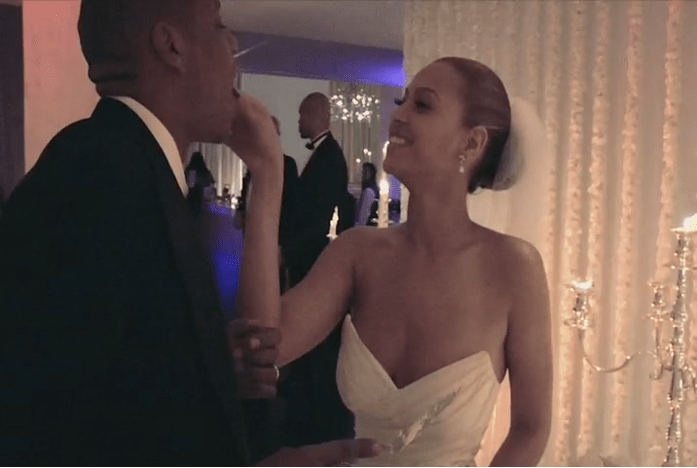
In general, the images in the video clearly give the audience a sense of cinematic quality. As Harrison (2015) also mentioned, the whole music video is more like a hybrid medium between film and music video. The video first opens with black and white historical feeling shots and a poetry by Warsan Shire quoted by Beyoncé on redemption. Some commentors point out this can be related to a wider context of black women in society (Novitzky, 2016). It then provides a mix of Beyoncé singing in front of the camera and various footages of family video. It is worth-noticing here that Beyoncé also present some personal home videos of her wedding with Jay-Z, her daughter Ivy Blue at her birthday party. The meaning behind these intimate moments of her family match with the whole love and redemption theme in the music video and will be explained in detail later.

Narrative
The narrative of the music video seems contain a reference to betrayal and ultimately a rebirth. The mention of lemon and lemonade in the beginning of the video can be considered as metaphor to the difficulties in our life. Here Beyoncé try to express her attitude of taking the lemons of her damaged marriage and making lemonade. Apart from the relationship narrative, another layer involves in the music video is its involvement with racial issues, which stated contemporary black female experience in the US. Bale (2016) in her review on Billboard also argues that the music video as part of Lemonade album is a work of Black Feminism that advocate union among women, as lemonade is “made by a black woman, starring black women, and for black women”.
Sound-image Relations
In the ending of the poetry part, Beyoncé slowly narrates that “My grandma said nothing real can be threatened, true love brought salvation back into me. With every tear came redemption, and my torturer became my remedy.” At the same time, the image shows her standing by the waterside alone, looking at us with firm and confidence. These all deliver a powerful message about healing and rebirth.


Moving forward, the rest of the video also contains a combination of grainy home video clips from real couples or families. As the frame shows Beyoncé and JAY-Z are shown smiling and having matching tattoos inked on their ring fingers, the lyric is saying “Give you some time to prove that I can trust you again. These can be considered as the symbolic of their marital union. Beyoncé then try to reinforce such idea of “true love can defeat everything” by presenting many footages featuring “real couples” of various races, ages, sexual orientations in the video. These diverse images of couples hugging suggest their union as human beings is part of the universal love we all can relate to: real, beautiful, and full of joy.


Reference:
Bale, M (2016), Beyonce’s ‘Lemonade’ Is a Revolutionary Work of Black Feminism: Critic’s Notebook. Available at: https://www.billboard.com/music/music-news/beyonce-lemonade-black-feminism-7341839/.
Novitzky, J (2016), We’ve Been Watching The New Beyoncé Video All Night Long. Available at: https://www.elle.com/uk/life-and-culture/culture/articles/a32878/weve-been-watching-the-new-beyonce-video-all-night-long/.
Sia (Xinyi Ji) – 33729902
29/11/2022
 Digital Audiovisual Media Class Blog
Leave a comment