Post-cinema is a term that has been used to discuss how media in the 21st century can help shape and reflect new forms of sensuality. Also, It is a continuation of, and at the same time a breakthrough for, the original form of cinema (Denson and Leyda, 2016).
Nope is a sci-fi, horror, suspense, and thriller film that just released in July this year. It was written and directed by Pierre Jordan and was nominated for four Academy Awards. The film tells the story of the protagonist’s siblings who discover a mysterious paranormal phenomenon over their horse farm and embark on a series of adventures in order to film the spectacle and gain huge profits and internet flow. As a film released in the 21st century, The film Nope has some post-cinematic features such as the following.
Firstly, the film Nope is edited in a way that reflects the “post-continuity”. “post-continuity” is a filmmaking style. “post-continuity” means that the images no longer follow the standard rules of composition and connection, but rather intensify the audience’s sensation and experience and that the narrative does not follow a completely linear character but uses new structural strategies such as montage to enhance the dramatic action (Shaviro, 2010). The film is divided into four sections, each with its own theme, and depicts four seemingly separate but causally linked stories. Each of these themes is followed by a montage at the climax of the story in order to enhance the audience’s experience.
Secondly, the post-cinema format includes the use of computer imaging technology in film production. Instead of images that can all be captured by the camera, post-cinema incorporates many images that have been synthesized by computers and digital technology. This form of post-cinema clearly demonstrates to the viewer that objects on the screen can be calculated, simulated, and constructed just like any other object in product design (Gurevitch,2016). The images of the alien creatures in Nope, for example, were created by CAD technology. The sequence in the film where the creature chases the protagonists was created using CGI technology (See Figure 1).

Figure 1 (Weiss, 2022)
Simulation techniques are also used in Nope. Although chimpanzees do exist, the chimpanzee featured in the film is made from a vivid and complex 3D model for better presentation. Motion capture was used to add movement to the chimp so that it could interact with the film’s supporting characters. This is an example of the post-cinematic form of Simulation techniques rather than Photographic (See Figures 2 and 3).

Figure 2 (Weiss 2022)
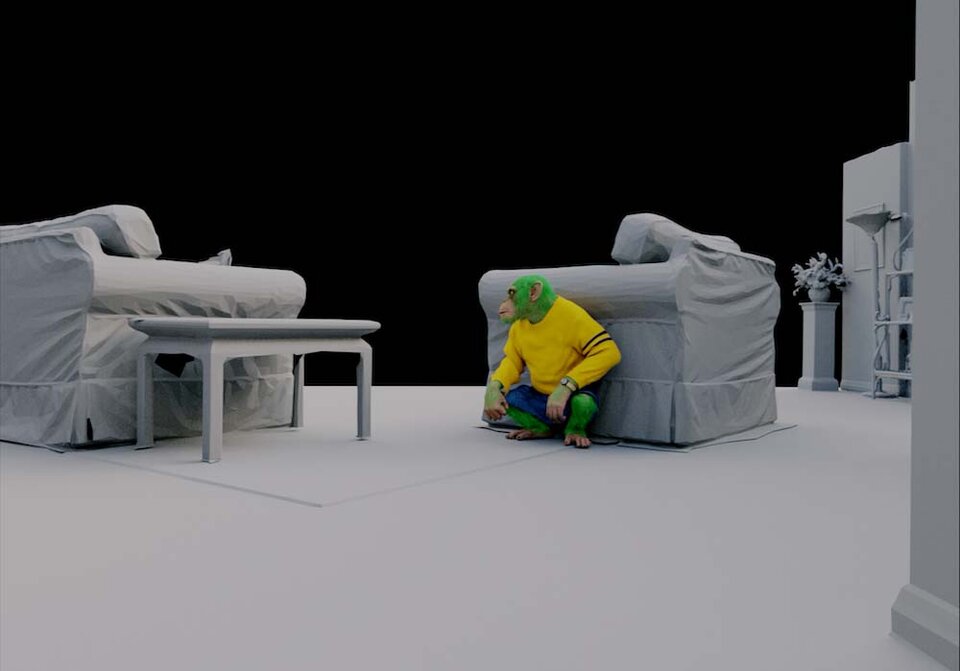
Figure 3 (Weiss 2022)
Edit By: Yuxia Shen (33738765)
References:
Denson, S. and Leyda, J. (2016) “Perspectives on Post-Cinema: An introduction,” in Post-cinema: Theorizing 21st-Century film. Falmer: REFRAME Books.
Gurevitch, L. (2016) “Cinema Designed: Visual Effects Software and the Emergence of the Engineered Spectacle,” in Post-cinema: Theorizing 21st-Century film. Falmer: REFRAME Books.
Shaviro, S. (2010) Post cinematic affect. Winchester: 0 Zero Books.
UniversalPictures (2022) Nope | final trailer, YouTube. YouTube. Available at: https://www.youtube.com/watch?v=HUgmq_8PlRY (Accessed: November 26, 2022).
Weiss, J. (2022) Inside how ‘nope’ invented its killer creature & literally built a VFX night sky for the big bad, SYFY Official Site. SYFY. Available at: https://www.syfy.com/syfy-wire/nope-jordan-peele-movie-vfx-supervisor-interview (Accessed: November 26, 2022).
 Digital Audiovisual Media Class Blog
Leave a comment