The original idea of nostalgia as a psychological feeling related to homesickness has been gradually evolved into a socio-cultural phenomenon (Routledge, 2016), which especially popular among the recent Internet distributed TV shows and receive pretty positive feedback form the audiences. They usually involve lots of romanticized pop culture elements of a past decade such as 70s or 80s and resonate with audiences who have shared experience form that time or people who reject the dissatisfying present and wish to live in such ideal past. To further understand this phenomenon, this blog would focus on two popular TV shows by Netflix, which are Stranger Things (2016 – present) and Sex Education (2019 – present) to analyse how they utilize cultural nostalgia to attract more audiences.
Stranger Things: the whole storyline based on culture from the 1980s
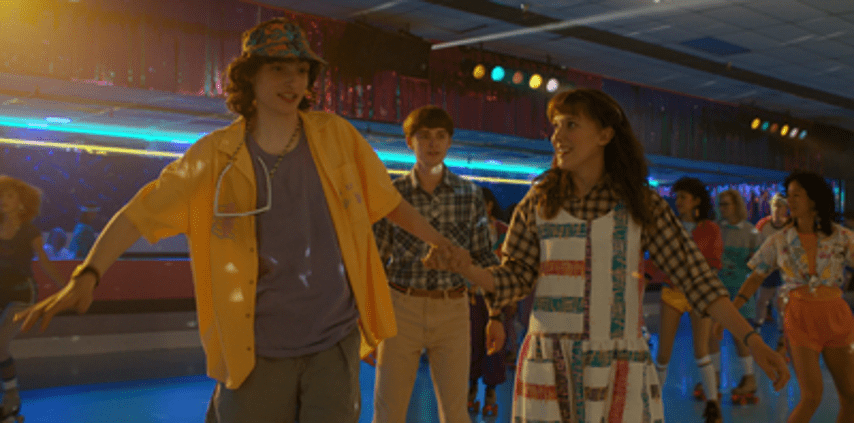
By depending the entire setting of the show and the development of the plot on popular trends and elements of 1980s’ American culture, Stranger Things successfully take advantage of human memory system’s connotation ability and the shared human feeling of fanaticizing things you never had. For example, there are many popular music form the 80s such as “Should I Stay or Should I Go” by The Clash (1982) and “Running Up That Hill” by Kate Bush (1985) incorporated in Stranger Things as a positive cue for the audience to recognize and resonate with their own memories from years ago. Moreover, some other 80s nostalgia elements such as the arcade and roller rinks appeared in the show (as shown below) act as signals calling out to certain groups of audience that link them with those joyful memories when playing on pac man and hanging out with friends at the rink (James, 2020).

Sex Education: a sense of aesthetic nostalgia
Unlike Stanger Things, the use of cultural nostalgia in Sex Education seems more focus on the clothes aspect. Audience can feel decades of fashion highlights involved in all characters’ dressing: the 60s exploration of self, the 70s groove, the sparkles of the 80s, and more modern popping colours with a Y2K style. As claimed by the show’s director, Ben Taylor, he intentionally wants the show bring a timeless feeling to the audience, which make them feel a sense of nostalgia but can’t match it with any specific time or era (Lopes, no date). By looking at some characters’ style in detail, we can tell 80s grunge rock from Maeve’s leather jacket and fishnet tights, which matches with her rebellious personality.
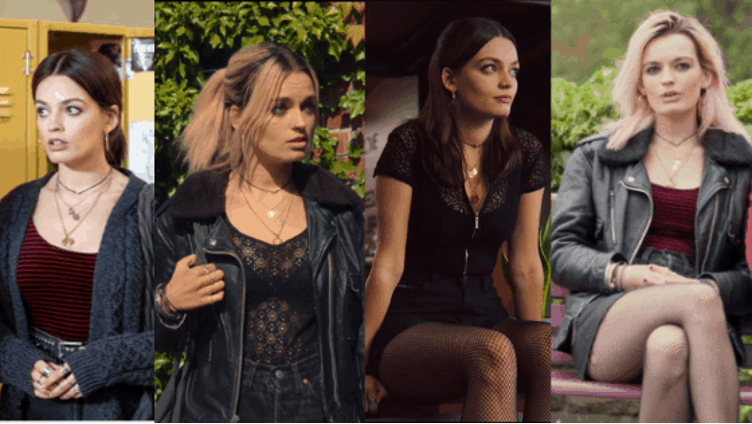
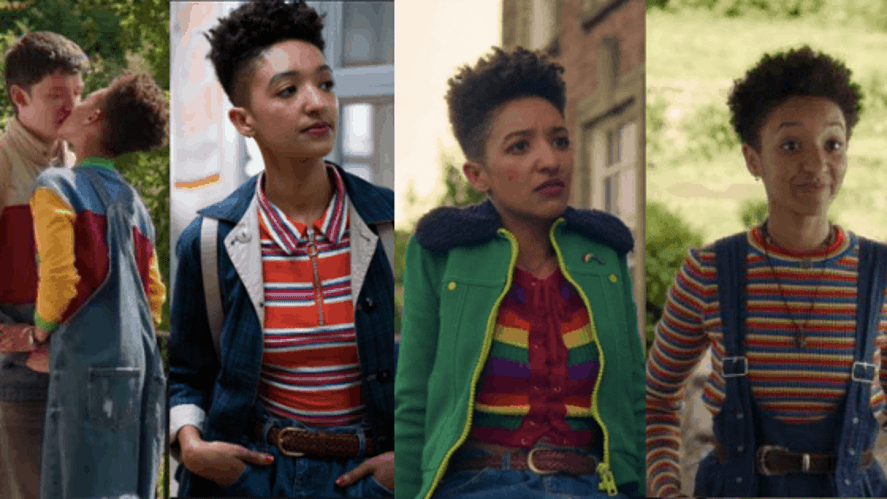
While for another character, Ola, bold rainbow stripes with 80s inspired denim overalls or mom jeans are her most common outfit. This reinforces her queer identify in the show. In my opinion, fashion can be a way for people to discover themselves and expression personal attitude, especially among young generation. It is worth-noticing here that Sex Education obviously take advantage of such power of clothes to empower its audience create and recall all sorts of emotions. As mentioned by the show’s costume designer, the clothes in Sex Education are designed to encourage its audience to wear whatever they would like to wear and no need to follow others in the mainstream.
Reference:
James, E. (2020), Nostalgia and what makes Stranger Things so successful. Available at: https://medium.com/@eosjames24/nostalgia-and-what-makes-stranger-things-so-succ-a1749878bafc.
Lopes, M (no date), Creating Universal Nostalgia: An Interview with Rosa Dias, Costume Designer for Netflix’s Sex Education. Available at: https://www.pilotmagazine.uk/home/creating-universal-nostalgia.
Routledge, C. (2016) Nostalgia: A psychological resource. New York: Psychology Press.
Sia (Xinyi Ji) – 33729902
28/11/2022
 Digital Audiovisual Media Class Blog
Leave a comment