As recent technological innovations have fundamentally challenged normative definitions of television and its ‘identity’, similar trend can be found from the increasing representation of LGBTQ characters in TV series that encourages audience to queer or challenge traditional knowledges about sexualities and identities. It should be noticed that the new affordances of Internet distributed platforms also allow the TV producers to avoid certain restriction experienced by national broadcaster such as BBC from their advertisers, whose audience are normally more conservative. At the same time, the algorithm and data science technology supported these new platforms enables a more precise segmenting of their audience groups, leading to increasing television contents that focus on some niche group such as the transgender community. Although there are critiques considering the trans or non-binary characters on some contemporary TV series as misrepresentation or simply used as a “tool” to show diversity, I would like to acknowledge the trans or representation in recent TV shows Pose and Billions as a light shed on a marginalized group that doesn’t fit into the box society has tried to put them in and often drowned out by the heteronormativity in previous shows or networks.
According to Davies (2019), taboos on television has to be challenged repeatedly ‘as boundaries tend to become set again after they are broken’. When show Queer as Folk first released in 1999, it is considered as a contribution to an attitude shift toward the queer community in the UK and let many young queer people first expose to gayness that not portrayed as a funny stories from straight people’s perspective or a problematic tragedy (Wallace, 2022). However, it can be easily noticed that the two versions of Queer as Folk have homogenous main casts of white, cisgender people, most are in their 20s and 30s. Despite the show tries to provide some unique gay representation, there’s an oblivious lack of diversity in race and gender expression in the show, which leaves out the representation of trans people and people of colour in the queer community.
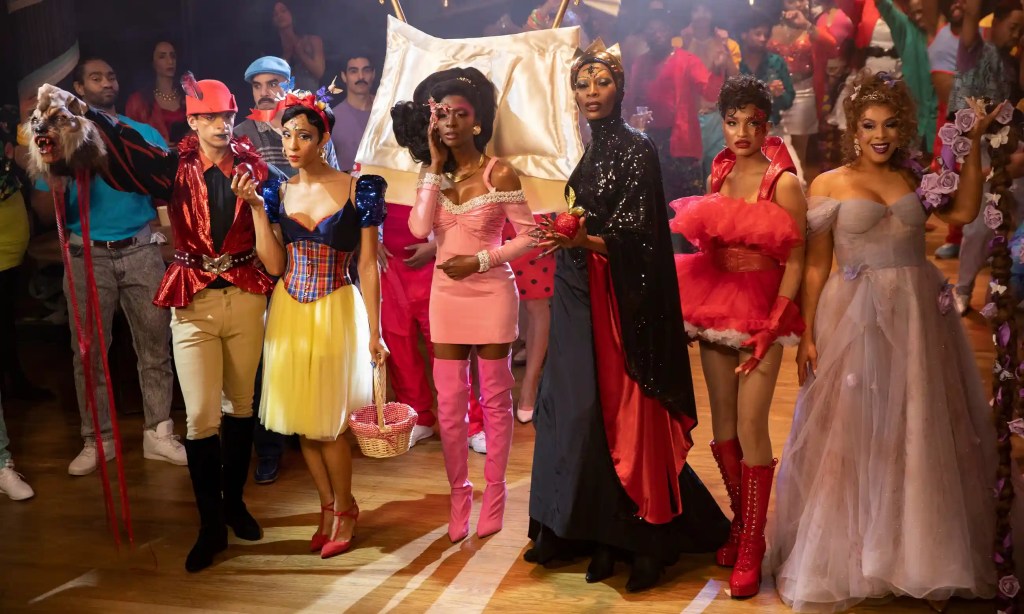
It is such pervasive sameness of television representation between 1990s and 2000s that some recent TV series try to challenge and make a change. A good example is FX’s TV series Pose, featuring a large number of trans actors in regular roles compared with previous scripted TV shows in history, with the narrative focusing on the Black, Afro-Latino and Latino trans and queer people who developed ballroom culture in the 1990s. By explicitly presenting these characters’ identities in front of audiences, it provides them a way to better perceive what non-binary and gender non-conforming identities look like. For the future, I think what important is to ensure there are more shows like Pose appeared on our screen led by trans casts and the explorations of the characters’ identities aren’t grounded by social media opinion or fan theory. The inclusion of trans or non-binary identities on television is still an ongoing journey to let more people familiarize and normalize them.
Reference:
Davies, RT (2019), Q&A with Russell T Davies and actors Craig Kelly and Denise Black, chaired by Gay Rights Activist and BBC 6 Music DJ Tom Robinson. TV Gamechanger: Queer as Folk.
Wallace, L.L. (2022), How Queer as Folk Became the Defining Gay TV Show of a Generation—Twice. Available at: https://time.com/6188510/queer-as-folk-gay-television/.
Sia (Xinyi Ji) -33729902
30/11/2022
 Digital Audiovisual Media Class Blog
Leave a comment