
When Instagram first took stage in 2010, it was a revolutionary platform, designed just for sharing photos with minimal write-ups so your friends and family could follow your life. Yes, you could do it on Facebook as well, but having something so specifically catered to one niche of social media changed the game completely. Instagram sought to take over from FB as the undisputed best social networking platform in the world, but it has since become the very thing it sought to destroy.
As of 2022, Instagram is a hyper mush of Facebook, Snapchat, YouTube, WhatsApp, eBay and most importantly, TikTok. As it stands, Insta is no longer a photo-sharing platform. If anything, it has ripped off concepts off TikTok, and has become a video-first media outlet. Every single video posted on it takes the form of a reel, which is pretty much the only content people consume nowadays. Reels are short-format videos that first emerged on platforms like Musically. They were made famous by TikTok, but are now the foremost content consumed on Insta as well. They are easier to grasp, and easier to navigate, and you can take in a much more amount of content in a shorter time. Not to forget, extremely entertaining as well.
And while most of these videos – sometimes as little as 10 to 15 seconds – are a hit-and-miss for me, the idea of short films in this format have taken me by storm. Films that are so short they are essentially ‘microfilms’. Instagram creators like @americanbaron, @writtenanddirectedbyhano, and @dannijuhl, especially, have come up with content that resonates with me – and evidently a lot others, – the most. They try to wrestle with largely serious themes in their works – questions of morality, existence, passions, originality, casual racism, happiness, and much more. At the same time, much like actual movies, they try to mix their stuff with humour every once in a while. These videos help bring up both, questions and answers, in everyday life and often things even full-fledged films cannot. Further, shorter videos also mean that they can address more topics, create more content, while keeping the punchline and the crux of the theme alive.
That said, these three creators, are in no way the same. Often they end up talking about similar topics, but have addressed them in different ways. Hano and Baron, for example, often take up a conversation style, where they create characters that are talking about something philosophical, with a usually open-ended conclusion. However, their aesthetics are largely varying. Baron is far from casual; he uses similar placements of shots, keeps things simple, and focuses more on the script. He also includes more elements and genres across one video. Hano’s videos often follow the aesthetic of a dimly lit room, driven by his powerful baritone. Further, contrary to Baron, Hano does not experiment a lot with characters, often using the same person on both sides of the conversation. Hano’s scripts are also far more subtle, and he keeps conclusions open-ended.
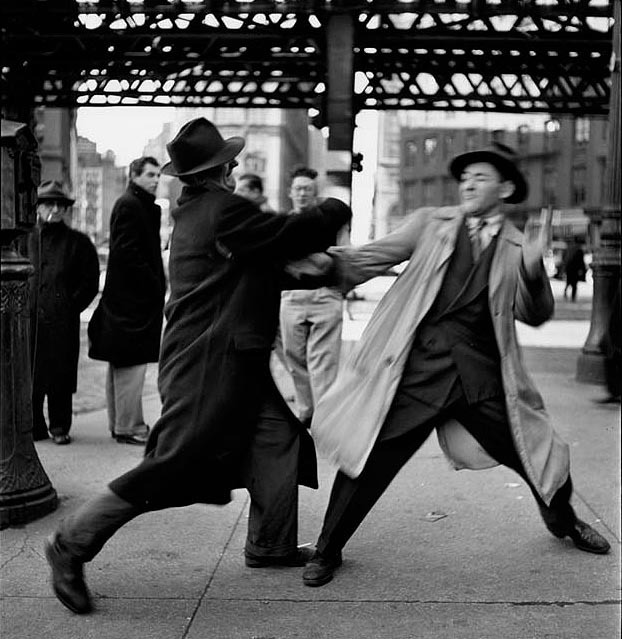
Hano’s goal is to let you stick with the script, not the character, while Baron tries to send his point across in a more relatable way, using mainstay characters, and varying accents. One of the videos of the former that stuck with me questions patience and dignity – or the lack thereof – in humans. Using a photo of two ‘dapper gentlemen’ fighting, clicked by Elliott Erwitt in the 1950s, as reference, Hano questions “how many sheets of decorum and decency exist in our somewhat lubricated society and our naked primal instincts?” While his own conclusion of ‘not too many’ is somewhat pessimistic, it does make you wonder, how much would it take for you to break?
In a much less philosophical manner, Baron uses a lot of loops in his videos, where they end the same way, or with the same frame they started with. He debates the idea of ‘moving to urban to rural areas’ and vice versa in one of them, with no real visual aesthetic quality to it except his ability to play two evidently different genders with ease. The writing, however, is as intriguing as it can be. While people may thing otherwise, he creates an excellent argument about why moving from the city to the country is much more difficult as there is no stimuli in the latter, which creates uncomfortable moments of silence.
In complete contrast to these two, Danni avoids the conversation equation altogether and focuses on narration or element-based stories. She is an evident master of cinematography and is able to draw in the attention of the viewer using powerful visuals and framing. Her transitions are smooth, the cuts quick and sharp, and the lighting-colour grading almost always pleasing to the eye. In one of her latest works, for example, Danni explores the question of reinvention, where she talks about how materialistic things – in this case, Oxford shoes – are enough to change a person, even temporarily, for the better. The video has no dialogue, but a continuous narration over some of the most brilliant shots you will ever see in a 9:16 aesthetic. The post-production work in her videos, too, is quite different compared to the other two, and follows complimentary grading – colours that work well with each other.

These microfilms are pretty much the only reels I can consume without feeling guilt at this point. And as someone aspiring to be a filmmaker, it gives me hope that there might just be a tiny speck of space left for me in this ever-shortening, but growing industry.
Written by Udhav Arora (33766290)
 Digital Audiovisual Media Class Blog
Leave a comment