
Skam – or Shame – tells the story of the students of the Hartwig-Nissens School in a fairly affluent, middle-class suburb of the capital Oslo. Her story is structured so that each season focuses on a different character from its large cast, telling their story only through their eyes. This structure serves to explore the different sources of shame for the individual protagonists. It also allows the viewer to get a first-hand perspective on how the real experiences of different personalities, religions, and people for example (LGBTQ+ people) differ and makes it more immersive.
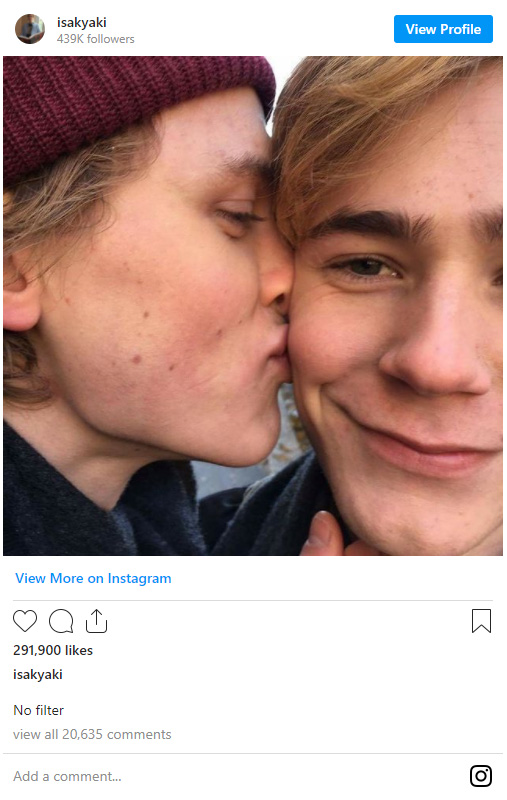
Skam is more than just a TV show, it is an immersive experience, with online trailer segments featuring supposed text screenshots between the main characters and active Instagram accounts providing content to its rapt audience before the full episode is posted online on Friday. This model is an innovative one that evolved from the growth of emerging media, one that contributed to skam’s success, even if at the time the episode didn’t have much official marketing with legitimate English subtitles, and its model was specifically that the narrative was also told through social media, including messenger chats from the characters and Instagram updates with screenshots. This was all posted on a unique webpage skam.p3.no and organized as a social media feed. The most innovative aspect of the show is that viewers can watch the story unfold in real time. (Rustad, 2018)
As Dana Boyd writes: “Just as shared television consumption once allowed adolescents to see themselves as interconnected through mass media, social media allows contemporary adolescents to conceive of themselves as part of a collective imaginary community” (2014: 9). Rustad.
This is what a hit show looks like in the internet age, a television show that rises to the top out of the power of marketing. sam’s success has also prompted a series of thoughts on social media practices; does the combination of drama and social media practices make certain shows better received by audiences, and in the process can we continue to look for new models for creating drama?
Meanwhile, the third season, the one that really saw the show explode internationally, featured Isaac
–who struggles to come to terms with his sexuality when he falls in love with newcomer Evan (Henrik Holm). Isak Walters (Season 3, Episode 6)
From Isak’s perspective, the shyness, insecurity, and fear of revealing his sexuality that he shows at the beginning of the season is very much in line with the realities of the LGBTQ+ community, especially as a teenager, and the growth and changes he undergoes as he goes through a series of psychological and conflicting experiences that this community has to go through. The story of Isaac and Evan is not overly dramatic and overly naked like the usual LGBTQ+ storylines, it is exactly what one would like to see, their story is everyday, simple and real, about everyday things that people go through like, sharing clothes, hugging, about riding bikes, and romantic underwater kisses, confessions, getting to know each other, growing up, discussing and sharing everyday learning and Growing up, discussing and sharing everyday learning life while also learning from each other what it means to love each other, overall it’s a beautiful story that is refreshing and refreshing for the LGBTQ+ community who need stories like this without exaggerated drama, but plain and real episodes that are a positive portrayal for them without stereotypes, so skam season 3 is a great way for the general public and That’s why skam season 3 was such a success for the general public as well as the LGBTQ+ community, and we hope to see more episodes like this, without prejudice and stubborn personal opinions, but simply presenting the real story in front of everyone, so that we can truly understand the diversity of the world and the acceptance of different groups.
As the protagonist says.
“I want my life to be real. Even though it will be absolutely awful at times, that’s still way better than for everything to be fake and boring.”
– Isak Valtersen (Season 3, Episode 10)
Reference
Rustad, G. (2018). Skam (NRK, 2015–17) and the rhythms of reception of digital television. Critical Studies in Television, 13(4), 505-509.
Dias, V. C. (2014). boyd, danah.(2014). It’s complicated: the social lives of networked teens. New Haven; London: Yale Universit Press. Psicologia em Revista, 20(3), 624-627.
by Zhiqing Cao (ID:33722458) 29/11/2022
 Digital Audiovisual Media Class Blog
Leave a comment