In chapter 2.2 of Post-Cinema: Theorizing 21st-century Film (2016) Shaviro describes how ‘modulation’, a technical aspect of ‘post-cinematic’ footage, extends beyond existing as an editing technique and permeates the economic and social segments of cinema. Throughout the chapter, Shaviro, uses the example of Grace Jones’ two-toned music video from 2008 entitled Corporate Cannibal. Jones’ face and body lose their natural form and become digitally distorted free flowing entities in this video. This ‘modulation’ renders Jones formless – she ceases to follow any definitive mould, much like cinemas current checkpoint in its ontology.
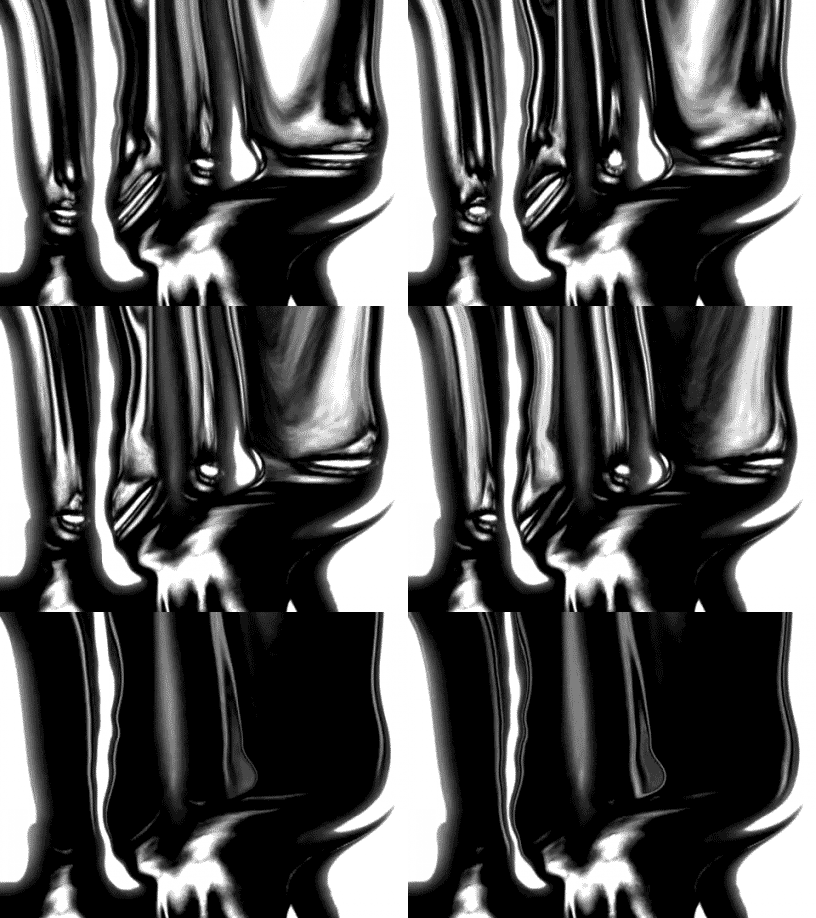
A GIF FROM CORPORATE CANNIBAL (2008)
French philosopher, Deleuze, defines modulation as ‘a sieve whose mesh varies from one point to another’ (Deleuze, 1957). The traditional definition of modulation concerns the world of electrics, telecommunication and sonics. Deleuze’s definition concerns the world of philosophy, sociology and art. In Corporate Cannibal, Grace Jones’ ‘mesh varies’ as her body is modulated by digital effects applied in post-production – much like how Cinema went through a series of modulations that birthed ‘Post-Cinema’.
In Post-Cinematic films tropes and practices of traditional filmmaking are stretched and reinvented and subverted. Whether it’s Gaspar Noe telling a story in reverse to wring more emotion out of the audience in Irreversible (2002), or Chris Marker making La Jetée (1962) – a motion picture – entirely out of still images, the moulds formed by the practices of traditional cinema are proven to not be forever.

A CANTED ANGLED STILL FROM GASPAR NOE’S IRREVERSIBLE (2002) SUGGESTING DANGER.
In this Foucauldian post-Fordist state, the only fixed requirement for Cinema is for it to be rapidly adaptable. For example, techniques such as continuity editing are widely recognised to be intrinsic to Cinema, however, the mould of continuity editing has been smashed by post-Cinema in which avant-garde perspectives and executions of continuity editing are held to high regard – examples such as Black Mirror’s 2018 interactive episode Bandersnatch or Kwan and Scheinhert’s multidimensional 2022 film Everything Everywhere All At Once testify.
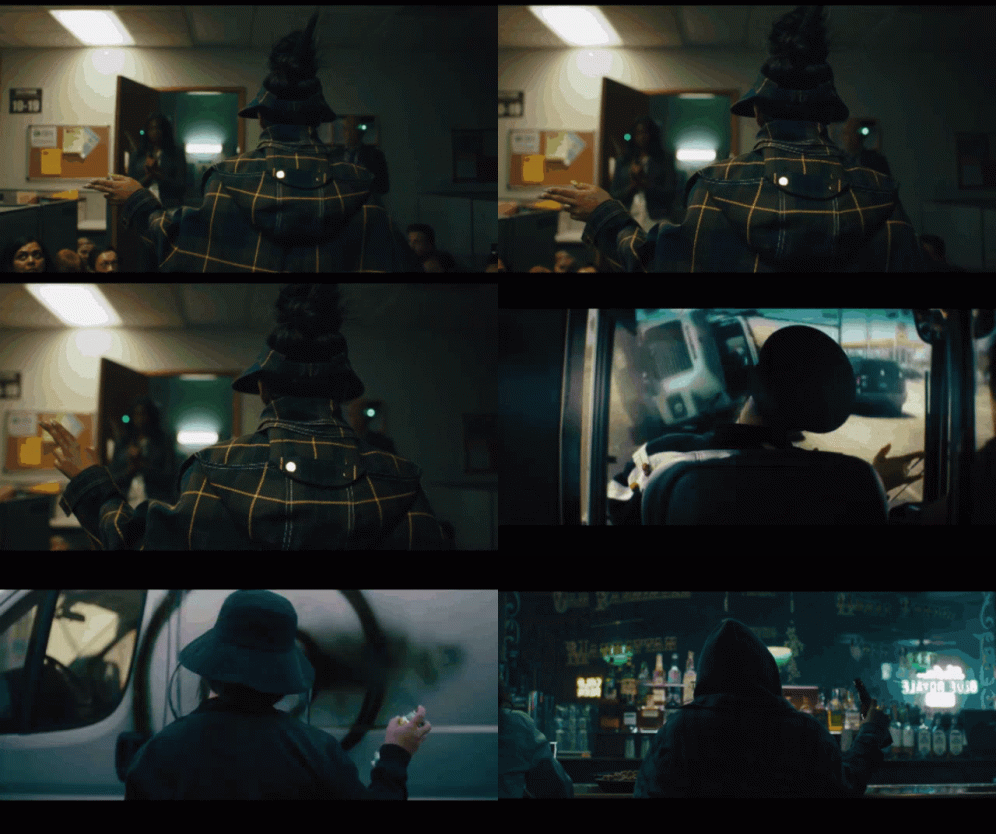
A GIF SHOWING THE INTERDIMENSIONALITY IN SCHEINHERT’S EVERYTHING EVERYWHERE ALL AT ONCE (2022)
BY ELORM KWESI AHORSU
14/10/2022
 Digital Audiovisual Media Class Blog
Leave a comment