Francesco Casetti’s concept of ‘relocation’ from his book, ‘The Lumière Galaxy’, is a powerful idea regarding the evolving landscape of cinema in recent times. It serves to describe and understand how cinema has evolved beyond its traditional confines, reshaping our understanding of the medium and its impact on our lives.
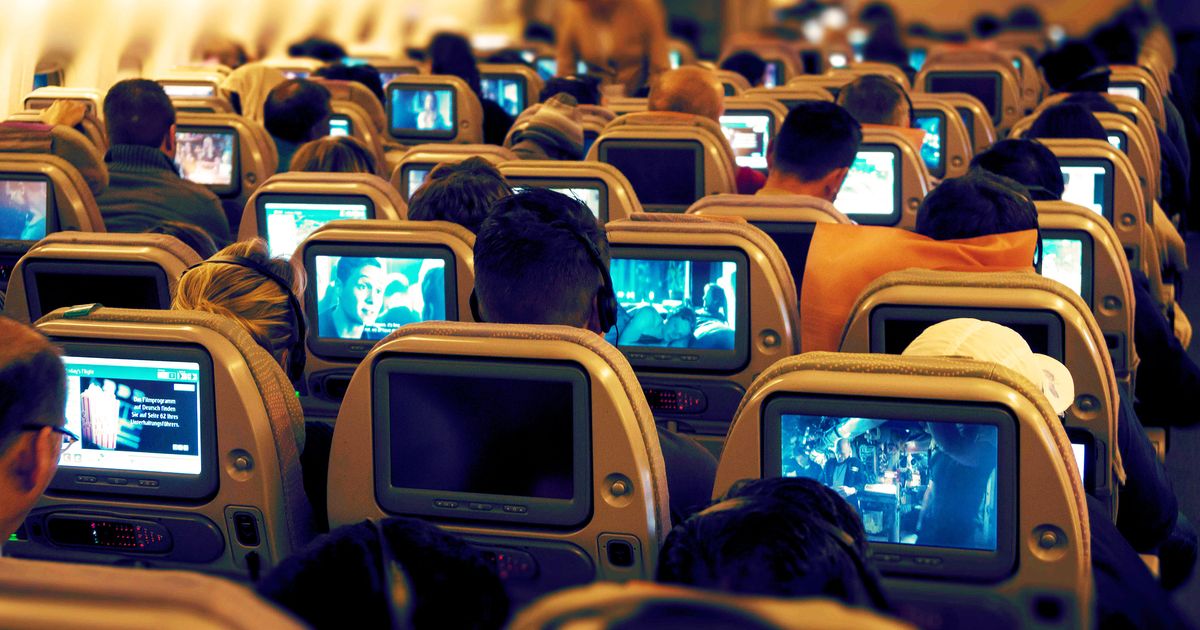
The foundation of relocation as a concept, is that, ‘The cinematic experience can arise even outside of the traditional darkened theater, thanks to other devices, and though it is certainly not the same, it still retains many of its characteristic traits’ (Casetti, 2015. p20). Essentially, Casetti argues that cinema as a medium has evolved, largely due to new technologies that allow us a different kind of cinema experience; for example, watching movies at home on a laptop, or on a small screen on an aeroplane, rather than the traditional theatre setting. However, he states that these experiences are still cinema as they preserve the core characteristics, and as such it is an evolution of the medium – not something entirely different. For example, watching a film on a plane is not too dissimilar to the cinema experience, I would argue; as you are in an enclosed space, the lights are dimmed, you have headphones for clear audio, and often you are watching the same film at the same time as others in the space – it’s a shared experience with elements similar to the cinema itself.
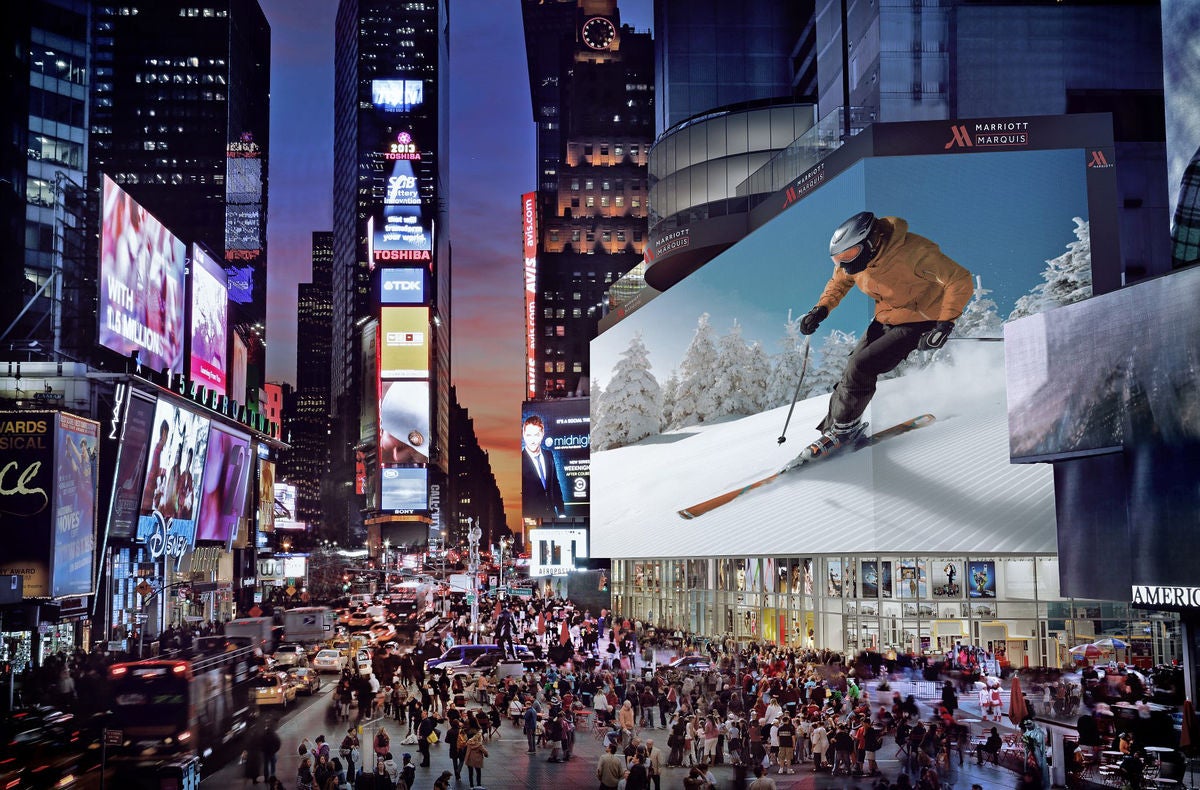
This process is closely linked to broader technological developments in society which have given way for cinema to expand and thrive in new environments, as Casetti states, ‘The enormous diffusion of screens in our daily life… brings with it a greater presence of cinema’ (Casetti, 2015. p19). As such, the multitude of screens that we encounter in both domestic and urban life, have reshaped the cinematic experience whilst also surrounding us with it: ‘We encountered it, in disguise, in waiting rooms, stores, public squares, along streets, and on urban media façades’ (Casetti, 2015. p19).
In conclusion, ‘relocation’ in cinema, as defined by Francesco Casetti, illustrates how the medium has moved beyond its historical boundaries, adapting to new devices, environments, and experiences. Cinema’s migration to new contexts reshapes our understanding of the medium, emphasizing its dynamic and ever-evolving nature. Whilst some may argue that cinema as we know it is dying, the theory of relocation suggests it is actually thriving more than ever.
Written by: George Bentley
Bibliography:
Casetti, F. (2015). Lumière Galaxy: Seven Key Words for the Cinema to Come. Columbia University Press. (pp. 17-42)
 Digital Audiovisual Media Class Blog
Leave a comment