The main-stream media has been changing from cinema and television to online streaming services and social media. While the specific characteristics of cinema and television are slowly moulding together with these contemporary media, which “emphasize that they are essentially digital, interactive, networked, ludic, miniaturized, mobile, social, processual, algorithmic, aggregative, environmental, or convergent, among other things” (Denson and Leyda, 2016).
The transition from analogue to digital technology in cinema has greatly impacted production, exhibition, and consumption. This shift is seen as the emergence of “new media,” which maintain elements from older forms but transform them in unique ways. Lev Manovich explores the adoption of a new database approach influenced by montage filmmakers like Dziga Vertov. Conversely, David Rodowick emphasizes how digitization loses the indexical and ontological qualities present in analog formats. Overall, this transformation has led to a significant change in the cinematic apparatus. While film is disappearing in its traditional form, digital cinema still exists but falls short aesthetically compared to its predecessor.
More recent theorizations have viewed digital cinema aa post-cinema, the perspective which was initially developed by Sean Cubitt in “The Cinema Effect.” According to Cubitt, cinematic effects can be found everywhere as the traditional cinematic apparatus undergoes technical transformations, arguing that film is no longer a time-based medium in contemporary Hollywood blockbusters. Instead, movement within the space of baroque spectacle takes precedence. Recent theories propose the concept of “post-cinema” to understand contemporary moving images.

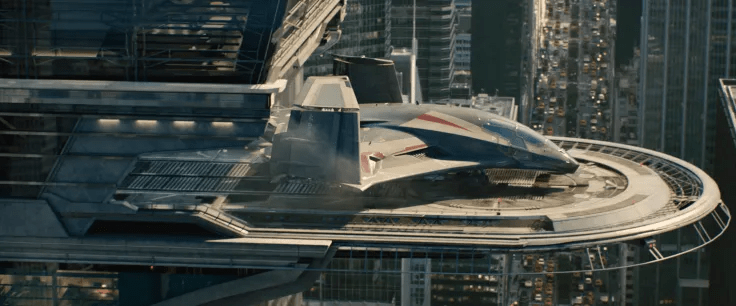
Post-cinema highlights the ongoing historical transition and challenges us to consider how emerging media shape our cultural forms. It prompts us to think beyond novelty and recognize the interactions between post-cinematic media and our inherited traditions. For example in “Avengers: Age of Ultron”, the film combines traditional film technique by employing narrative along with visual effects. However, the heavy reliance on digital effects in the film combines other forms of media within the film, creating a post-cinematic experience which blurs the boundaries between film, video game and other forms of media.
Denson, S. and Leyda, J. (2016). Perspectives on Post-Cinema: An Introduction.
Avengers: Age of Ultron. (2015). Marvel Studios.
33702665
 Digital Audiovisual Media Class Blog
Leave a comment