Last year I completed my BA Sociology dissertation focussing on the embodied experiences of gender from the personal accounts of transgender individuals. Using arts based research, participants created two “visual representations of [their] gender identity,” (Burgess 2023:2) from both their perspective, and the perspective of wider society. As such, the two drawings produced by each participant were strikingly contrast; while visual representations of participants self-constructed gender identity were expressive and abstract, visual representations of participants socially constructed gender identity blended both realist portraiture and absurdist caricature.
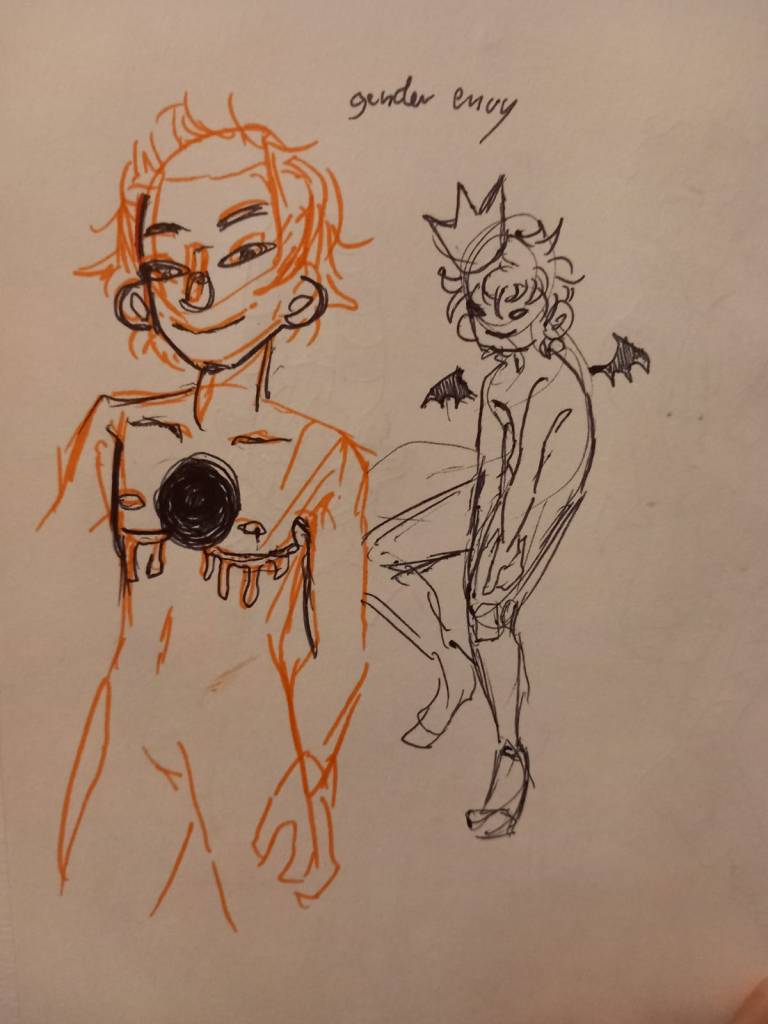
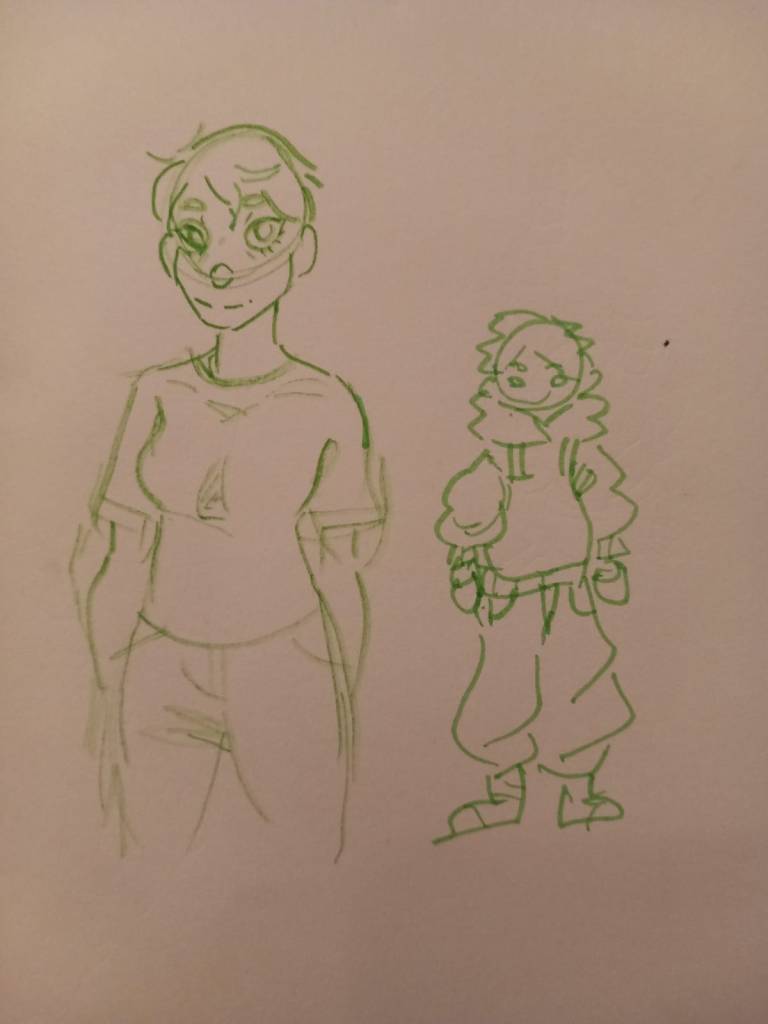
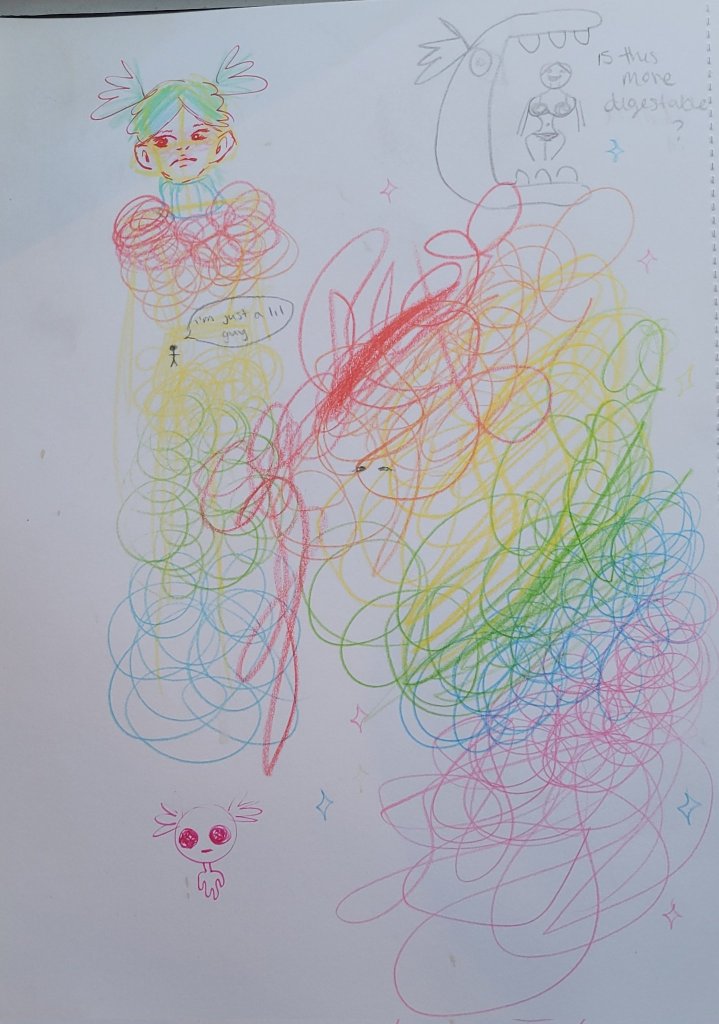
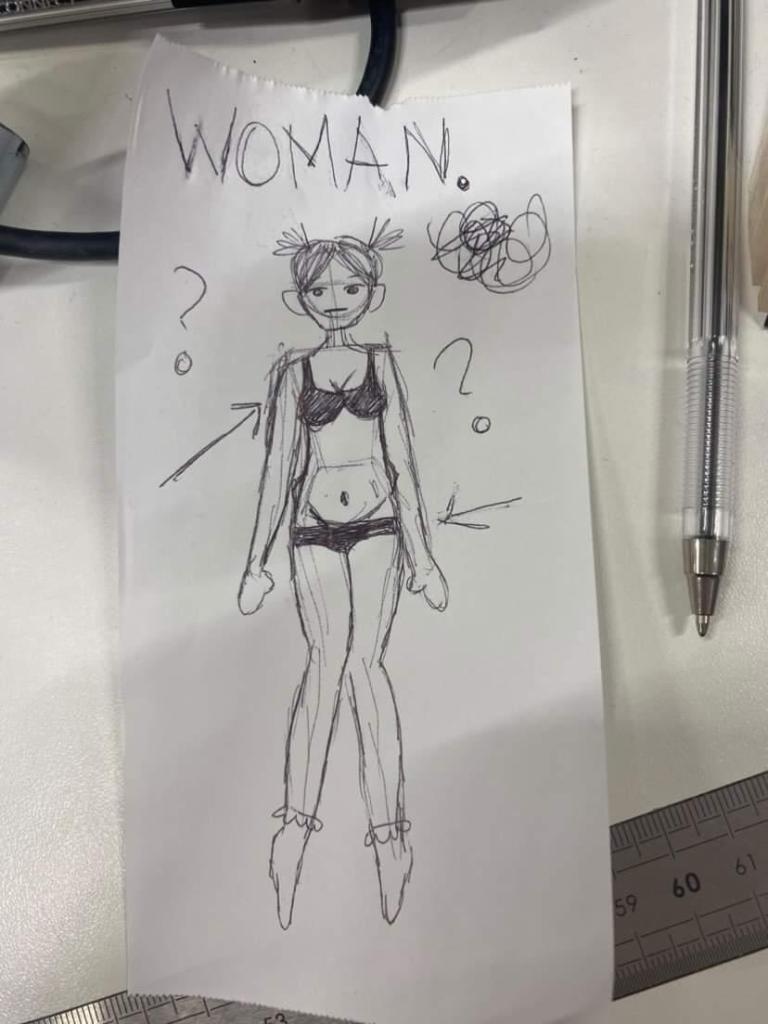
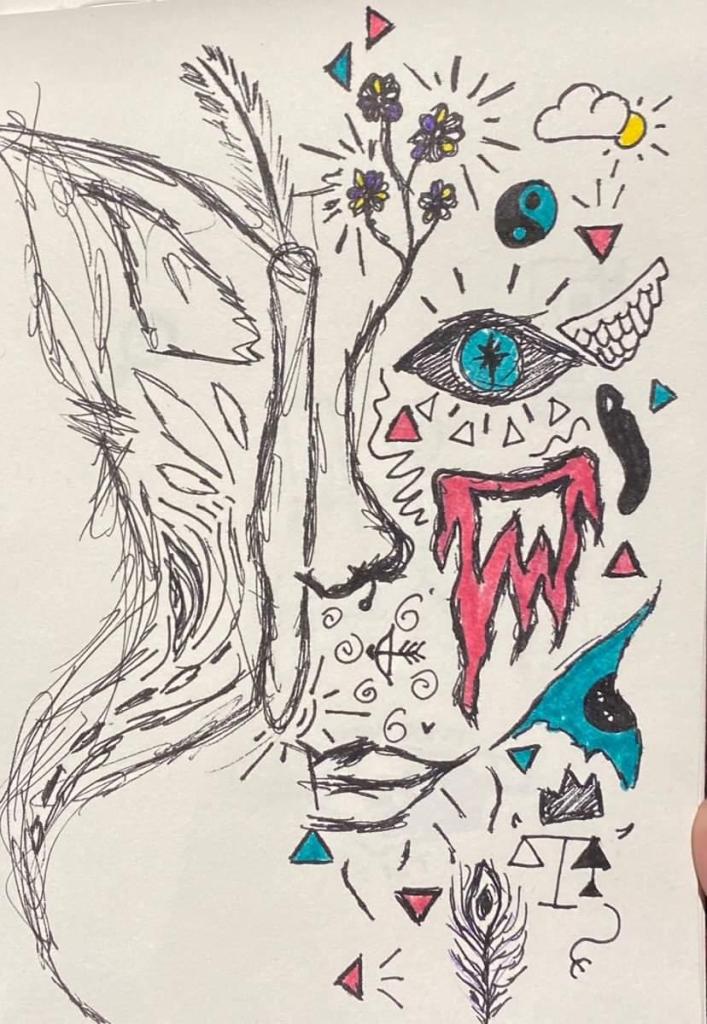
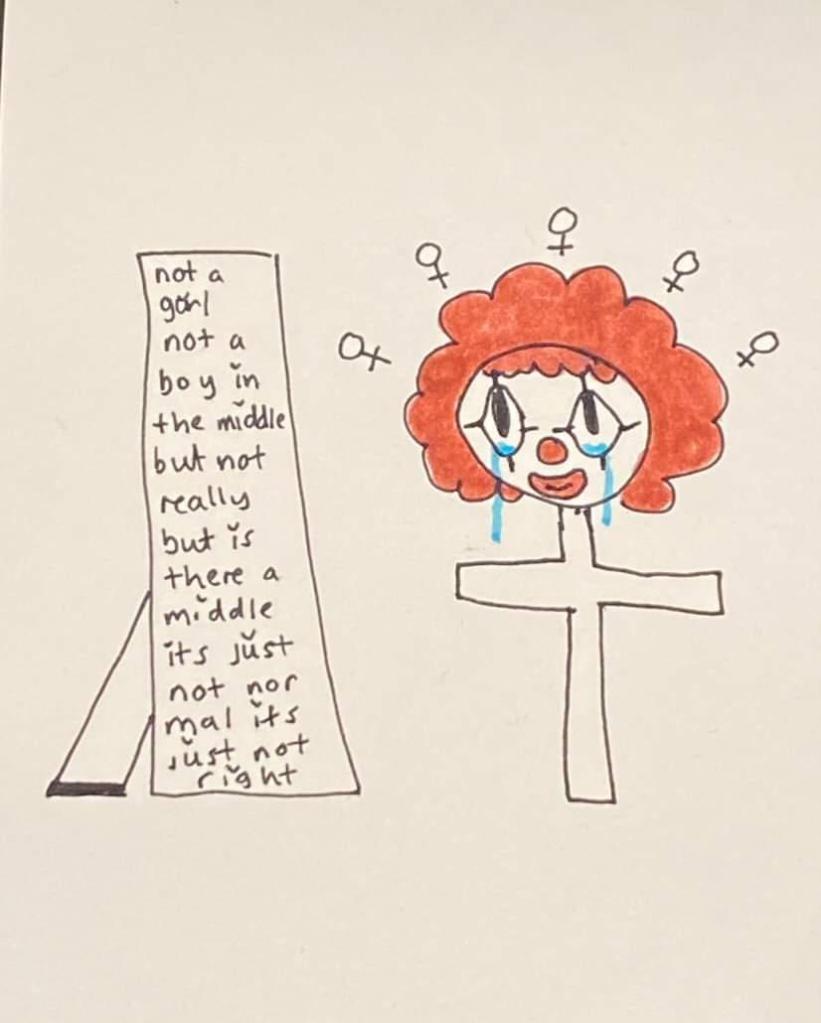
I argue that this method of arts based research in the field of gender studies helps reveal a valuable distinction between the embodied and lived experiences of gender transition, as well as how gender is both a personally understood, as well as socially mediated category of difference. I highlight the abstraction these visual representations of self extend to as I believe they concisely reflect the “spectrum of transgenderism”.
Michael Goddard and Christopher Hogg (2018) interlink this topic within their dossier ‘Trans TV as concept and intervention into contemporary television’, wherein they explore the title’s namesake Trans TV as a study of “empirical industry” of television with the “representational approach” of screening “non-heteronormative characters, narratives and viewer experiences.” (Goddard & Hogg 2018: 471)
The character Jules in HBO produced show ‘Euphoria’ (2019) faced both praise and criticism during the show’s run-time. Much of the criticism that argued Jules represented an ultimately exploitative presentation of transgender individuals was deflected by trans actress Hunter Schafer assuming the role. It can be argued still however, that despite the positive positioning of the authentic casting the role of Jules provided, of which other shows featuring trans representation have failed such as ‘Transparent’ (2014 – 2019), the character remains a caricature of socially constructed gender presentation.
As Goddard & Hogg suggest “television is undergoing a process of transformation,” (2018) wherein TV aesthetics have shifted over time along with the the theoretical, and material developments of television. However, they have been paid less attention as studies have typically been oriented toward the material reality of technological development or visually representational media.
“New directions in television production and distribution [..] provide creative freedom for artists, and could also allow for a more diverse space of representation across the landscape of what we are for now still calling ‘television’.”
(Goddard & Hogg 2018: 472, citing Lynch & Scarlata 2017)
To contribute to the discussion of Trans TV, one conclusion can be drawn that not all representations of trans characters accurately reflect the lived reality of those with transgender, or other non-normative, identities. This supposes that positive representation is key in transing the narrative of contemporary television so that it is more authentic, but one should still consider and critique how the notion of ‘television’ has transformed, while the language surrounding it has largely remained the same.
– Red Burgess –
———————————————————————–
References
Burgess, R. (2023) How do social constructions of gender simultaneously contribute to both the misrecognition & formation of transgender identities?.
Goddard, M. & Hogg, C. (2018) Introduction: Trans TV as concept and intervention into contemporary television. Critical Studies in Television 13:4.
Lynch & Scarlata (2017)
Goddard, M. & Hogg, C. (2018) Trans TV dossier, III: Trans TV re-evaluated. Critical Studies in Television 15:3.
 Digital Audiovisual Media Class Blog
Leave a comment