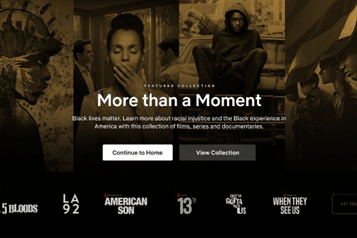
Netflix attempted to become allies with the BLM movement after the murder of George Floyd by creating a new genre for its interface named Black Lives Matter, which aimed to…“only begin to tell the complex and layered stories about racial injustice and Blackness in America.” (Twitter, Netflix) Netflix has created many black original series such as 13th, When They See Us or Dear White People that aim to bring awareness to the plight of black Americans, but why now?
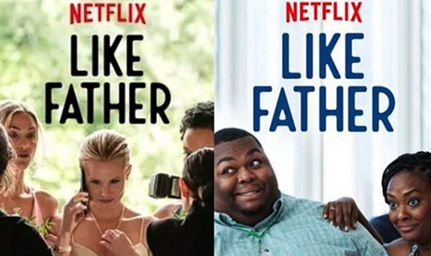
Breaking out of the network era has allowed platforms such as Netflix to become the standard for television engagement, we now get to control the content we want to watch and more ethnic groups are represented compared to the regime of network television. Though their intentions are admirable, there have been past controversies over Netflix’s false advertising within its algorithm, The thumbnails for shows on Netflix once changed to fit within your personal viewing history in order to cater to personal interests.
Many black people on social media argued that Netflix tricked them with films where black actors had very minuscule roles in white-centric movies that appeared on the thumbnail. As Amanda Lotz states “Portals are characterized by more than their program content, but also the features of their interface” (Lotz,2017). The film industry has a history of employing “token” blacks, so though they are trying to be diverse with their marketing I believe this algorithm had a more negative impact than a positive one. “the problem is “not in what we’re being shown, but in what we’re not being shown. . . . [I]t’s not until you express specific interest in ‘black’ content that you see how much of it Netflix has to offer. “[T]o the new viewer, whose preferences aren’t yet logged and tracked by Netflix’s algorithm, ‘black’ movies and shows are, for the most part, hidden from view.” (Joyner, 2016)
I would make the argument that it shouldn’t have taken a tragic loss for Netflix to directly market towards black viewers interests, currently there is a genre called “black stories” and I commend Netflix for its diverse screenings, but people and the technologies they code still have a long way to go.
By Miles Mitchell
Joyner, April. “Blackflix.” Marie Claire, Marie Claire, 29 Feb. 2016, http://www.marieclaire.com/culture/a18817/netflix-algorithms-black-movies/.
Lotz, Amanda D. Portals : A Treatise on Internet-Distributed Television. Ann Arbor, Mich., Maize Books, An Imprint Of Michigan Publishing, 2017.
 Digital Audiovisual Media Class Blog
Leave a comment