The first broadcast on MTV commenced in 1981 (Arnold, 2017:17) with the advent of MTV (Music Television). Carol Vernallis outlines, in her book “Music Video’s Second Aesthetic,” the various transformations from the 1980s to the present day and its rhythmic subtlety being an important aspect that has been transformed by DI (digital intermediate), “a process that came into common use only after 2005” (Shaviro, 2017:13). I will examine this significant aspect of evolution using Billie Eilish’s music video “NDA” (2021) as a case study to explore how the implementation of DI has impacted the transformation of the music video, particularly in terms of rhythm, flow, and editing.
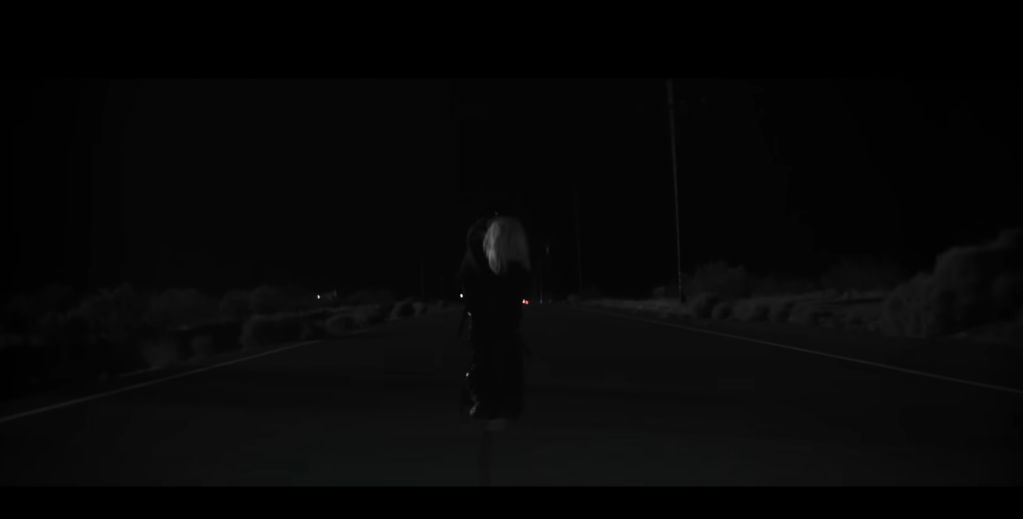
To begin with, rhythmic subtlety faced challenges in the 1980s due to technological limitations, with video clips predominantly edited on video, often without timecode (Vernallis, 2013:217). Currently, artists can synchronize the rhythm of the video with the music, emphasizing the seamless integration of sound and image (Vernallis, 2013:209). For example, Billie Eilish in “NDA” passes down a dark highway dressed entirely in black. Obscure figures in the background follow her and then vanish perfectly on time when she glances back. This unfolds as she continues to walk along the road, creating a sense of unease as the shot length is surprisingly precise.
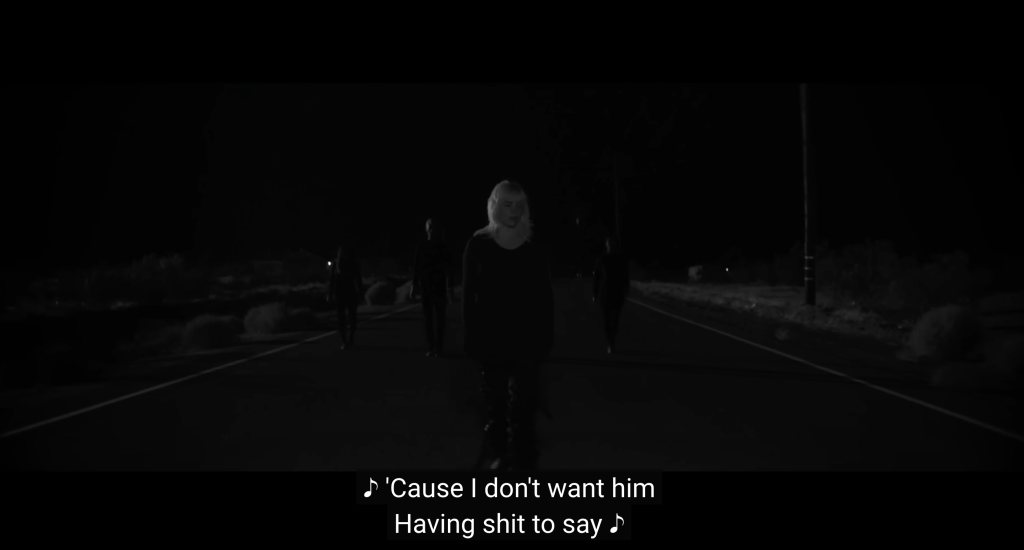

Moreover, she delivers the chorus, which is synchronised with the accelerated movement of cars zooming past her in the dark in the music video, intensifying the dramatic effect and infusing adrenaline and anxiety into the scene.
In addition, following the music’s diminuendo at 1.16, beats align with the tact of the music, and the camera begins to shake, evoking a sensation akin to a heartbeat.
Furthermore, Billie Eilish stops singing at 1.25 seconds, which corresponds to a pause in her physical movement—a notable example of efficient shot length management in conjunction with music in the video.
In summary, I analyzed Billie Eilish’s music video “NDA,” which skillfully achieves a seamless rhythmic subtlety through careful shot lengths and precise frame counts. This results in a sequence that induces a feeling of discomfort, aligning with both the lyrical content and visual elements of the video. The strategic use of DI played a crucial role in enabling clear framing and rhythmic precision in a contemporary music video.
References:
Shaviro, S. (2017). Digital Music Videos. “Glitch Aesthetics”. Rutgers University Press.
Arnold. G. & Cookney, D. & Fairclough, K. & Goddard, M. (2017). Music/Video: Histories, Aesthetics, Media. “Introduction: The Persistence of The Music Video Form”. Bloomsbury Academic.
Vernallis, C. (2013). Unruly Media: YouTube, Music Video, and The New Digital Cinema. “Music’s Video Second Aesthetic”. Oxford University Press.
Eillish, B. (2021). “NDA.” YouTube, uploaded by Billie Eilish, July 9, 2021, [https://www.youtube.com/watch?v=OORBa32WFcM]. Accessed on November 22, 2023.
 Digital Audiovisual Media Class Blog
Leave a comment