Music videos have experienced an immense transformation as a result of technological developments, particularly in the area of digital media (Arnold, 2017:9). Carol Vernallis draws a comparison between the editing techniques and shot compositions in music videos of the past and present. To illustrate these changes brought about by modern technologies, I will analyse the music video “Look at Her Now” by Selena Gomez (2020).
To begin with, Vernallis notes that shooting styles differ significantly from contemporary methods, and there has been a shift in framing, with some music videos now being shot on cell phones (Vernallis, 2013:218). For example, Selena Gomez’s music video for “Look at Her Now” portrays her engaged in lip-syncing and dancing choreography alongside her team. However, upon closer examination, various advanced visual techniques become apparent. This is evident in the official video on YouTube, where the hashtag #shotoniphone is displayed, and as reported by Billboard, the music video was shot on an 11 iPhone Pro (Mamo, 2019). Additionally, at 00:22 seconds, Selena grabs a camera and starts filming herself, introducing a completely different angle and perspective for viewers, making us closer to her and causing a feeling of unity.
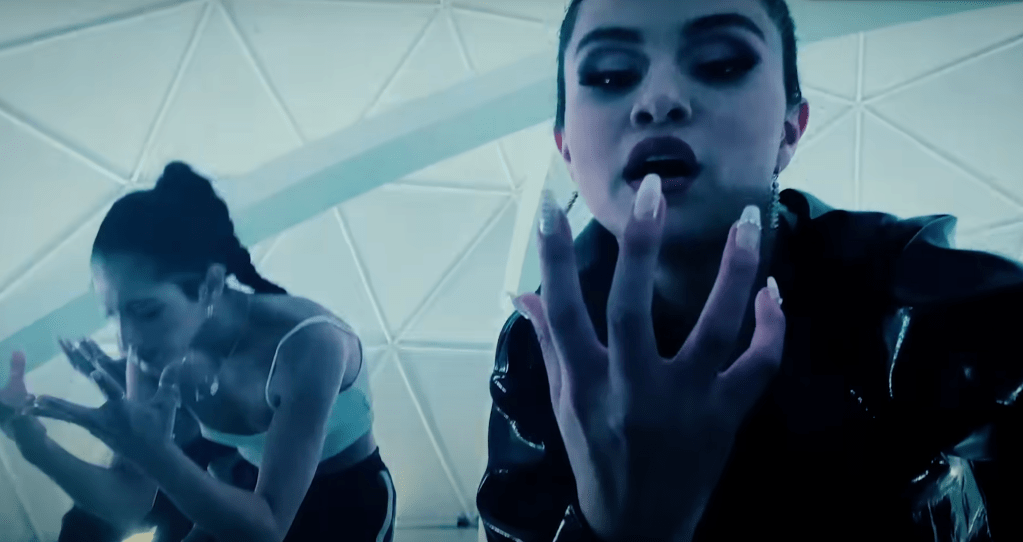
According to Vernallis, the implementation of DI (digital intermediate) employ offer directors flexibility in framing and editing (Vernallis, 2013:218). For instance, during my fourth viewing of the music video, at 2:16 seconds, I noticed a shift in angles facilitated by digital cameras, not effects. This was discernible when playing the video at 0.25x speed. There were five shots of Selena and her team from slightly different angles that looked like a glitch at first. This scene evokes a sense of wholeness and freedom in expression, portraying them from various angles and embracing their imperfections in alignment with the lyrics “wasn’t wrong, wasn’t right, what a thing to be human” (Gomez, 2020).
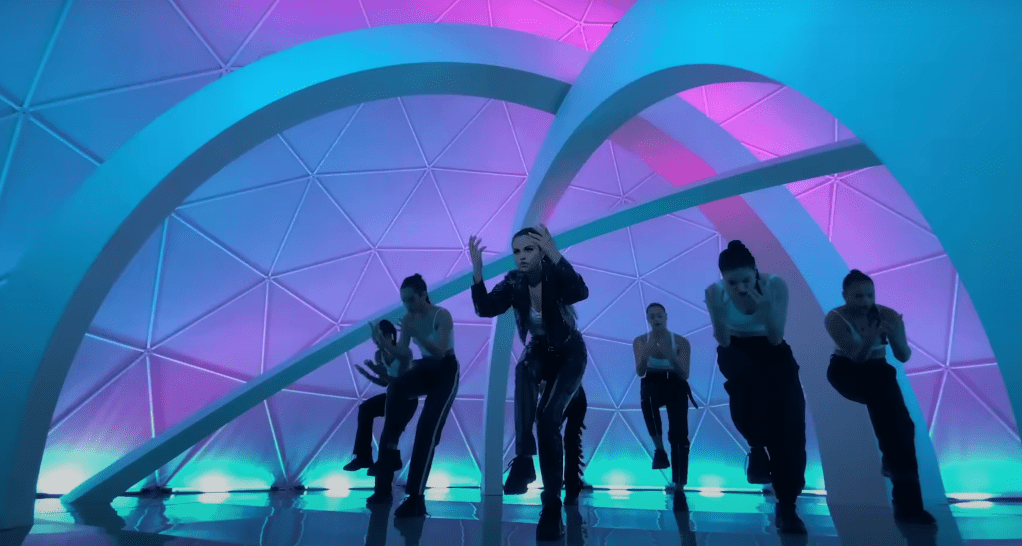


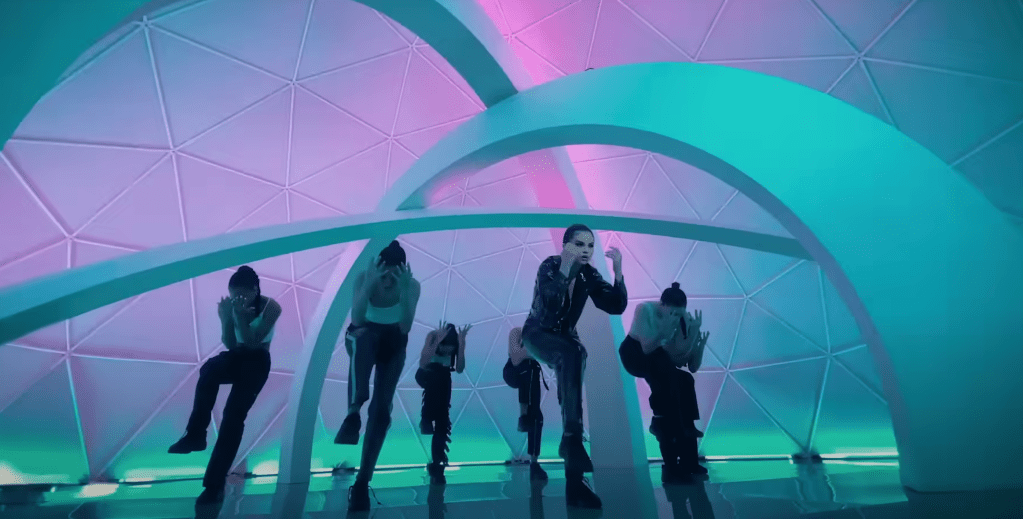
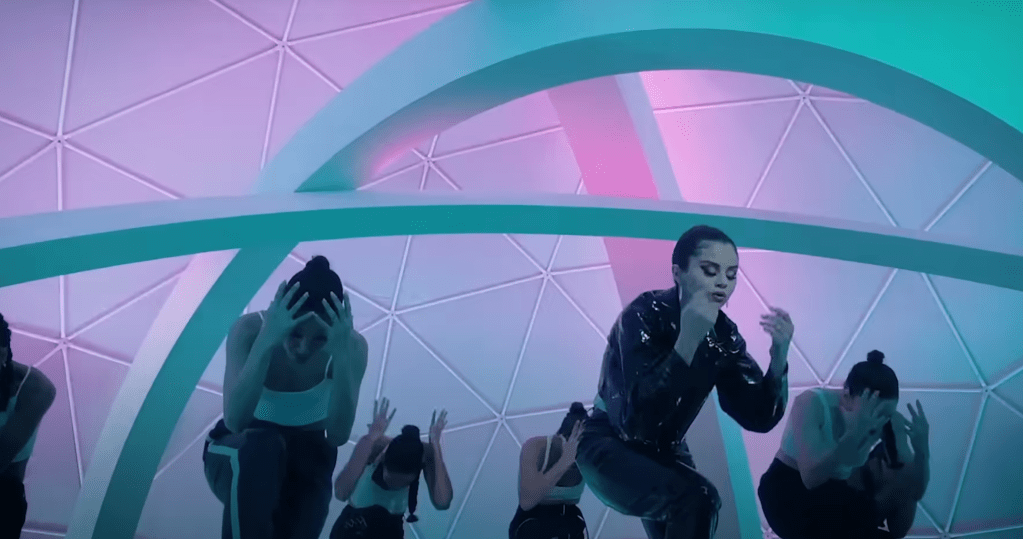
Overall, I analysed Selena’s Gomez music video “Look at her now” and her act of filming herself using a lighter camera, seamlessly integrating DI technologies into establishing shot composition in dancing choreography for editing exemplifies a departure from traditional framing to “digital and electronic time” (Shaviro, 2017:67). Today’s music videos benefit from a more liberated visual language as a result of these modern changes.
References:
Shaviro, S. (2017). Digital Music Videos. “Glitch Aesthetics”. Rutgers University Press.
Arnold. G. & Cookney, D. & Fairclough, K. & Goddard, M. (2017). Music/Video: Histories, Aesthetics, Media. “Introduction: The Persistence of The Music Video Form”. Bloomsbury Academic.
Vernallis, C. (2013). Unruly Media: YouTube, Music Video, and The New Digital Cinema. “Music’s Video Second Aesthetic”. Oxford University Press.
Gomez, S. (2020). “Look At Her Now”. YouTube, uploaded by Selena Gomez, October 24, 2020, [https://www.youtube.com/watch?v=8u-_64S7plI]. Accessed on November 23, 2023.
Mamo, H. (2019). “Selena Gomez Taps Into Her Personal Journey in ‘Lose You to Love Me’ Behind-the-Scenes Video“. Billboard. https://www.billboard.com/music/pop/selena-gomez-lose-you-to-love-me-video-behind-the-scenes-8542738/
 Digital Audiovisual Media Class Blog
Leave a comment