With the rise of technology, past music videos have been able to come alive in the social media age due to apps such as YouTube and TikTok making them more accessible than ever, becoming a meme can be rewarding, with the ability to edit in a moment’s notice, art can now take on a different form than originally intended and potentially enhance it.
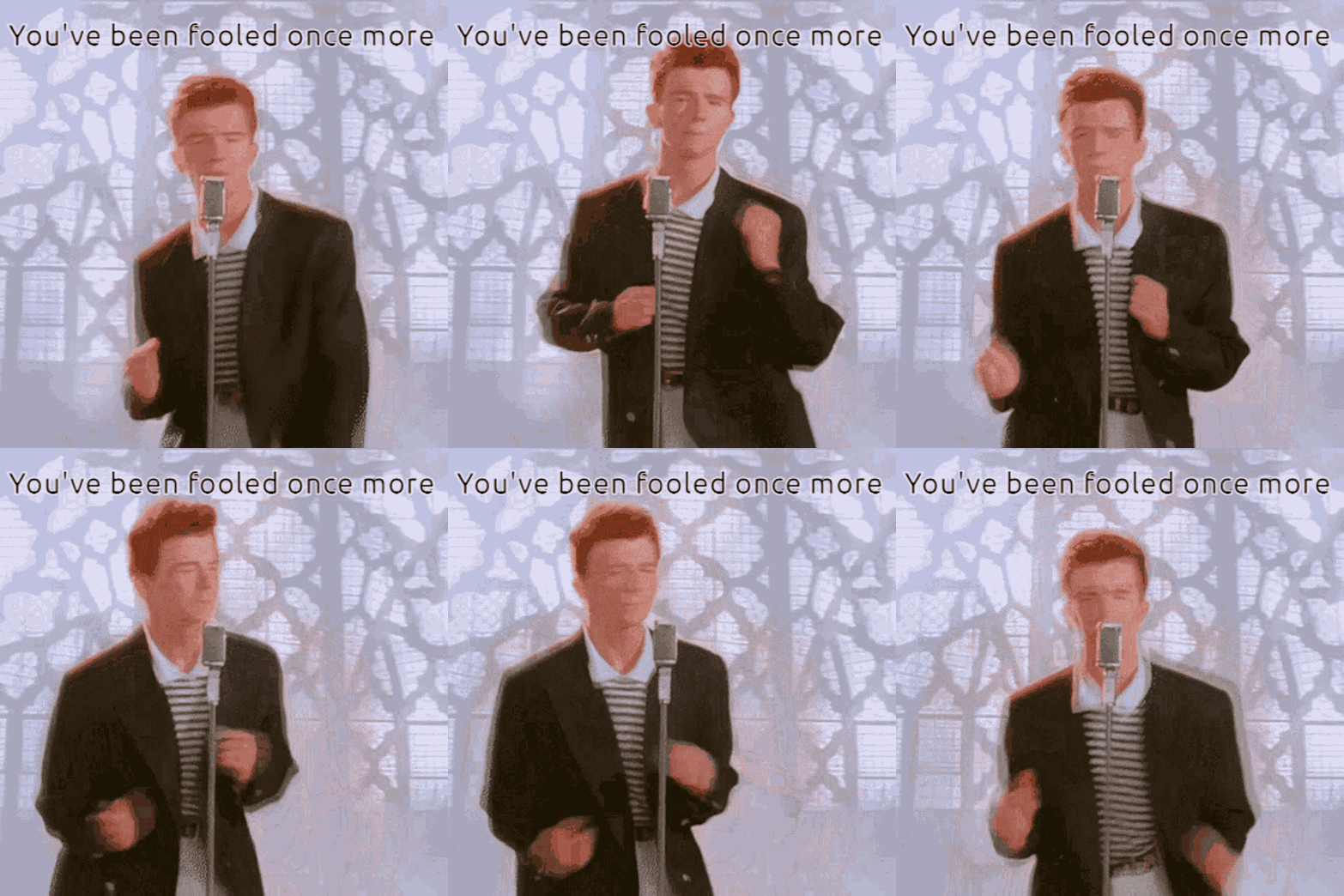
For example Rick Astley’s, “Never gonna give you up” has 1.4 billion views on YouTube! These views were pushed by a term known as rickrolling, where someone tricks you into opening a seemingly unrelated hyperlink which turns out to be Rick dancing rather awkwardly at the beginning of the song’s music video. Due to the rise in popularity, Rick was given the opportunity to tour his music years after his musical prime which was during the MTV era.
Similarly, Drake’s Hotline bling is very popular for memes and it’s no coincidence it is his most viewed music video at 1.9 Billion. When comparing the two videos they are quite plain and feature no narrative, Drake’s features a more artistic outlook with the background constantly changing colour while Rick appears in more realistic settings on the street on a much lower budget. Both have women dancing in separate shots and cut to around 4 different scenes where they change clothes. Arguably the key difference is the intent, I believe Hotline Bling was purposely created to be a meme for the internet, in the social media era it is key to achieving the most sales/views. Though 28 years apart both songs due to meme culture are of the most-watched music videos of all time on YouTube.

Apps like TikTok are able to capture 10-second clips and edit and parody them to create content the creators and artists benefit from. The days of MTV-style videos are slowly fading, we now allow people to push our music with memes or challenges to use as advertising and promotion. So while video killed the radio star it is now making or being made by the social media stars. As described here… “any perceived eradication of the original author is coupled with creation”. “Giving rise to new creative voices and a spate of original, interpretive audio-visual forms” (Cleeve) The rise of the meme has created a new mixing board aesthetic.
Miles Mitchell
Cleeve, Sam. “Music/Video: Histories, Aesthetics, Media. Edited by Gina Arnold, Daniel Cookney, Kirsty Fairclough and Michael Goddard. New York: Bloomsbury, 2017. 311 Pp. ISBN 978-1-5013-1391-2.” Popular Music, vol. 38, no. 01, Jan. 2019, pp. 172–174, https://doi.org/10.1017/s026114301800065x. Accessed 8 Nov. 2021.
 Digital Audiovisual Media Class Blog
Leave a comment