The evolution of watching movies and TV series has undergone significant changes over the years. The traditional method of adhering to a set schedule for televised shows has given way to the influence of digital technologies, allowing viewers to watch content on streaming platforms at different times (Jenner, 2018:2). Netflix has successfully embraced the phenomenon of binge-watching, which involves consuming multiple episodes of a programme through a non-linear TV medium (Jenner, 2018:109). I will examine the impact of this shift in terms of effect on audience engagement, using the example of “Stranger Things” (Duffer & Duffer, 2016).

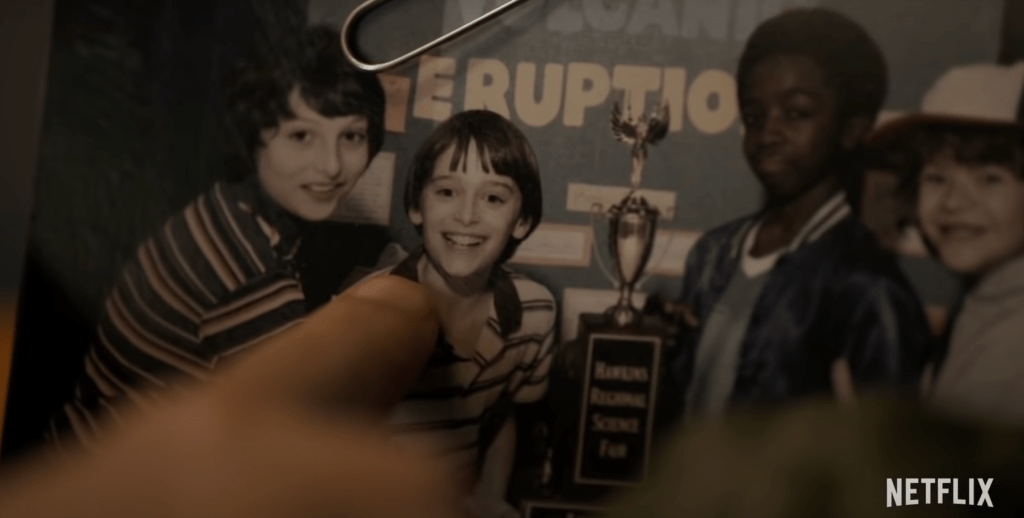
Firstly, I’ve binge-watched “Stranger Things” but visited the screening to remind myself of the show’s brilliance. The series revolves around young teenagers unveiling mysteries in Hawkins. The first season, released on July 15, adopted a binge-watching approach, releasing all episodes at once. This approach heightened viewer involvement and nudges viewers to watch all at once, when contrasted with the linear TV, where episodes were aired one per week (Jenner, 2018:112).
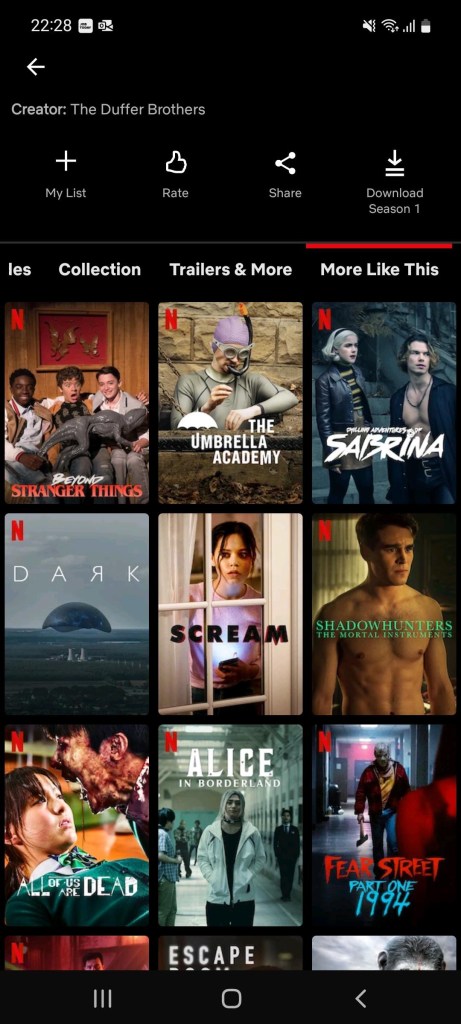
Secondly, Netflix utilizes sophisticated algorithms, analyzing your watched series, like “Stranger Things,” to suggest similar shows (Jenner, 2018:23), such as “The Umbrella Academy” (Blackman, 2019). It accentuates the programs considered relevant to the viewer (Jenner, 2018:110), fostering binge-watching of other TV series, thereby enhancing audience engagement.
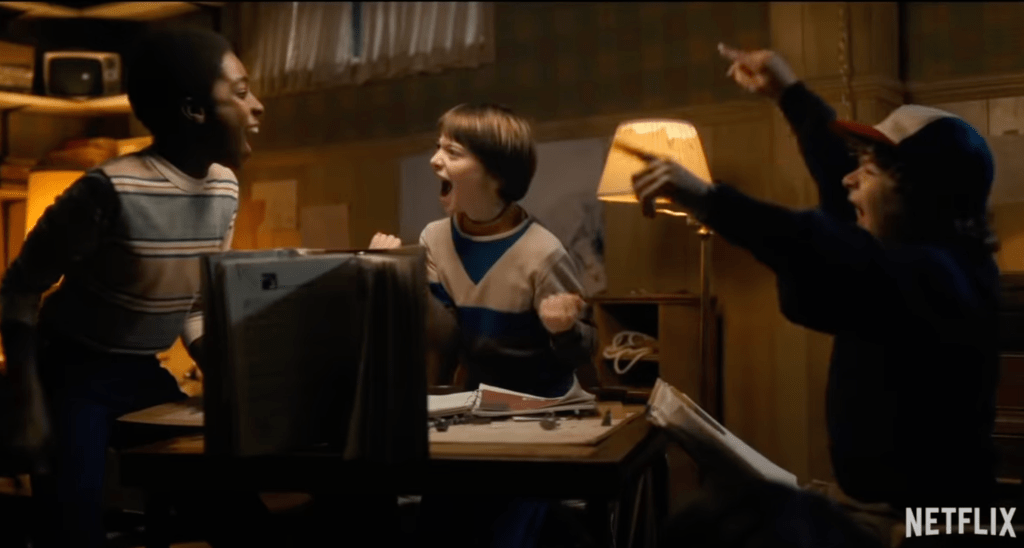
Thirdly, the binge-watching interface on Netflix supports consecutive viewing through features like the “skip intro” button, enabling viewers to easily bypass opening titles (Davidson, 2013:15). This implies that when I watched “Stranger Things“, it became so compelling that we promptly pressed the button to skip titles and continue watching. It underscores the “emotional intensity and story immersion” (McCormick, 2016:101), as, in my perspective, it enabled me to immerse myself in the narrative without any distraction.
Overall, I’ve examined the recent integration of binge-watching using “Stranger Things,” considering the increase in audience engagement facilitated by the new interface, the shift in the release structure with all episodes available at once, and the beneficial algorithms suggesting similar shows.
References:
Blackman, S. (2019). “The Umbrella Academy“. Borderline Entertainment.
Duffer, M., & Duffer, R. (2016). “Stranger Things”. 21 Laps Entertainment.
Jenner, M. (2018). “Netflix and The Re-Invention of Television“. Palgrave Macmillian
Lotz, A. (2017). “Theorizing the Nonlinear Distinction of Internet-Distributed Television“. Maize Books.
McDonald, K. & Smith-Rowsey, D. & McCormick, C. J. (2016). The Netflix Effect: Technology and Entertainment in the 21st Century. “Forward Is the Battle Cry”: Binge-Viewing Netfllx’s House of Cards.”Bloomsbury Academic.
Davison, A. (2013). “The Show Starts Here: Viewers’ Interactions with Recent Television Serials”. SoundEffects.
 Digital Audiovisual Media Class Blog
Leave a comment