There have been transformations in the film industry, nowadays constituting the post-cinematic form (Shaviro, 2010:7). Additionally, a new cinematic approach “chaos cinema” has been introduced, which deviates from the structure of classical narrative movies (Shaviro, 2016:50). The introduction of chaos cinema has sparked debates in the Matthias Stork’s essay. I will examine the chaos cinema by referencing Steven Shaviro’s definition and a video essay by Mattias Stork with my example of “Transformers” (2007).

To begin with, Steven Shaviro defines “chaos cinema”, characterised by extreme angles, shaking cameras, and rapid editing (Shaviro, 2016:51). In Mattias Stork’s video essays, there is an argument that chaos cinema “apes the illiteracy of the modern movie trailer” with the “hysterical climax of a scene” (Stork, 2011).
Firstly, “Transformers” serves as a successful example of chaos cinema with intense action sequences, and it’s crucial to recognise it as a new and experimental filmmaking form that aims to immerse the audience in the experience (Shaviro, 2016:209). Although one might contend that there exists a spatial discontinuity or “space of flows” (Sahviro, 2016: 294), it still manages to give viewers the opportunity to immerse themselves in the film. This is evident in scenes like the final battle between Prime and Bonecrusher, where the camera shakes, creating a feeling of being right there in the midst of the fight.
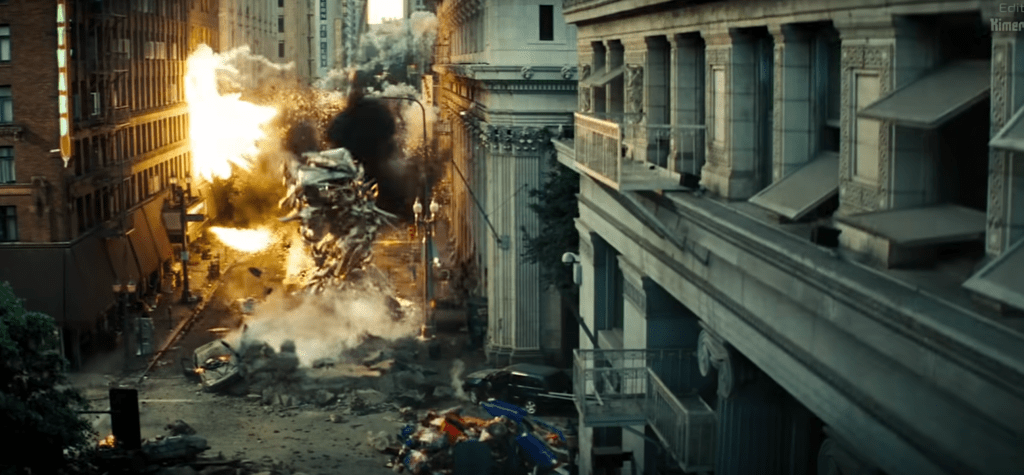
Secondly, there is a dedicated audience, including myself, who appreciates this cinematic style for its ability to evoke adrenaline and “provide direct stimulus to generate excitement” (Shaviro, 2016:199). While Jim Emerson may argue that these films lack a specific structure, I contend that it’s more about feeling than thinking. For instance, moments like a Bonecrusher moving in slow motion above a woman create tension, making us wonder about the outcomes of their dangerous intersection.
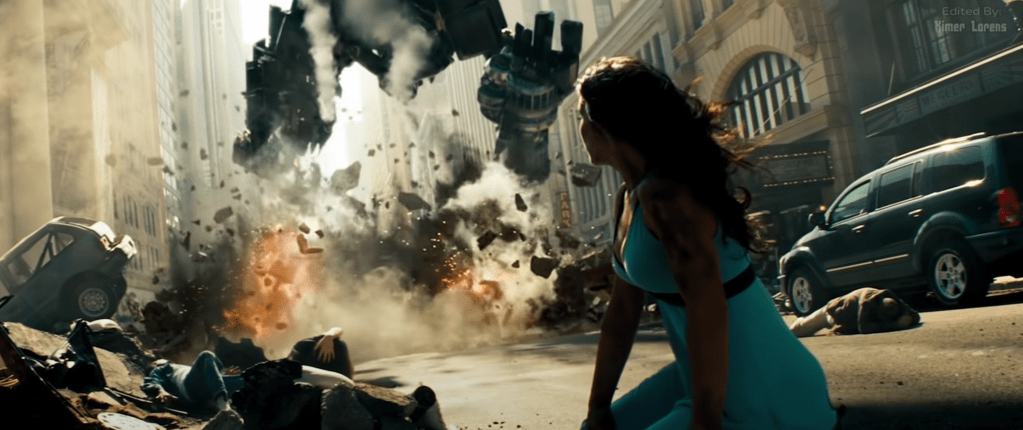
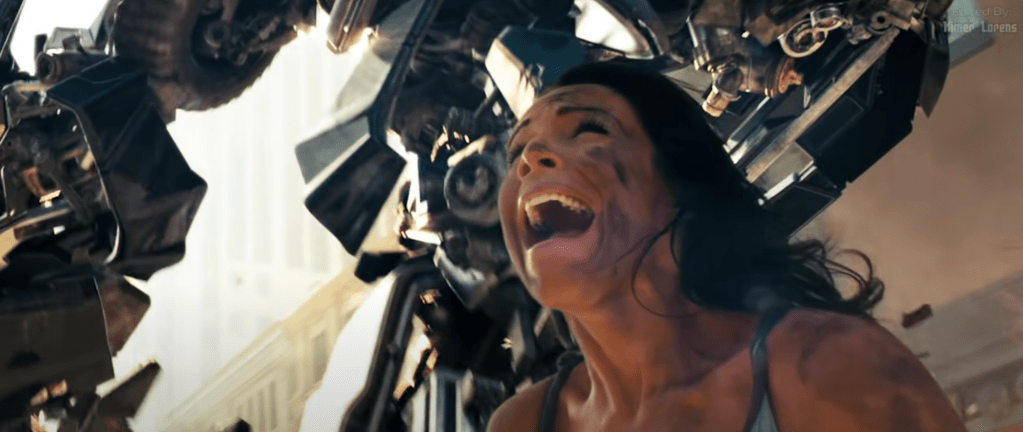
Thirdly, these films intensifies the “affect” and expressive in terms of both sound and image (Shaviro, 2010:8) “Transformers” exert control and influences our perception by using rapid sounds, montage, and Dutch angle shots in the battle scene, inducing reaction from me like tapping fingers and breath-holding.
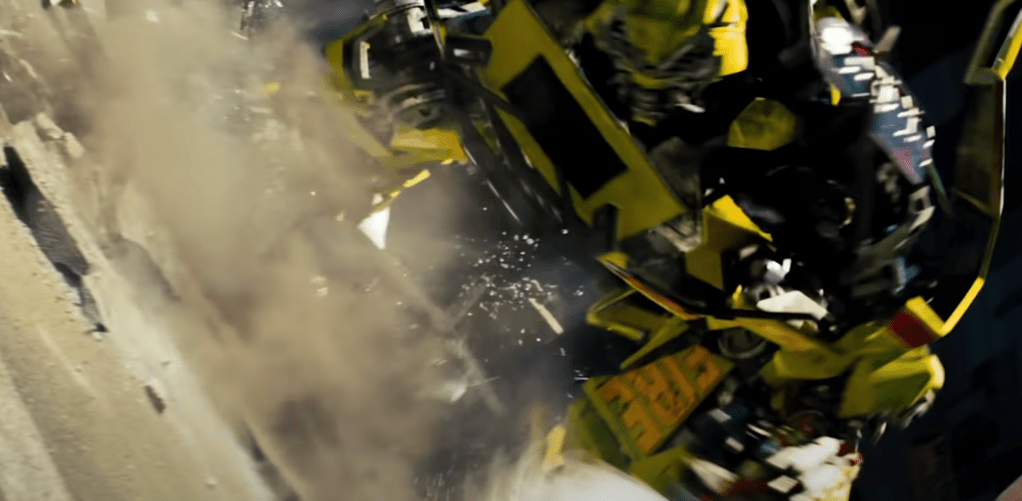
Overall, I’ve explained the concept of chaos cinema using the battle scene from “Transformers and highlighted its positive and negative aspects, including its ability to evoke emotions, adrenaline, and create an immersive experience despite points as spatial discontinuity and lack of meaningfulness. Despite the criticism it may receive, I personally find this post-cinematic style to be remarkable, providing immense pleasure through the utilisation of new technologies and showcasing the power of chaos cinema in shaping our emotional experience.
References:
Bay, M. (2007). “Transformers”. Paramount Pictures.
Shaviro, S. (2016). “Post-Cinema: Theorizing 21-st Century Film”. REFRAME Books.
Brown, W. (2013). “Supercinema: Film-Philiosophy For The Digital Age“. Berghahn
Bennett, B. (2015). “The Cinema of Michael Bay: An Aesthetic of Excess“. Article. https://www.sensesofcinema.com/2015/michael-bay-dossier/cinema-of-michael-bay/
Shaviro, S. (2010). “Post-Cinematic Affect“. Ropley: Zer0 Books.
Stork, M. (2012). “Chaos Cinema”. Video-Essay. https://vimeo.com/metafilm
Lorens, K. (2007). “Transformers – Prime vs Bonecrusher and Final Battle – Action Only”. YouTube, uploaded by Kimer Lorens, March 6, 2018, [https://www.youtube.com/watch?v=fjtljjvTb_0]. Accessed on November 24, 2023.
 Digital Audiovisual Media Class Blog
Leave a comment