“Miserable America” was written and directed by Kevin Abstract about the anxieties and difficulties of being a queer person of colour in the US. It is the 13th song on Abstract’s second album, American Boyfriend: A Suburban Love Story (2016), which is described to be an album about ‘seeking love in a world now primed to find new angles for hate’.
The music video was released in 2017, focusing solely on a metaphorical narrative that investigates the emotional affects of homophobia as well as how race and sexuality intertwine, illustrating the crucial impact this has had on Abstract’s relationships that is discussed in the lyrics. ‘Miserable America, assassinate my character’ is repeated throughout the video to show how American society and the stereotypes created with it have been able to destroy Abstract’s ability to feel true to his character.
The representation of stereotypes is seen in the first character we are introduced to in the first seconds of the video – a white man, wearing white and beige, walking into a large house surrounded by a white picket fence. This is a symbol of the white, middle-class suburban life, perhaps alluding to commentary on America’s history and treatment of people of colour.
The music video is important in symbolising the lyrics being sung such as “They love gays but they hate n*****.” to present how it seems only white people of the LGBTQ+ community are starting to be embraced as racism is still existing within society and the LGBTQ+ community. The scene sees the house being entered to reveal black women dancing around Kevin Abstract who is tied upside down from the ceiling, which could nod to the over-sexualisation of black women in society and the interconnected nature of race in topics of sexuality.
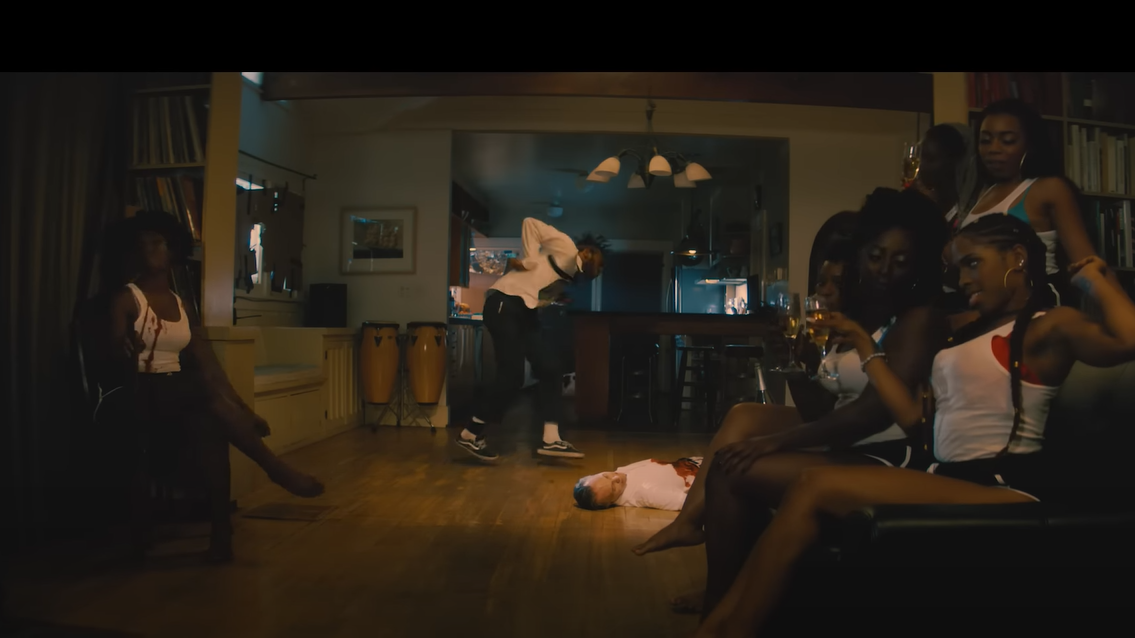
“What else are we to do rather than talk and paint a picture?” is a lyric used before the man, as a representation of society’s stereotypes, is killed in the video, proving the importance of visual media to influence conversation and emphasise the mistreatment of these communities.
By Lilly Khaokham 33688831
https://pitchfork.com/reviews/albums/22689-american-boyfriend-a-suburban-love-story/
Diane Railton and Paul Watson (2011), ‘Music Video in Black and White: Race and Femininity’, Music Video and the Politics of Representation, 87-107
 Digital Audiovisual Media Class Blog
Leave a comment