Throughout time, with shifts and changes in the structure and feelings of cinema, we find an era of post-cinematic form. Steven Shaviro, a film theorist, philosophy and cultural critic, explains new sensations, post-cinematic forms and post-continuity in sense with production, editing, distribution and remixing audiovisual material. Now in cinema, we cannot see classic narrative structure in relation to a linear stream of space and time anymore, but a new metaverse for breaking down boundaries and the rise of ‘cultural-technological regimes’ (2011). It’s not just how technology has advanced, allowing for new skills and digitalisation to advance film, but how culturally as audiences and creators we have shifted attitudes towards time and space and we experience film.
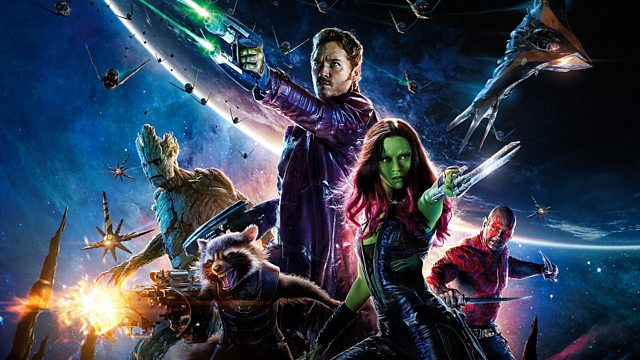
Through these post-cinematic forms, we find an ‘intensified continuity’ via indexical media – such as CGI, green screens, rapid editing, complex 3D models and much more (Bordwell, 2008:16). Techniques and post-continuity forms like this can be seen in Marvel Studios ‘Guardians of the Galaxy’ (2014), which was directed by James Gunn. During this fast-paced, sci-fi series of films, we follow the Guardians of the Galaxy who are a team of intergalactic mercenaries who primarily defend the Andromeda galaxy – which include non-human characters such as Groot which are made up completely of CGI and prosthetics. Furthermore, through intensified battle scenes, such as when the Guardians fought High Evolutionary’s Army, they use slow-motion and a multitude of angles to intensify and dramatise the fight. Using techniques like slow-mo and jump cuts creates the idea of ‘chaos cinema’, where we are unsure with incoherent space and time; as each moment feels like the climax of the fight but we are only just getting started in the action (Stork).
Overall, the wave of supra-narrative structures, where it doesn’t make linear sense with time, challenges the conventional expectations of metaphysical consistency; creates new opportunities with film-making and creativity. This is because we aren’t confined to a construct where continuity rules aren’t classed as crucial, that there is more of an opportunity to make ‘meaningful alternative models of sensory engagement’ (Shaviro, 2011). Mediums such as Guardians of the Galaxy creates a euphoria with the audience, where digitalisation of film meets with storytelling in a non-linear way, introducing new feelings and pitless emotions with the new age of digitised content.
References:
Steven Shaviro, ‘Post-Continuity: An introduction’, Post-Cinema: Theorising 21st Century Film
Guardians of The Galaxy (2014), Marvel Studios
By Emma Murphy 33693622
 Digital Audiovisual Media Class Blog
Leave a comment