The mixing board aesthetic can be described as a new era of new technology being crossed with new media. This aspect is significant in the music video for Sundress through the way editing have been affected by the new technology, as Carole Vernallis suggested, hours of recorded footage will be combined later in new editing patterns to create a narrative that wasn’t anticipated prior to shooting.
The vigorous use of new technology and editing is apparent through the narrative of the music video, through the creation of a slow pace throughout. This is done through the use of one continuous shot throughout the video as well as the limited movement of the characters seen, contrasting with MTV video aesthetics. The limited action of the actors goes against typical rhythm seen in music videos, lacking action and instead focusing on camera movement to paint the narrative.
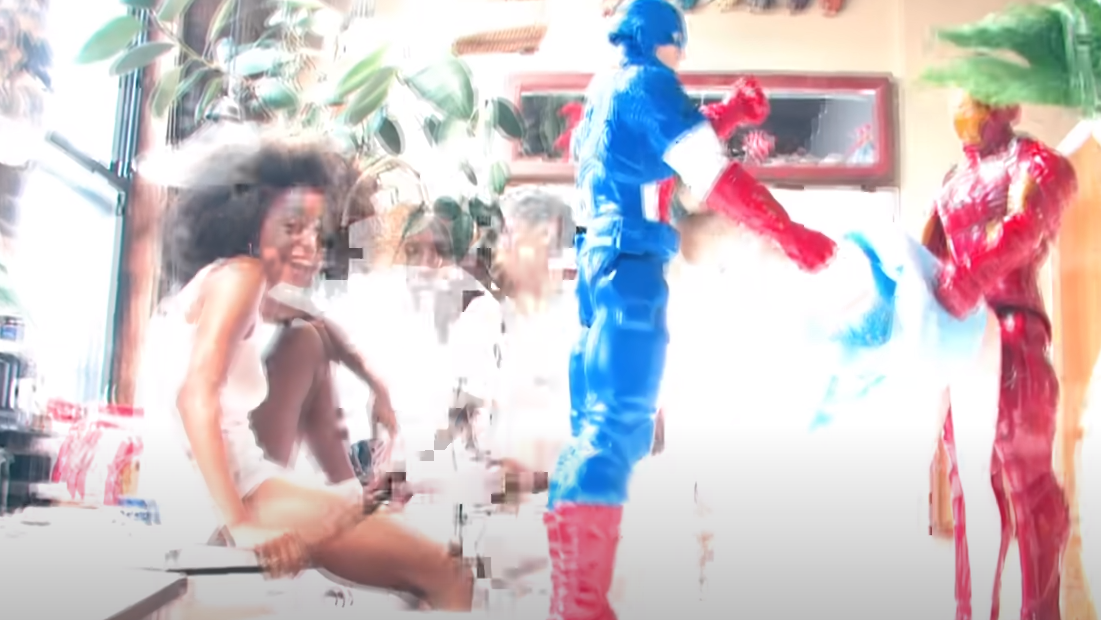
Starting at 1:46, rapid shots are seen to illustrate the complex emotions and relationships between the characters, contrasting the rest of the slow paced video and introducing the first break to the continuous shot. The use of altered colour in comparison to the previous shots is clear through the beige tones and muted colours, while the rest of the music video focuses on using bright primary colours such as red, blue and yellow, which enhances the idea of separation and the insight to the relationship between 1:46 – 2:00.
New technology is significant in the editing which is creating the narrative for the audience. An example is seen through the use of glitching. The use of glitching is important in this narrative as it creates a distance between the audience and the images being shown, as suggested by Steven Shapiro when analysing Cold war by Janelle Monae, the glitches cause prevention of suspension of disbelief.
By Lilly Khaokham 33688831
Carole Vernallis, ‘Music Video’s Second Aesthetic’, Unruly Media: YouTube, Music Video, and the New Digital Cinema, 207-233
Steven Shaviro, (2017), ‘Glitch Aesthetics’, Digital Music Video.
 Digital Audiovisual Media Class Blog
Leave a comment