This week we discussed whether, to some extent, changes in digital and Internet technology are also causing what some critics call “aesthetic and content” shifts.
Goddard and Hogg introduce the concept of “Trans TV” and emphasize its importance as an intervention in contemporary television. They argue that despite the growing presence and influence of transgender people in society, the mainstream media still grossly underreports and portrays this group. Therefore, they advocate “Trans TV” to fill this gap, in order to more fully and truthfully show the diverse lives of transgender people.
In their 2020 article, Goddard and Hogg reevaluated “Trans TV.” They pointed out that while “Trans TV” has changed the public’s perception of transgender people to some extent, there are still some problems and challenges. For example, some shows may overemphasize the heterogeneity of transgender people and overlook their commonality; Some shows may glamorize the lives of transgender people too much while ignoring the difficulties and pressures they face. Therefore, they called for further improvement and development of “Trans TV” to better serve transgender people and society as a whole.
Villarejo discusses how Jill Soloway’s series Transparent explores larger themes of family, gender, and sexual orientation by portraying Jewish, queer, and transgender characters. Author Amy Villarejo praised Soloway’s innovation and breakthrough, describing the series as a new milestone in the television industry.
Villarejo notes that Transparent is not just a transgender story, but also explores issues of identity, gender, and sexual orientation. The characters in the play challenge the original male-female relationship and family relationship in their own different ways, presenting a pluralistic and inclusive family form.(Villarejo, 2014)
In addition, the play also focuses on the character of the Jews. She believes that Solloway’s depiction of the protagonist as a Jew shows the diversity and complexity of Jewish culture in American society. Villarejo sees Transparent Family as an innovation that questions traditional views of relationships between men and women and the family, and presents a diverse and inclusive social value.
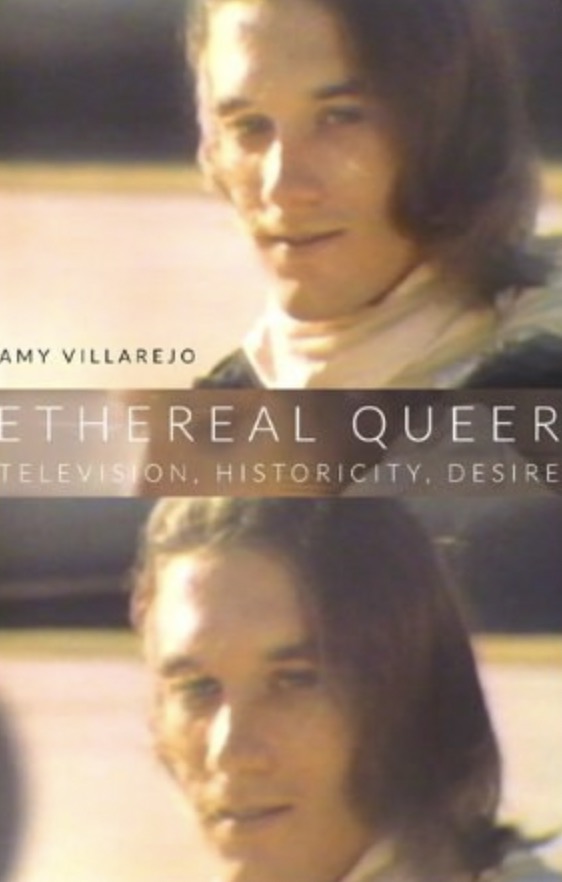
Ethereal Queer: Television, Historicity, Desire by Amy Villarejo is a treatise on the relationship between television, history, and desire. This article explores how TV dramas convey emotions and desires through the creation of illusory homosexual images, and emphasizes the historical background and cultural influence of such expressions.
Through the study of the illusory homosexual image in TV series, the importance of the illusory homosexual image to the audience’s emotions and desires and its relationship with the social and historical background are revealed. It provides valuable insights into the role of television drama in shaping perceptions of gender and sexual orientation.
In the future, the deepening of digital logic will also drive more innovation in the form of TV content. For example, the shift from linear viewing to non-linear viewing, such as the use of content review, on-demand online features will become more and more common. These changes have not only changed people’s viewing habits, but also put forward new requirements for the form and content of TV programs. As a result, we can expect television aesthetics and content to undergo a profound transformation in the process.
Reference:
Villarejo, A. (2014). Ethereal Queer: Television, Historicity, Desire. Duke University Press.
By Qi Liu
 Digital Audiovisual Media Class Blog
Leave a comment