In the dynamic world of action filmmaking, a noticeable shift has occurred over the past few decades, steering American cinema towards an impressionistic and chaotic style. In the article Observation Of Film Bordwell and Thompson contrasted the difference between this new contemporary style of film making, which has been adopted by American cinema, with the more classical approach that can be found in Japanese cinema. This style emphasises on visual clarity and a structured rhythm, a move away from Hollywood’s preferred current style of editing.
Today, Hollywood seems to rely on fragmented shots to obscure the unrealistic nature of the action, being presenting in an impressionistic and arguably more realistic manner. Film scholars Thompson and Bordwell highlight the distinctions between the two styles, describing classic Asian action scenes as “expressionistic.” (Thompson & Bordwell;2008) These scenes focus on larger-than-life, graceful movements and aerobatics, showcasing the amplified physical capabilities of characters. The goal is to “experience how the action feels” (Thompson&Bordwell;2008).
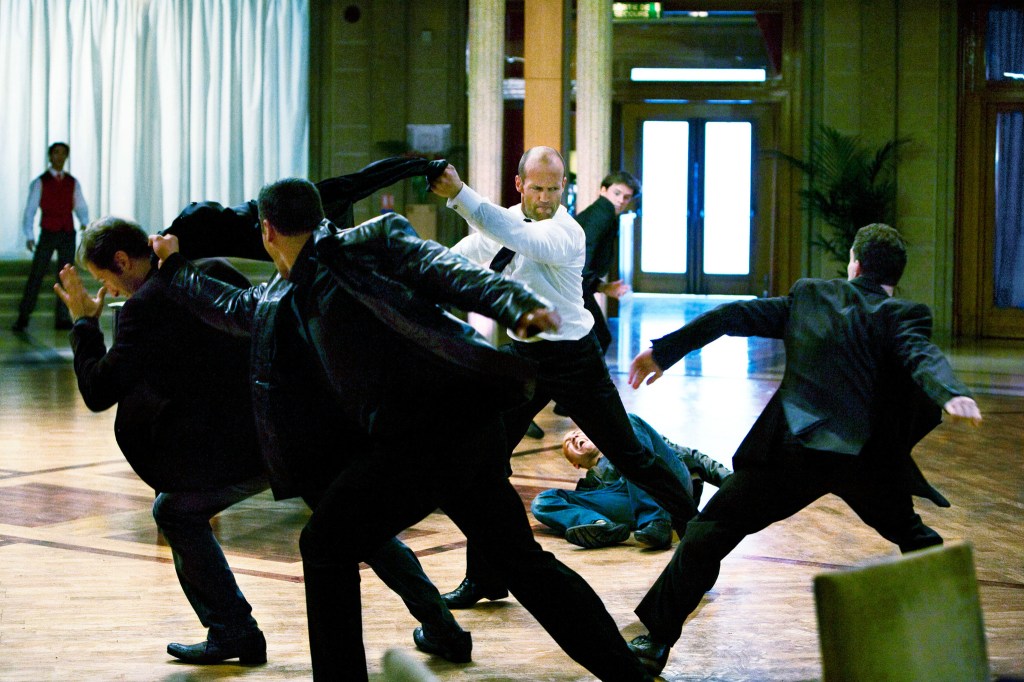
To illustrate this concept of expressionistic action, they highlight the work of Japanese director Yuen Kwai, who is famous for directing films such as Transporter(2002). His emphasis on visual rhythm and the willingness to sacrifice dialogue for visually striking sequences sets him apart. Yuen Kwai’s work has become a benchmark for understanding a style that is slowly fading in Hollywood.
Amidst the prevalence of chaotic cinema in major film productions, some exceptions do emerge. The World War I film,”1917” directed by Sam Mendes in 2019, stands out as a remarkable departure from the norm. Shot to appear as if filmed in one continuous take, the film employs creative editing and long takes, some lasting up to eight and a half minutes. This innovative approach earned “1917” widespread acclaim, challenging the chaotic cinema technique and garnering three Oscars.
In aligning more closely with Yuen Kwai’s classical approach, “1917” becomes a beacon of deviation from the prevailing Hollywood trend. Its success not only challenges the status quo but also signals a potential renaissance for a more structured and visually engaging form of action filmmaking. As we celebrate the exceptional departure of “1917” from the chaos, it prompts us to reconsider the rhythmic potential within action sequences, beckoning for a return to the roots of visual storytelling.

By Joseph Sofocleous
References:
Bordwell , D. and Thompson, K. (2008) A glance at blows, Observations on film art. Available at: http://www.davidbordwell.net/blog/2008/12/28/a-glance-at-blows/ (Accessed: 01 December 2023).
Filmography
Mendes, S. et al, (2019) 1917. United States: Universal Pictures.
Leterrier. L, Yuen. C The Transporter (2002).
 Digital Audiovisual Media Class Blog
Leave a comment