Michael Goddard and Christopher Hogg’s work on ‘Trans TV as concept and intervention into contemporary television’ from “Critical Studies in Television” provides a lens; their study points out: “Trans TV operates as an intervention into these multiple contemporary transformations of television, arguing that they need to be thought together, and especially that discussions of technological transformations of industry cannot be thought separately from aesthetic transformations both of televisual programs and the televisual experiences of audiences” (Goddard& Hogg, 2018). This interconnectedness of technological and aesthetic transformations is a fascinating aspect of contemporary television, as it influences the way we perceive and consume televisual content. With the technological change and development of the television industry, contemporary television aesthetics, representation, and new forms of content have all transformed radically.
A compelling case study in this realm is the groundbreaking series “Euphoria,” in which issues like teenage drug use, suicide, and queer and transgender issues are presented directly and uncompromisingly. However, the diversity and inclusion of the new audiovisual platform provide a broad space for “Euphoria” to explore sexuality, gender, and gender identity.
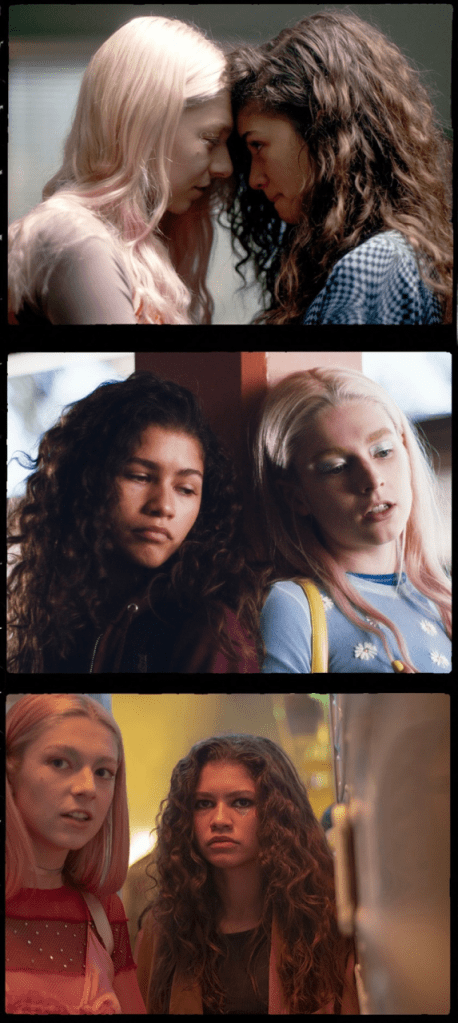
The characters in this series cover multiple gender identities such as transgender, gay, bisexual, etc., and because of the distributed nature and flexibility of digital platforms, “Euphoria” has attracted wide attention. Meanwhile, the characters in the series have diverse backgrounds and involve different races, cultures, and social classes. They show the complexity and diversity of contemporary society through diversified narration and representative practice.
However, transgender television, such as “Euphoria” has gone through a long series of developments, especially regarding the treatment and inclusion of gender, sexuality, and other forms of diversity (Goddard& Hogg, 2020).
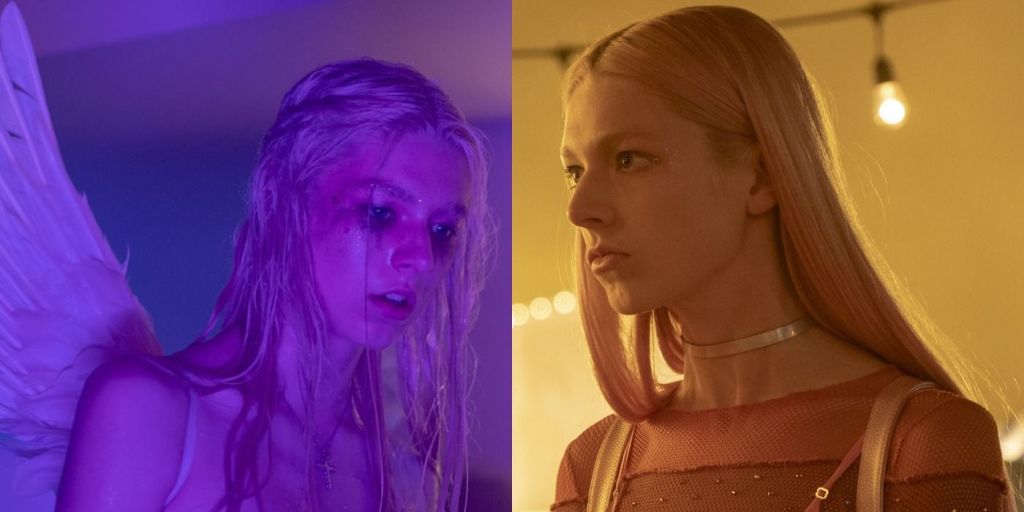
In addition, the contemporary era of television is not just about new ways of producing, distributing, and consuming television but also about the relocation of the televisual experience, with Rustad pointing out: “The contemporary experience of television reception is becoming more personal, ephemeral, mobile and instant than ever before” (Rustad, 2018), which means that Trans TV aesthetics cannot be separated from changes in rhythms of TV consumption. It is precisely because of these changes that Trans TV has promoted development. However, it has also promoted the progress of fans’ aesthetics and concepts, and tolerance has been further improved.
Reference
Goddard, M. N., & Hogg, C. (2018). Introduction: Trans TV as concept and intervention into contemporary television. Critical Studies in Television, 13(4), 470-474.
Goddard, E. A. I. B. M., & Hogg, C. (2020). Introduction: Trans TV dossier, III: Trans TV re-evaluated, part 2. Critical Studies in Television, 15(3), 255-266.
Rustad, M. L., & Koenig, T. H. (2018). Towards a global data privacy standard. Florida Law Review, 71, 18-16.
By: Tianyu Zhang 33784928
 Digital Audiovisual Media Class Blog
Leave a comment