Vernallis argues that after the initial flowering in the 1980s, the music video has entered a new aesthetic era, characterized by new digital technologies, new kinds of cross-media authorship, and new transmedia potentials for expression she refers to as the “mixing board aesthetic” (Vernallis, 2013). Vernallis points out that the MTV music video model has entered a new era in the 21st century, and more music videos are being distributed through new online channels than ever before. The combination of music, sound, and visuals is entirely different from traditional music videos; for example, the visuals add value to the song and Music and Image synesthesia (Curwen, 2022). How do these new changes empower music videos? To illustrate this, I’ll use the iconic Lady Gaga and Beyonce’s “Telephone” music video as an example of this transformation, inspiring further research and analysis in the academic community.
Lady Gaga and Beyonce’s music video ‘Telephone’ is not just a video, it’s a testament to innovation and visual artistry. It’s a creative masterpiece that pushes the boundaries of digital aesthetics and editing patterns. In an era dominated by video hosting and sharing sites like YouTube, ‘Telephone’ stands out as a shining example of how video production, distribution, and consumption have fundamentally changed.
Editing patterns have been profoundly influenced by digital technologies, resulting in recording hours of digital footage to be combined later, often in new patterns not necessarily anticipated before the shoot. This feature is reflected in ‘Telephone’. The video employs a ‘mixing board aesthetic ‘, a technique often seen in digital cinema, where multiple shots are combined in a way that resembles the operation of a mixing board in audio production. It takes 3 minutes for the video to play before singing the song.
The story narrative in ‘Telephone’ is a masterclass in the use of rapid editing and skipping techniques. These techniques create a dynamic and tense visual experience that keeps the audience engaged and excited. This editing style, reminiscent of a mixing board aesthetic, enhances the visual impact and effectively conveys the complexity of the story through multiple narrative levels.
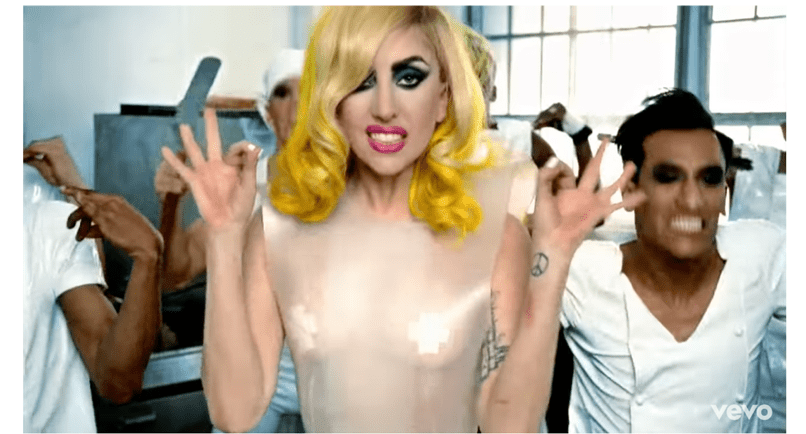
The music video ‘Telephone’ not only introduces a new narrative style but also presents a multitude of musical visual highlights. The video is a riot of bright colors, rapid editing, and bold costume designs, all of which contribute to a unique visual experience. The high-resolution image quality and meticulously designed scenes allow the audience to be fully immersed in an incredibly futuristic and surreal world. This visual style not only enhances the music’s expressive power but also effectively conveys complex emotions and narratives through a rich array of visual symbols, leaving a profound impact on the audience.
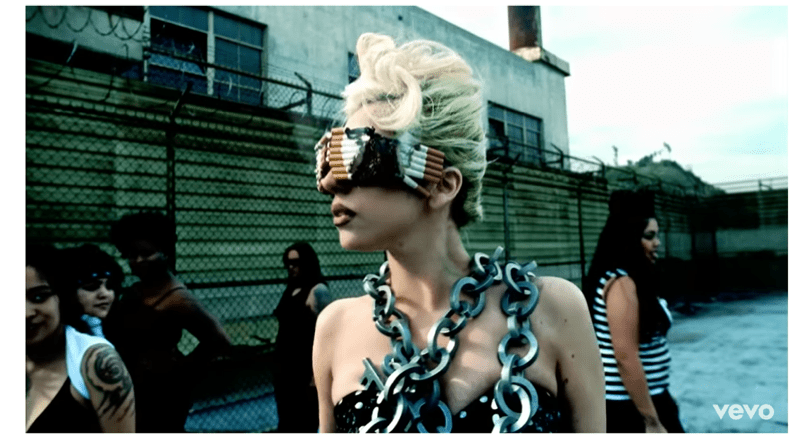
In summary, “Telephone” combines the innovation of digital aesthetics with the profound change of editing mode to show that contemporary music videos should have both excellent narrative ability and visual impact to adapt to The Times’ changes and innovations.
Reference
Curwen, C. (2022). Music-colour synaesthesia: A sensorimotor account. Musicae scientiae, 26(2), 388-407.
Vernallis, C. (2013). Music video’s second aesthetic?’. The Oxford handbook of new audiovisual aesthetics, 437-465.
By: Tianyu Zhang 33784928
 Digital Audiovisual Media Class Blog
Leave a comment