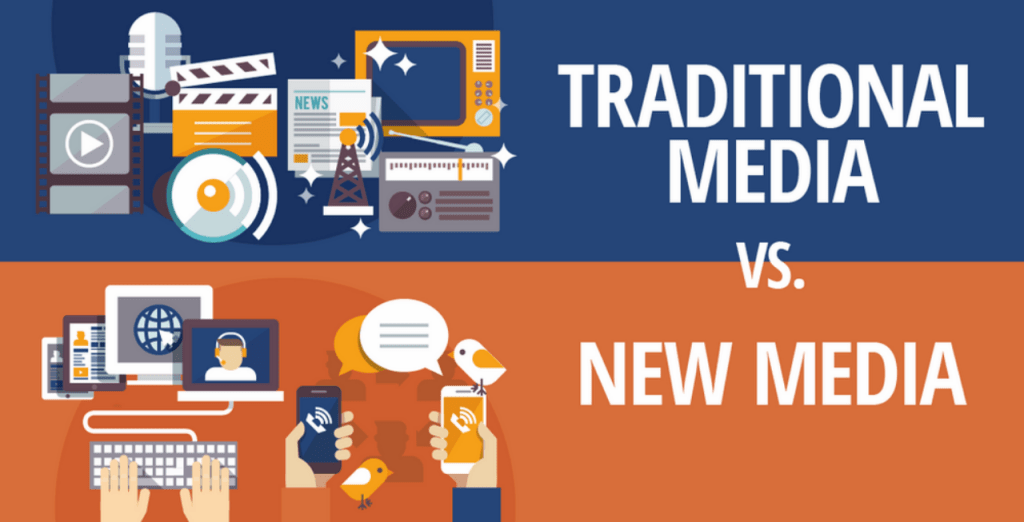
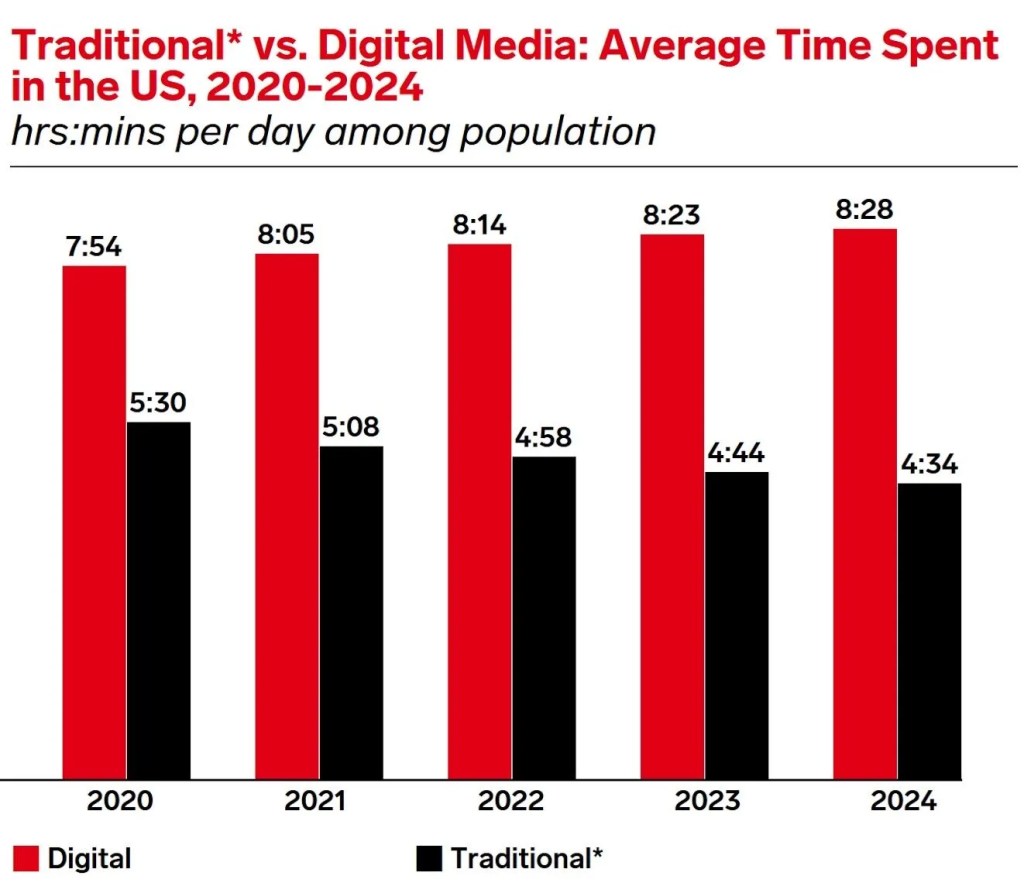
In Lev Manovich’s The Language of New Media, new media is defined as a digital form of media, emphasizing its fundamental difference from traditional media (such as books, movies, and television). Manovich believes that “the update of new media is not only a technological evolution, but also involves profound changes in culture and social structure.” These changes have shown significant influence in redefining power relations and changing cultural production and consumption patterns.
Changes in social structure and power relations
The impact of new media on traditional power structures is obvious. In the past, media organizations and authoritative figures dominated the production and dissemination of information, and ordinary people were often only passive recipients. However, with the rise of social platforms, individuals have gained a greater voice in information dissemination. Ordinary users can express their opinions and share their experiences directly on the Internet, thus playing an important role in the formation of public opinion (Fotopoulos, S. 2023). This shift has prompted all sectors of society to re-examine power relations, strengthen the requirements for transparency and image design, and promote social calls for accountability for power.
Although social media provides a platform for expression, it is also prone to rumors and false information. Individual initiative in information dissemination does not necessarily mean higher information quality. In this case, the demand for transparency and image design, while reflecting the public’s desire for accountability, also exposes society’s loss of the truth of information (Happer, C. and Philo, G. 2013).
Democratization of cultural production and consumption
In the new media environment, the rise of user-generated content (UGC) marks the democratization of cultural production. New media platforms such as YouTube and TikTok encourage ordinary users to participate in cultural creation, breaking down the barriers to traditional cultural production. This phenomenon not only enriches the cultural ecology, but also gives more people the opportunity to express their views and creativity, promoting diverse cultural expressions.
New media also provides a display platform for people from different cultural backgrounds, allowing various cultures to be spread and communicated. The voices of different regions, nationalities and social groups can be widely recognized through new media, promoting the diversity and understanding of global culture. This diversity not only enriches global culture, but also challenges the monotony of mainstream culture (Ruiu, M.L. and Ragnedda, M. 2022).
In “The Language of New Media”, Lev Manovich expounds on the fundamental difference between traditional media and new media, which not only reflects the progress of technology, but also reflects the profound changes in social structure and cultural ecology. With the continuous development of new media, the relationship between social change and cultural exchange will become more common in the future. However, these changes are not entirely positive, and the potential risks and challenges cannot be ignored. Therefore, ensuring that new media truly becomes a tool to promote social change and cultural prosperity, rather than a new control mechanism and information bubble, is an important issue that needs to be addressed in the forward-looking society (Luna, J.P., Toro, S. and Valenzuela, S. (2022).
By: Jingwen Lei 33841662
Reference:
- Manovich, L. 2002, ‘What is New Media’, The Language of New Media
- Yan, N. (2021). Social Media Is Redistributing Power. Open Journal of Social Sciences, [online] 9(6), pp.107–118. doi:https://doi.org/10.4236/jss.2021.96010.
- Fotopoulos, S. (2023). Traditional Media versus New Media: Between Trust and Use. European View, 22(2), pp.277–286. doi:https://doi.org/10.1177/17816858231204738.
- Happer, C. and Philo, G. (2013). The Role of the Media in the Construction of Public Belief and Social Change. Journal of Social and Political Psychology, [online] 1(1), pp.321–336. doi:https://doi.org/10.5964/jspp.v1i1.96.
- Ruiu, M.L. and Ragnedda, M. (2022). Comparing the Empowerment Dynamics of Traditional Media and Social News Sites: The Case of GameStop. Digital Journalism, pp.1–22. doi:https://doi.org/10.1080/21670811.2022.2142628.
- Luna, J.P., Toro, S. and Valenzuela, S. (2022). Amplifying Counter-Public Spheres on Social Media: News Sharing of Alternative Versus Traditional Media After the 2019 Chilean Uprising. Social Media + Society, 8(1), p.205630512210773. doi:https://doi.org/10.1177/20563051221077308.
 Digital Audiovisual Media Class Blog
Leave a comment