Example film – Eternal Sunshine with the Spotless Mind (2004)
William argues that the editing of digital cinema spatialises ‘time’ so that we can travel from ‘real’ moments to ‘imagined’ or ‘remembered’ moments without necessarily seeing a clear demarcation between them (Williams, 2015). In this editing jigsaw, as viewers, we feel the continuity between real and imagined time and space. How does this new technique help the film’s narrative? To illustrate this, I will use the iconic surrealist film Eternal Sunshine of the Spotless Mind as an example to analyse how this technique creates a perception for the audience.
In the film Eternal Sunshine of the Spectacular Mind, the director uses several spatial and temporal transformations and montage language to disrupt the three parts of reality, the subconscious mind, and the time dimension in the subconscious mind, so the whole film seems to have no logic to follow. However, despite this, the audience can still distinguish reality from the subconscious and the time dimension in the subconscious, which is the film’s examination of the artistic expression of time and space transformation.
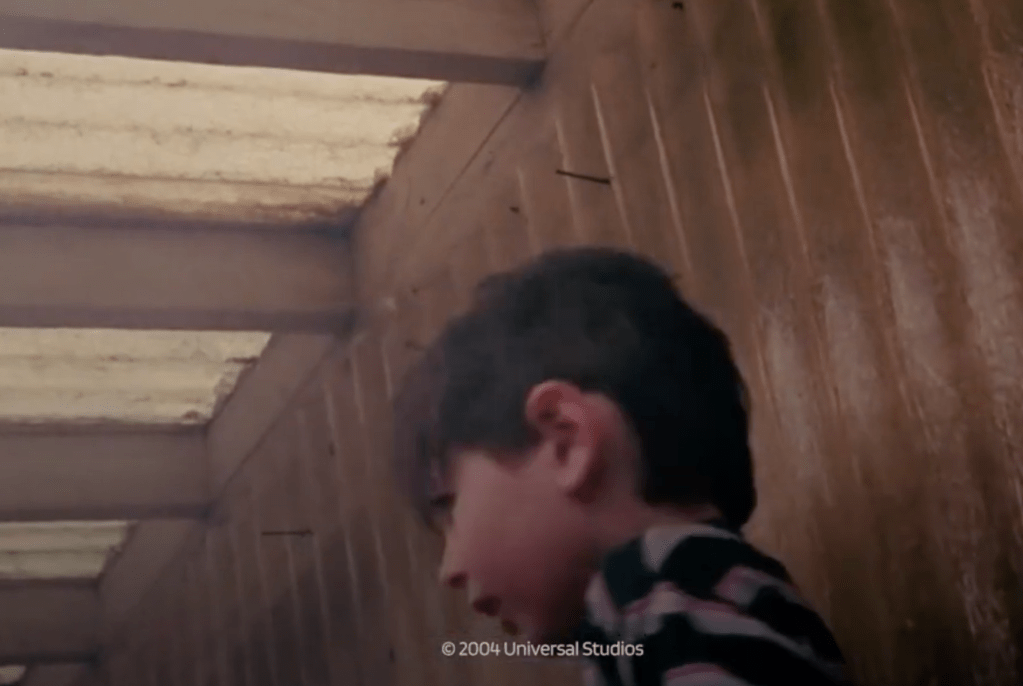
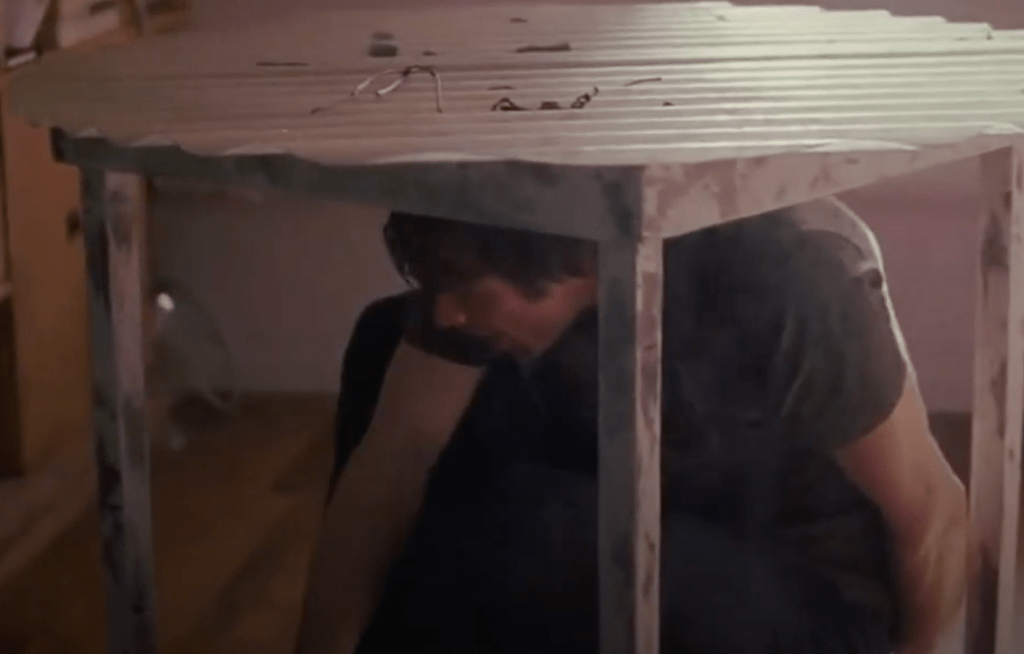
In the film, the adult Joel remembers the scene of playing in the rain outside the house when he was a child, and suddenly it pours down in the room, which changes into two images of the young Joel hiding under the shed outside the house and the adult Joel burrowing under the table to hide from the rain, and after the repeated interspersed appearances, the space of the rain inside the house shifts to the childhood Joel’s house. The image structure of the end of the previous space is converted into the opening image of the next space, which also has the same elements of image structure. The human brain has a self-association function for visual residual images, and even two completely independent spaces and times are connected without feeling abrupt.
When time breaks the inherent logic, combines with a specific space, and transmits as a visual signal to the human brain, it creates a different chemical reaction, giving the viewer a new experience of the subconscious. This is the new task that the new post-cinema image system brings to the human perception organs (Walter, 2008).
Reference
Benjamin, W. (2008) The work of art in the age of mechanical reproduction. London: Penguin.
Brown, W. (2015) Supercinema film-philosophy for the digital age. New York: Berghahn Books.
By Xinran Liu 33732297
 Digital Audiovisual Media Class Blog
Leave a comment