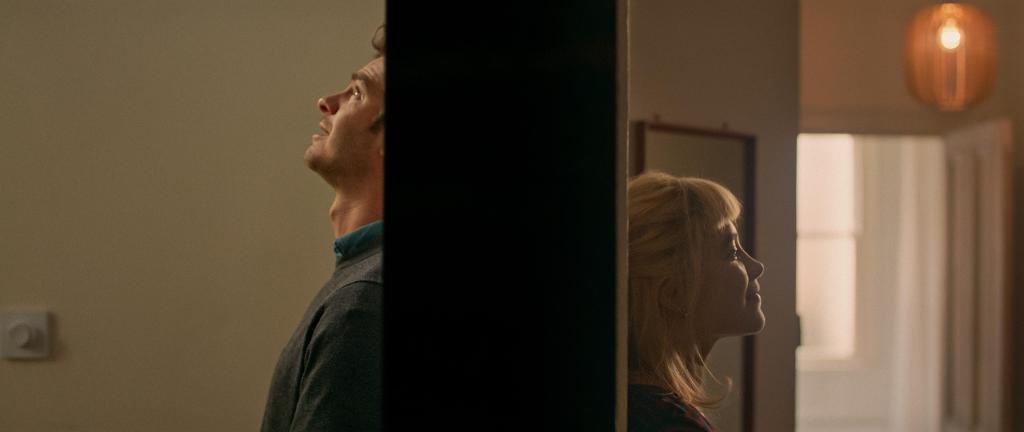
We Live In Time is A24’s romance/comedy starring Andrew Garfield as Tobias and Florence Pugh as Almut. Ahead of its UK release in January, I previewed it at BFI’s Film Festival. Spoilers included…
It encapsulates post-continuity filmmaking through its structure and plot, rather than editing. For example, throughout the entire structure of the film, there is implicit storytelling, shaky camera angles, and shifting time-frames, all of which I will discuss in this blog.
Steven Shaviro coined “post-continuity” in Post-Cinematic Affect. He described the style of filmmaking as: “a preoccupation with immediate effects trumps any concern for broader continuity…” (p.123), common in action films. However, We Live In Time doesn’t fit into the action genre. Thus, portraying post-continuity in a nuanced way.
The film tells a story of a partnership, full of tribulations and life experiences many people face, for example nerves with first encounters, meeting the parents, and childbirth. However, the film’s central point is how they are affected by Almut’s cancer.
The structure flips backwards and forwards through moments of their partnership. Starting with a scene of the two living together in a quaint cottage, then immediately after it transitions to before they met, when Tobias is signing divorce papers from his past relationship. This was initially confusing because I thought the divorce papers were for the current couple, although they weren’t. This non-chronological order was offset by baby bumps and hairstyles.
Unlike Stork’s Chaos Cinema, pacing of the film is not a “barrage of high-voltage scenes”, including slow and fast scenes. The faster ones reflect post-continuity through the cinematography, as it utilises shaky camera angles. In scenes of the two passionately arguing, there were flipping shaky close-ups shots, which was similar to anger building up so much you begin to shake. During the birth scene, the camera similarly changes angles of each person’s face to understand everyone’s emotions.
The scene when Almut dies is an experimental interpretation of death. We don’t see any ambulances or hospital beds, rather she skates on an ice-rink away from Tobias and their daughter, who are waving goodbye. There is no explicit mention of her death, but through dialogue and camera-work, it occurs. It was easily known what was occurring but not in a spoon-fed way.
We Live In Time is a post-modern film using a post-continuity structure, although at times it was confusing, the overall plot was understandable and I enjoyed the unconventional time jumping.
Words by Lucy Snell.
References:
Steven Shaviro, ‘Post-Continuity: An introduction’, Post-Cinema: Theorising 21st Century Film, 51-64
Chaos Cinema, 2012 [Video Essay], Dir. Matthias Stork, available here and elsewhere: https://vimeo.com/metafilm
 Digital Audiovisual Media Class Blog
Leave a comment