Red Sorghum is a classic film directed by the famous Chinese director Zhang Yimou, adapted from Mo Yan’s novel of the same name. Released in 1987, the film tells the love story of a young girl Jiuer and a winery owner in rural China in the 1930s, as well as their lives and struggles against the backdrop of turbulent history.
The film’s story revolves around Jiuer’s marriage, family and love. She is forced to marry a cruel man, but she eventually develops a deep relationship with a brave anti-Japanese fighter. The film not only shows the customs and traditional culture of the countryside, but also reflects the national sentiment during the Anti-Japanese War.
“Red Sorghum” is a representative work of China’s “post-cinema”, showing profound complexity and diversity in emotional expression, reflecting the struggle and awakening of individuals in historical turmoil.
1) Conflict between tradition and modernity
Red Sorghum depicts rural life and traditional culture, showing how individuals struggle between old and new values in the context of social change. In the film, the contradiction between traditional religious beliefs and real life makes the characters face emotional choices. This conflict not only reflects the impact of social turmoil on human nature, but also reveals people’s helplessness and tenacity at the moment of historical change.

2) Non-linear narrative structure
The film adopts a non-linear narrative structure, breaking the traditional time sequence and blurring the boundaries of time. With the help of Jiuer’s memories, it shows the tracing of the past and the exploration of the meaning of life, allowing the audience to have a deeper understanding of the character’s inner world and emotional conflicts.
3) The awakening of language and emotion
The film shows the awakening of individual spirit and the desire for freedom through the growth process of the heroine Juxian. Juxian gradually transforms from a poor rural girl to a woman who dares to pursue love and life. This process symbolizes the individual consciousness. In the sorghum field, the passionate fusion between her and her lover is not only a manifestation of sexual awakening, but also a rebellion against traditional constraints.
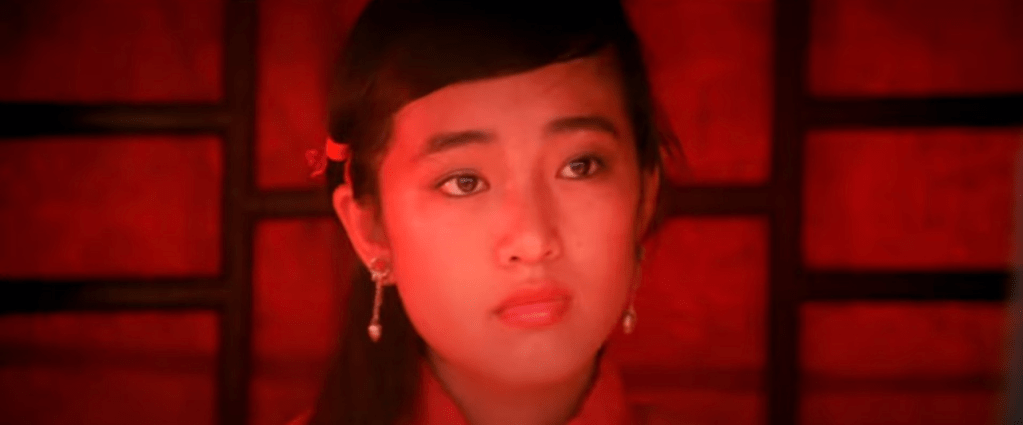
4) Visuals and Symbolism
The film’s unique use of color and composition interprets the natural beauty and humanistic feelings of rural areas in northern China. Director Zhang Yimou uses rich colors and visual symbols (such as the red sorghum field) to enhance the film’s emotional expression. Not only does it create a strong visual impact, but it also allows the audience to more deeply experience the character’s inner struggle and emotional activity. The sorghum field symbolizes vitality and traditional culture, and is also a witness to love, visually reinforcing the importance of emotional communication.

Red Sorghum, through its profound exploration of individual emotions and history, presents a “post-film” emotional atmosphere, challenges the traditional narrative structure, and enables the audience to have a deeper understanding and reflection on the relationship between characters and history. The red sorghum field in the film has also become a symbol of love and life, deeply expressing the tenacity of human nature and the tenacity of life.
By: Jingwen Lei
Reference: Zhang, Y. (2012). A Companion to Chinese Cinema. Oxford, UK: Wiley-Blackwell. doi:https://doi.org/10.1002/9781444355994.
 Digital Audiovisual Media Class Blog
Leave a comment