As technology evolves, films have richer content and a greater variety in storytelling. Thus, the idea of ‘post-cinema’ has emerged, reflecting these changes in filmmaking. Post-cinema refers to films that break away from the traditional methods of making and watching movies. In the book Post-Cinema: Theorizing 21st-Century Film, Shane Denson and Julia Leyda explain that the term post-cinema “is not used to denote an absolute ending of cinema, instead, it signals an ongoing transformation characterized by the overlap and juxtaposition of old and new media technologies.” This means that post-cinema challenges traditional approaches to making and watching films by combining new digital techniques with older film methods. Here are several characteristics of post-cinema.
Nonlinear Narrative:
In postmodern cinema, we often find that time and space are like a “Rubik’s cube,” freely combined and distorted. Time and space are stretched, shortened, omitted, flashed back, or reversed. Compared to traditional films, the means and perspectives of storytelling become more diverse. For example, in Christopher Nolan’s Memento, the director uses reverse editing to make the audience follow Leonard Shelby, a man suffering from short-term memory loss, as he tries to find his wife’s killer based on his fragmented memories. This nonlinear approach not only immerses the audience in the character’s disoriented state but also challenges traditional narrative structures, making the storytelling process more complex and engaging. By distorting time and space, postmodern cinema invites viewers to piece together the story themselves actively.
Expanding Platforms and Interactive Experiences
The variety of platforms allows people to watch movies outside of the cinema, giving them more ways to access films. Nowadays, people can easily watch movies through streaming platforms, the internet, or TV, anytime and anywhere. At the same time, the viewing experience has changed. In Black Mirror: Bandersnatch, viewers can make choices while watching, and this type of interaction makes them part of the story. It breaks the traditional idea that viewers are just passive watchers.
Technological Advancements and Immersive Effects
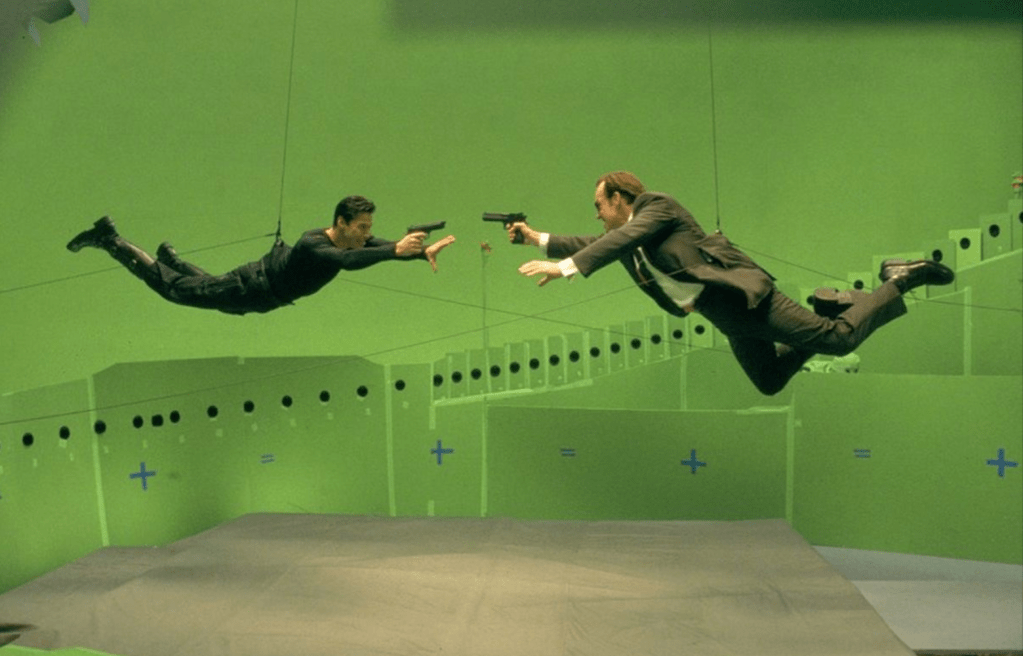
Besides the changes mentioned above, advancements in technology have made our viewing experiences richer, allowing us to see increasingly realistic special effects, creating a visual and auditory feast. This is commonly seen in Hollywood sci-fi blockbusters and superhero movies. The famous “bullet time” scene in The Matrix is a great example, where technology brings a whole new visual experience to the audience. In addition, the appearance of VR movies also allows audiences to feel even more like they are inside the film. This shift in technology has transformed both how we watch films and how we experience their stories, making the viewer a more active participant.
In conclusion, post-cinema has brought significant changes to both the way films are made and how audiences experience them. By embracing nonlinear narratives, expanding across multiple platforms, and integrating cutting-edge technology, post-cinema challenges traditional film language and opens up new possibilities for storytelling. As technology continues to evolve, the boundaries of cinema will likely keep expanding, allowing for even more interactive, immersive, and innovative film experiences.
Suki Han 33846005
 Digital Audiovisual Media Class Blog
Leave a comment