In the digital age, movies no longer only convey emotions through traditional narratives, but directly affect the audience’s sensory experience through complex audio-visual effects and non-linear narratives.
Take< Blade Runner 2049 (2017)>as the example in this blog, as an iconic work of digital cinema, demonstrates how digital special effects, surrealism and fragmented narrative can be expressed in the post-film era.
Digital Cinema and the Expansion of Space
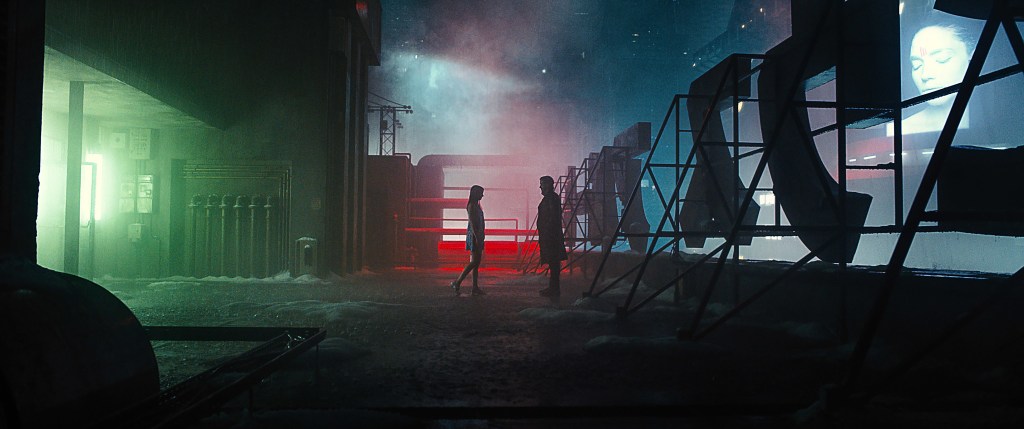
William Brown pointed out in “Digital Cinema’s Conquest of Space” that digital movies not only change the audience’s perception of space, but also expand the visual space in movies through technology. In “Blade Runner 2049”, the urban landscape and desolate future world are displayed extremely vastly through digital special effects, and the audience’s visual experience transcends the physical limitations of reality. This spatial expansion is consistent with Brown’s theory that movies conquer the limited space in traditional movies through digital means, creating a borderless visual experience.
The future world in the film is filled with highly designed spaces that are infinitely amplified through digital special effects. These digital technology makes these spaces more realistic, also have a strong sense of surreality. This reconstruction of space blurs the boundaries between real and virtual by breaking physical boundaries, forming a typical expression of “digital conquest of space”.
Post continuity and narrative fragmentation
Through the fragmented narrative structure and non-linear time processing, the film no longer follows the traditional chronological order of the plot. As Steven Shaviro emphasizes in Post-Cinematic Affect, emotions in post-film are no longer generated through traditional narratives and character relationships, but act on the audience through direct visual and sensory stimulation. The combination of narrative uncertainty and shocking visual effects in “Blade Runner 2049” puts the audience in a floating state perceptually and emotionally, which is the core feature of post-continuity theory.
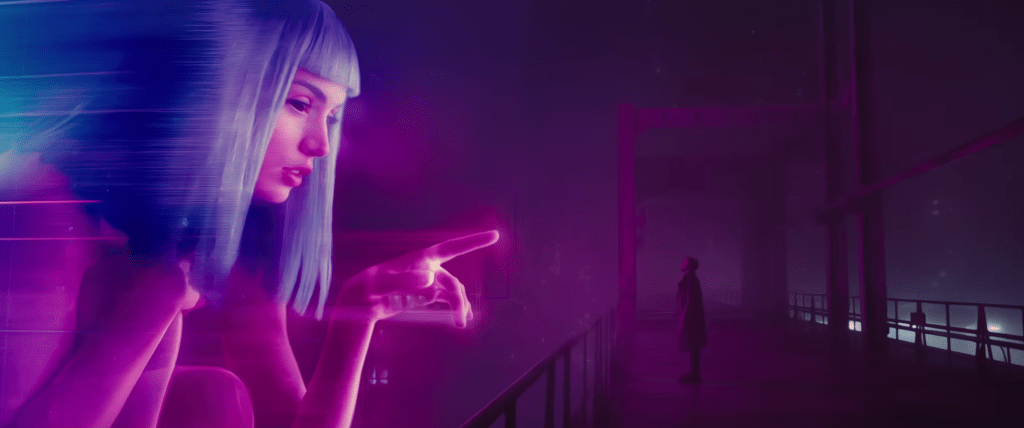
This film creates the visual design of the virtual artificial intelligence character Joi, and the desolate landscape of the future city, through its complex CGI and digital technology. And these allow the audience to directly feel the loneliness, alienation and illusion in the film visually. Shaviro mentioned in his theory that post-film emotion emphasizes “senses before narrative”. It is through this sensory stimulation that “Blade Runner 2049” makes the audience resonate visually and emotionally.
Blade Runner 2049 (2017) is undoubtedly a landmark film, but at the same time, I also find myself thinking, is it easier for audience to be attracted by shocking landscapes and no more focus on more detailed emotional expressions? And these landscapes do they bind tourists into dependence on the spectacle of the landscape?
Junwei Lin 33867183
 Digital Audiovisual Media Class Blog
Leave a comment