Representation of Non-Binary/ Transgender identities in film sparse, and are portrayed in a plethora of ways but not limited to misrepresentation and tokenism, as discussed by Horvat in ‘Crossing the Borders of Queer TV’, particularly in Transparent (2014) the a Trans character, Maura is played by a CIS man, which received backlash.
However in my opinion, a brilliant representation of the Transgender experience is the psychological horror: I Saw the TV Glow (2024), written and directed by Jane Schoenbrun. They are transfeminine and non-binary filmmaker, who reflects themes of gender identity and dysphoria throughout their work, especially in I Saw the TV Glow which is a part-autobiographical depiction.
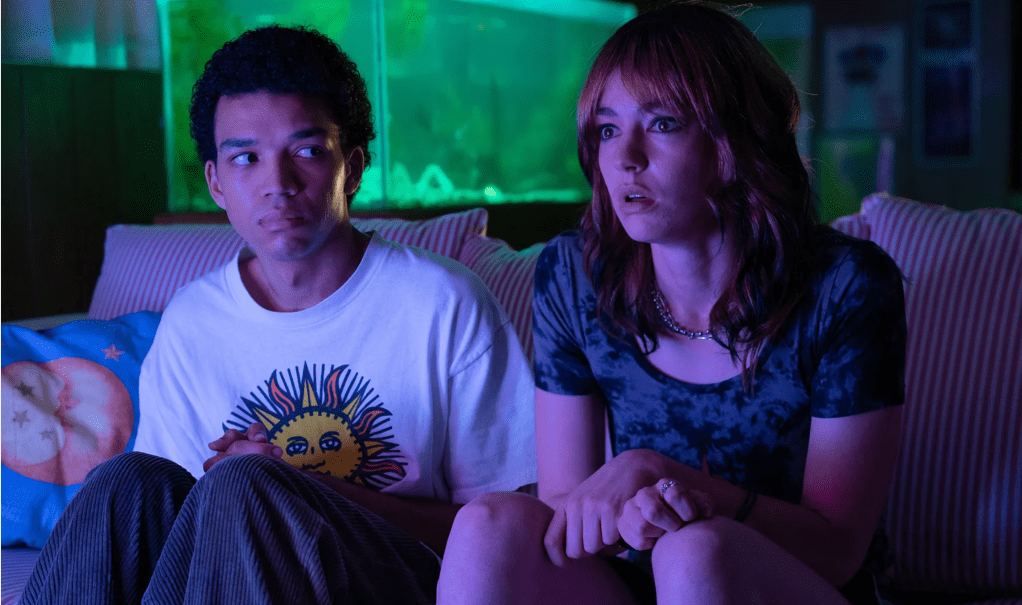
Main characters: Owen (Justice Smith) and Maddy (Brigette Lundy-Paine) Pic: A24
Schoenbrun said in a Teddy Award interview it was a film that they wrote in the early stages of transition and how they were dealing with life after coming out.
The narrative follows two characters battling with gender dysphoria and sexual transition, and the immense anxiety that coincides with those feelings. Reflected in wandering directing style and slow pacing, reflecting cool, quiet feelings of anxiety. Set in the 90s, the main idea is the characters live vicariously through a TV show called The Pink Opaque, and how they wait impatiently for the next episode to air, reflects network era of television too.
Video essay: Lucas Blue
Furthermore, The Pink Opaque also means one’s true self lies within, and Schoenbrun cleverly reflects the main characters love for the show as they relate to The Pink Opaque characters as someone they wish they were, whilst they attempt to untangle those parts of their identity. The art-house cinematography also reflects the transgender flag through colour, which I thought beautifully reflects aspects of form.
Overall, I Saw the TV Glow is a well-done representation of people who are Non-Binary and Transgender partly because the Non-Binary director can draw from their own experience. They said: “I want to make movies for my people”.
Words by Lucy Snell.
References:
Anamarija Horvat ‘Crossing the Borders of Queer TV: Depictions of migration and (im)mobility in contemporary LGBTQ television’, Trans TV Dossier 3, Critical Studies In Television 15: 3: https://journals.sagepub.com/toc/csta/15/3
Guardian interview with Schoenbrun: https://www.theguardian.com/film/article/2024/may/11/jane-schoenbrun-interview-i-saw-tv-glow-movie
Teddy Rewards interview Schoenbrun: https://www.youtube.com/watch?v=zXHpm6VwKhM&t=5s
Lucas Blue video essay: https://www.youtube.com/watch?v=kjS_GezAzzk
 Digital Audiovisual Media Class Blog
Leave a comment