
Nowadays, the emergence of Trans TV is in part one of the reasons for this important intervention into the changes in the contemporary television industry, stressing that these changes should be thought of together, especially in the discussion of technological changes in the industry, and that aesthetic changes cannot be separated from television programmes and the viewing experience of the viewer (Goddard and Hogg, 2018). In modern television, the rise of digital platforms has opened up unprecedented opportunities for Trans TV, and the American series Pose exemplifies this transformation. Not only is the show unique in its storyline, it also breaks the rules in its casting and production team choices. As the show with the most transgender cast ever on scripted television, Pose amplifies voices that are often marginalised in mainstream media (Cooper, 2018).
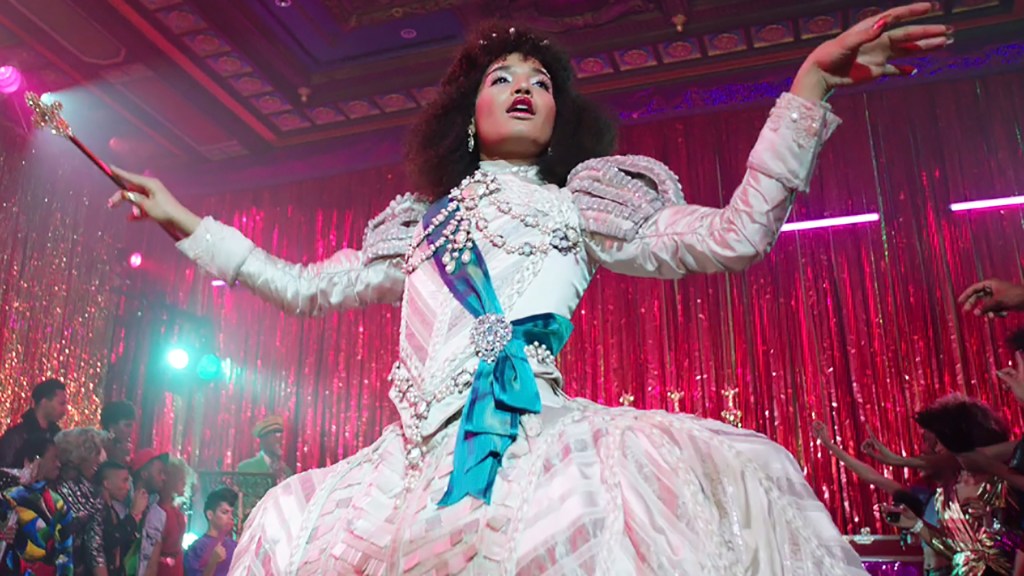
Set in 1980s New York, Pose focuses on prom culture and explores themes of identity, community and resilience. The character Blanca (MJ Rodriguez) chooses to start her own ‘family’ after learning she is HIV-positive, an act that is symbolic of the families of choice created by many LGBTQ individuals who face rejection from their biological families. The play depicts the prom scene, where contestants compete for trophies in different categories, a cultural practice rooted in resistance to social norms.
The key strength of ‘Pose’ is its authentic representation of the LGBTQ experience, especially for trans women of colour. This inherent perspective allows ‘Pose’ to honestly and deeply explore love, loss, and the challenges of living as a trans person.
Whilst digital platforms have provided a vast space for Trans TV, there is still a challenge between being authentic and entertaining. While to some extent transgender characters have become more visible on digital platforms, there is still a tendency to simplify and stereotype transgender people in the presentation of many episodes (Mocarski et al., 2019).
Overall, Pose is an important milestone in the evolution of Trans TV, utilising the opportunities afforded by digital platforms to authentically recreate the LGBTQ experience, and in particular the transgender experience. It also denotes how balancing the aesthetic context of niche culture with commercial viability remains an important topic for the television industry to consider.
Reference:
Cooper, M. (2018) Why pose is the most groundbreaking LGBTQ TV show ever – LA weekly, LAWEEKLY. Available at: https://www.laweekly.com/why-pose-is-the-most-groundbreaking-lgbtq-tv-show-ever/ (Accessed: 05 November 2024).
Goddard, M. N., & Hogg, C. (2018). Introduction: Trans TV as concept and intervention into contemporary television. Critical Studies in Television, 13(4), 470-474. https://doi.org/10.1177/1749602018798217
Mocarski, R. et al. (2019) The rise of transgender and gender diverse representation in the media: Impacts on the population, Communication, culture & critique. Available at: https://pmc.ncbi.nlm.nih.gov/articles/PMC6824534/ (Accessed: 05 November 2024).
Zeming Xu 33838915
 Digital Audiovisual Media Class Blog
Leave a comment