Have you ever found a series so captivating it hypnotises you from the first episode to the last? In the ever-evolving world of technological advancements, film and television has seen its development from rigid linear viewing to tailored on-demand preferences.
Clearly, there has been a shift in content consumption, from traditional broadcasting to an endless stream of personalised content. So this begs the questions, is binge-watching just a harmless hobby or does it reveal a deeper social digital addiction?

VCRs allowed viewers to record programmes to watch later. Pic: Legacybox.com
To build context, traditional television followed a strict schedule which many would plan their day around. Then came along ‘historical binge-watching’ starting with VCRs which came about during the mid-70s where viewers could ‘time-shift’ and record programmes to watch later (Stevens, 2021) Non-linear television is valuable for its “ability to control viewing […] using tools to time-shift and place-shift” (Lotz, 2017)
Then came video on-demand (VOD) viewing which totally rocked the television world. The dawn of VOD was attractive to viewers for its technological convenience and efficiency to “further expand choice” (Lotz, 2017) which allowed viewers to escape network scheduling which already offered minimal original content.
Moreover, when streaming giant, Netflix, came on the scene, they completely challenged traditional television. Netflix served as a “dominant challenger to linear television, viewing practices, nationalised media systems and established concepts of what television is” and signalled a “significant shift” in a “new global media landscape” (Jenner, 2018)
Alongside that, Netflix introduced “season dumping”, meaning an entire film series is available for immediate viewing, completely abandoning the weekly episode schedule model.
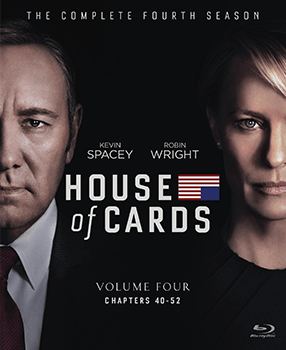
House of Cards, Netflix’s first orginal series, was released in 2013. Pic: Wikipedia
The first Netflix Originals series was House of Cards which invited viewers to fully immerse themselves in the narrative world. In an interview with a producer from the show, Beau Willimon stated: “Our goal is to shut down a portion of America for a whole day”, showing the drastic change in TV distribution (McDonald, 2016)
Evidently, filmmakers don’t focus on building a healthy relationship between us and technology but instead their goal is to create content that glues us to our screens for hours, whether or not it’s good for our wellbeing.
Francesca Rodriguez-Broadbent 33752271
References:
Stevens, E. Charlotte. “Historical Binge-Watching: Marathon Viewing on Videotape.” In Binge-Watching and Contemporary Television Research, edited by Mareike Jenner, 23–39. Edinburgh University Press, 2021
Amanda Lotz (2017), ‘Theorising the Nonlinear Distinction of Internet-Distributed Television’, Portals: A Treatise on Internet Distributed Television
Jenner, M. (2018) Netflix and the re-invention of television. Cham, Switzerland: Palgrave Macmillan.
Kevin McDonald, Daniel Smith-Rowsey, Kevin McDonald, Daniel Smith-Rowsey and Smith-Rowsey, D. (2016) The Netflix Effect: Technology and Entertainment in the 21st Century. 1st edn. New York: Bloomsbury Publishing
 Digital Audiovisual Media Class Blog
Leave a comment