The journal article “Trans TV as Concept and Intervention into Contemporary Television” explains that changes overtime in how television series are produced and released allow for more queer and trans focused media to be created from both a storyline and aesthetic perspective (Goddard and Hogg). Heartstopper (2022-ongoing) is a television series on Netflix that focuses around an LGBTQ+ friend group as they go through high school, and it is geared towards a target audience of tweens and teenagers. The show is performing very successfully as it has just released its third season and currently holds a 98% score on Rotten Tomatoes.
Credit: “UCA Stars in Heartstopper” by University for the Creative Arts
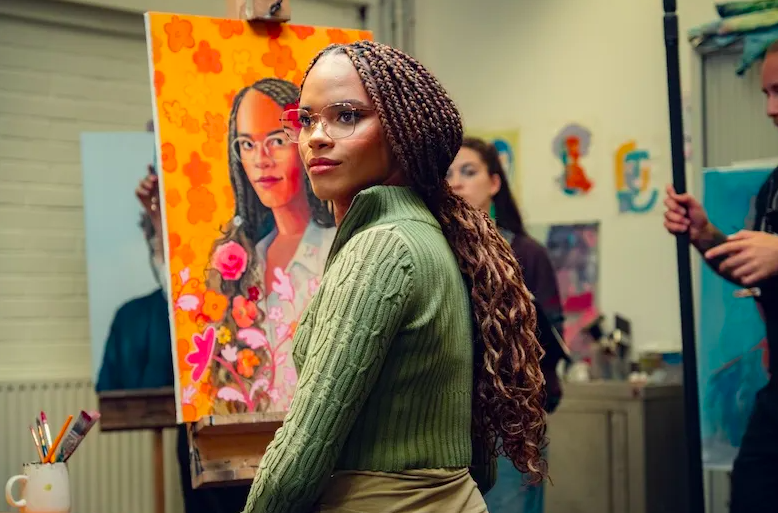
One of the main characters on Heartstopper is Elle, played by Yasmin Finney, and both the actress as well as her character identify as a transgender woman. The show takes a more unique approach to Elle’s storyline than in other examples of trans TV as it follows her journey post-transition, meaning that there is no “coming out” plot line for Elle and her dead name is never mentioned in the show. While Elle does face several issues throughout the series that are related to her identity, her story is mainly focused around her dreams of becoming an artist and her relationship with her boyfriend Tao. There is a likelihood that Heartstopper’s predominantly positive reception is due to the show’s ability to feature LGBTQ+ characters whose storylines extend beyond just their sexuality or gender identity.
Credit: “Heartstopper Official Trailer” by Netflix
The concept mentioned by Goddard and Hogg that some series adopt more of a “queer and trans aesthetic” can evidently be seen through the visuals in Heartstopper. All the scenes in the show are filled with bright and vibrant colors that are often associated with LGBTQ+ pride and the celebration of one’s identity through colorful identity flags and the rainbow symbol. The show also incorporates small animations throughout the episodes that are used to display the emotions and feelings that the characters are experiencing which gives viewers a better sense of what it is like to go through life from a queer perspective. These creative decisions give the show a clear sense of cohesion as both the visual style and storyline itself are reflections of each other.
-Olivia Arenburg
References: Michael Goddard and Christopher Hogg (2018), ‘Introduction: Trans TV as concept and intervention into contemporary television’, Critical Studies in Television 13:4: https://journals.sagepub.com/doi/full/10.1177/1749602018798217
 Digital Audiovisual Media Class Blog
Leave a comment