But I’m a Cheerleader tells the story of Megan (Natasha Lyonne), a cheerleader sent to a conversion camp called “True Directions” after her parents suspect she’s gay. Megan, who initially denies being queer by insisting “But I’m a cheerleader,” starts to discover her true identity at the camp and falls in love with another camper, Graham (Clea DuVall). The film is a satirical take on gender roles, sexuality, and societal expectations, using humor and exaggerated visuals to critique stereotypes. Director Jamie Babbit’s use of bright pink and blue tones highlights traditional gender norms, while the dollhouse-like setting underscores the fake belief of trying to “fix” someone’s identity.
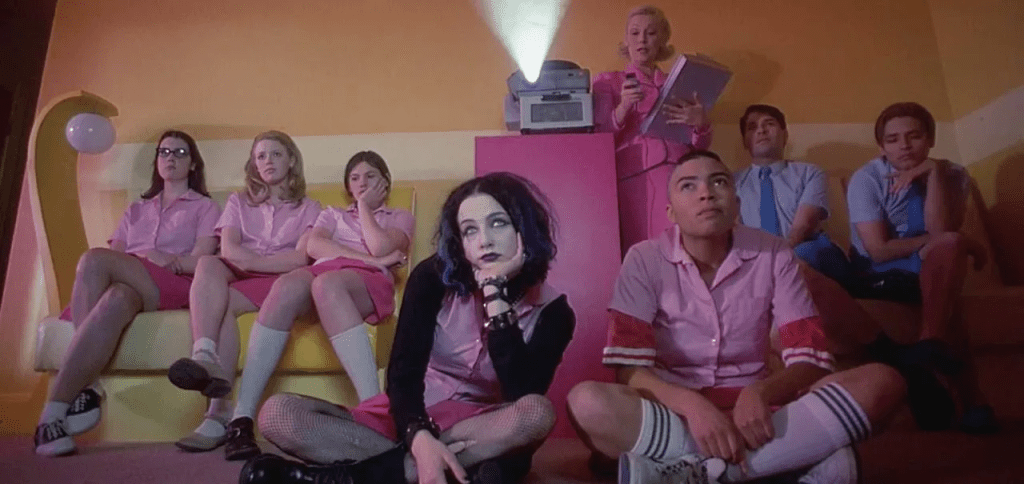
Megan is portrayed as the stereotypical “girl next door”—blonde, pretty, and dating the football captain—making her realization of being gay ironic and central to the film’s humor. Her parents, however, see her vegetarianism and posters of singer Melissa Etheridge as signs of her queerness which are stereotypes. At True Directions, the camp’s methods involve extreme gender performances, forcing the campers to act in ways that match outdated ideas of “normal” femininity and masculinity. The absurdity of these activities highlights how unrealistic and harmful such stereotypes can be.

The film also challenges assumptions about what it means to be queer or straight. Megan is a feminine lesbian, while Jan, another camper, is a butch, Hispanic girl who loves softball and is assumed to be gay but isn’t. Jan makes a passionate plea to not judge her sexuality based on her appearance, saying, “Just because I wear baggy pants and play softball doesn’t mean I’m gay.” By contrasting Megan and Jan, the film rejects narrow ideas about gender and sexuality.
In the end, But I’m a Cheerleader celebrates individuality and queer identity by humorously challenging the stereotypes that were widely accepted when the film was released. The movie stands out for showcasing a diverse range of queer representations, all set within the unconventional backdrop of a conversion camp—a setting that many audiences were unfamiliar with at the time. The film made a significant impact on LGBTQ+ cinema, quickly becoming a cult classic and one of the most successful queer romantic comedies of its era. It paved the way for more comedies centered around queer characters, breaking new ground in representation and storytelling.
Credit
- McWilliam, K. (2006). Girl Meets Girl: Lesbian Romantic Comedies.(2006).
- “But I’m a Cheerleader Movie Review.” WLW Film Reviews, 14 July 2022.
- “But I’m a Cheerleader.” The Soul of the Plot, 16 June 2015.
By Jimena Saavedra
 Digital Audiovisual Media Class Blog
Leave a comment