Netflix emerged as a highly successful video on demand (VOD) platform, readily available at the touch of one’s fingers. However, its designed accessibility has allowed it to dominate viewer reflexes when looking for something to watch. Lotz argues it has enabled viewers to perceive laptops and tablets as ‘television screens’ helping to mobilise and facilitate new viewer experiences, with far greater access.
However, its tools such as ‘recommendation engines’ can be seen to narrow our fields of programme and film exploration, forcing us to be confined to its suggestions of what we may want to watch next. Lotz, argues not only have we begun to stray from the weekly episode style of watching, which generates thrill and excitement between sessions, but we are moving towards normalising the satiated state from binge-watching, suffering from what is known as the ‘season dump.’ We must then consider whether we are being absorbed into a inactive engagement with the content, and whether we have unintentionally sacrificed our viewer participation.
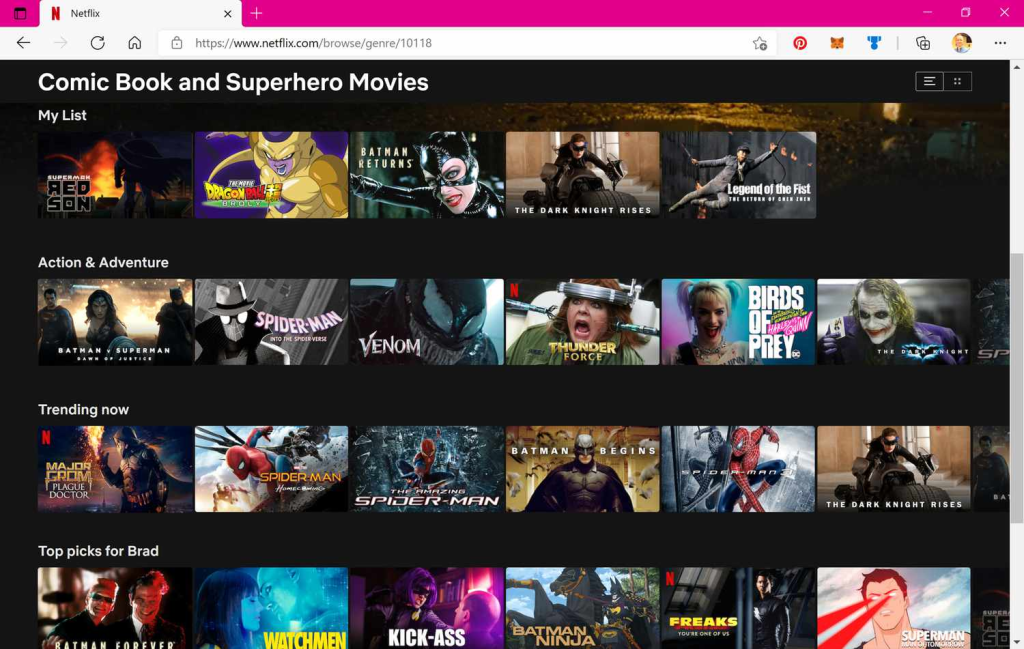
Jenner flips this angle and invites us to view the platform as content producers rather than distributors. This invites the notion of a subtle role shift in Netflix’s attempts to attract audiences and redefine viewership. Perhaps, we must now consider the greater market context of what Jenner defines as ‘matrix media’. This refers to ‘where viewing patterns, branding strategies, industrial structures, the way different media forms interact with each other or the various ways content is made available’. Therefore, we can infer the involvement of marketing strategies and the diversification of roles for these platforms, to view them as not only distributors but producers who intentionally position viewers to experience its content.
Ostensibly, Netflix’s attempts to display objective categories of films positions its viewers to understand and approach television and film within the boundaries of their genres. Arguably, these recommendation engines redefine our viewer experience by confining our imaginations to the bubble of the Netflix perspective. This pacifies our participation and drives us down the road of binge-watching and reliance on content dumps. This is amplified by the notion of ‘Netflix Original’ content, which is often at the forefront of accounts, illustrating the promotion of their own production with intention, as opposed to simply distributing.
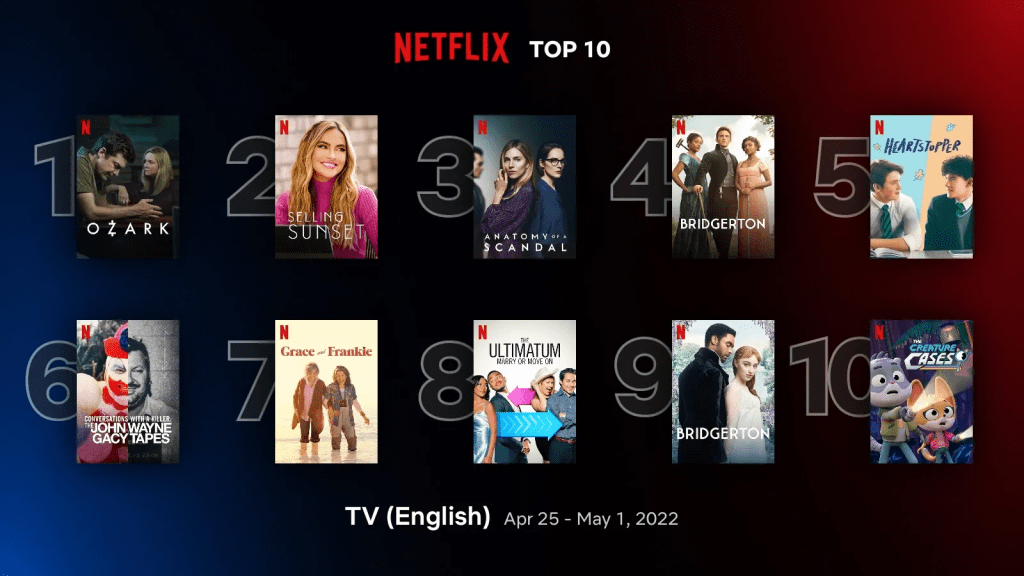
Here we can see that the entire Top 10 of shows are made by Netflix, which conveys their capitalising of the space to promote their own content whilst attempting to signal to its audiences what is considered almost necessary to watch.
Therefore, we can argue that our pre-VOD understandings of viewership have changed amidst a dramatic personalisation of television, due to the shift from externally distributed programmes and episodes to individualised scheduling. In the case of Netflix, it would appear that the option to promote one’s own production allows for a clear imposition of content which reduces the viewers active participation and choice in viewership, often in a subconscious sense.
References:
Mareike Jenner (2018), ‘Introduction: Netflix and the Renvention of Television’, ‘Introduction: Binge Watching Netflix’, Netflix and the Reinvention of Television, pp. 1-31, 109-118.
Amanda Lotz (2017), ‘Theorizing the Nonlinear Distinction of Internet-Distributed Television’, Portals: A Treatise on Internet Distributed Television, https://quod.lib.umich.edu/m/maize/mpub9699689/
Zayn Rajan 33777996
 Digital Audiovisual Media Class Blog
Leave a comment