While watching the 2009 animated film Coraline, we, as the audience, are subjects traversed by affect. However, we each process affect differently, as we each possess our own emotions.
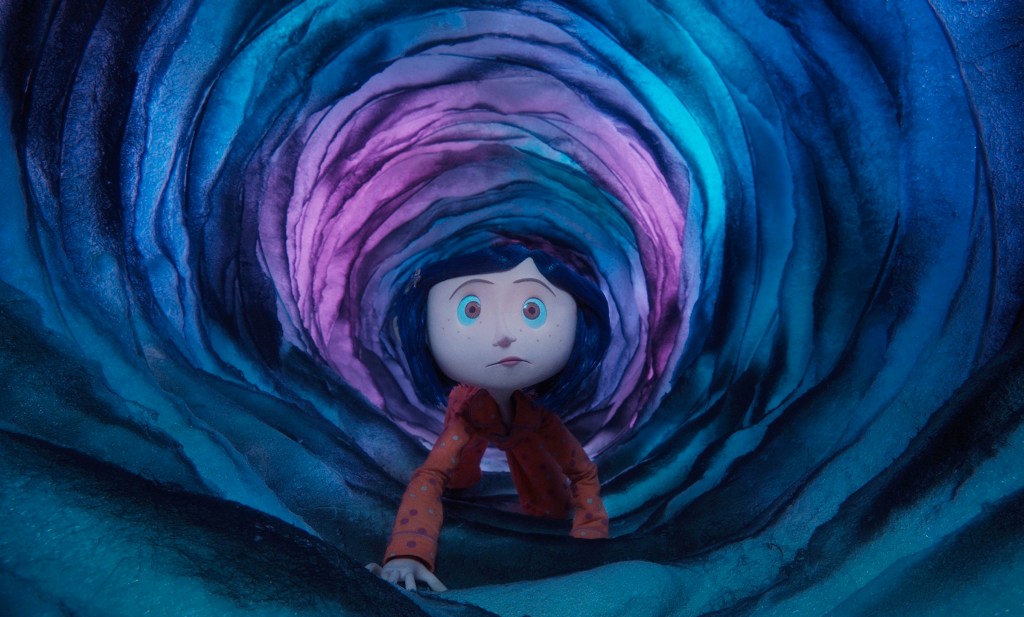
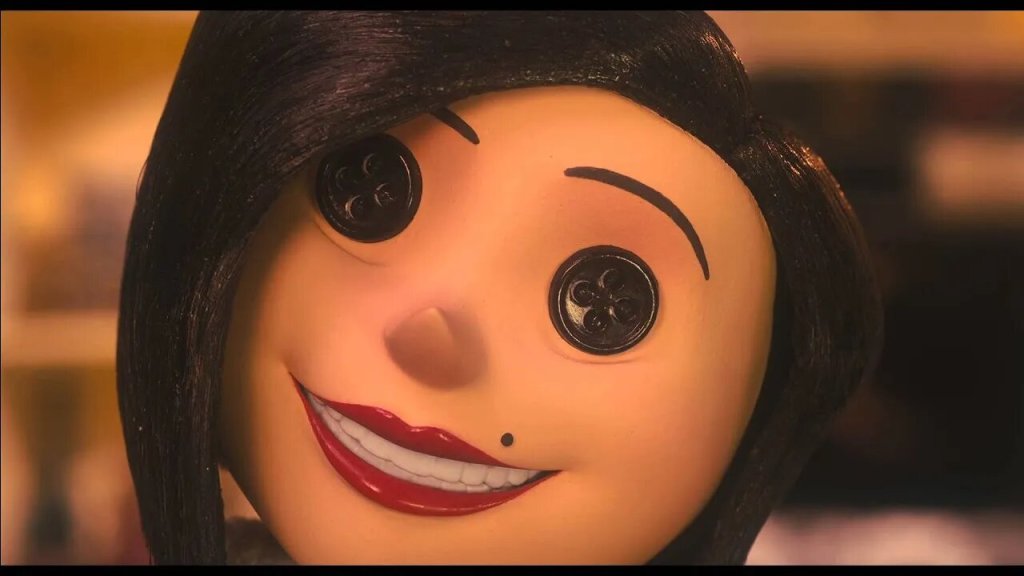
Coraline was released in 2009 and was rated as PG, i.e., suitable for children over the age of eight. However, the general discourse of reviews and articles all over the internet tout the film as being far more scary than other PG-rated horror-style films. The plot is about a young girl whose family move to a big old house, and she is unhappy with her new life. She finds a hidden door in the house, leading to a parallel world, which is perfect and has everything she could have dreamed of. She meets a new set of parents, who she calls her ‘other parents’. However, everyone in this world has buttons for eyes, and Coraline finds that not everything in this new world is as perfect as it first seemed.
Steven Shaviro discusses the concept of affect in terms of audiovisual media, explaining that “films and music videos, like other media works, are machines for generating affect, and for capitalising upon, or extracting value from, this affect”. Shaviro elaborates on this and references Massumi’s differentiation between affect and emotion, explaining that ‘affect is primary, non-conscious, asubjective or presubjective, whereas emotion is derivative, conscious, qualified and meaningful’ (Massumi in Shaviro, 2010).
Shaviro explains that our lives and existences are always bound by affective and aesthetic flows that elude cognitive definition or capture. Also, according to Shaviro, affect, is captured, reduced, and then qualified in the form of emotion. This is what audiences experience when watching Coraline.
We as the audience are traversed by affect throughout Coraline, firstly by the digital medium of animation itself, and secondly through Coraline’s crossings between her primary and secondary worlds. The stark difference between her real and other world is what fuels the film’s horror elements. The fear instilled in Coraline when things go wrong in the other world can be understood as the film’s ‘machine’ for tactfully generating an affective response within the viewer. The unsettling and scary themes throughout create non-conscious reactions, which the viewer then processes into emotions of fear and discomfort.

Perhaps there is a societal expectation that adults should not find an animated film particularly scary, as the medium of animation itself alludes to the ‘unreal-ness’ of the film. Animation could be seen as a tool to accelerate sensory affective input, especially in the scenes where the ‘other’ parents try and trap Coraline in the other world. The powerful affect that is generated throughout Coraline is what gives it such an uncomfortable edge, and even mature viewers would struggle to break free from it.
References
Steven Shaviro, ‘Post-Cinematic Affect: On Grace Jones, Boarding Gate and Southland Tales’, Film Philosophy 14.1, 2010.
Coraline (2009), Directed by Henry Selick. United States: Focus Features, Universal Pictures, Universal Pictures Home Entertainment.
Jonathan Thwaites 33745474
 Digital Audiovisual Media Class Blog
Leave a comment