Julie Andem’s SKAM (2016) is a Norwegian transmedia phenomenon that has captivated audiences worldwide, spawning numerous international remakes and a passionate fanbase. SKAM was issued as a response to NRK’s (Norwegian public broadcasting channel) challenge in engaging younger audiences. Through its exploration of teenage life, carefully delving into themes of friendship, relationships, identity, mental health, eating disorders, and sexual assault. Its heartfelt portrayal of teenage life earned widespread acclaim, but a significant factor in its success lies in its innovative approach to distribution.
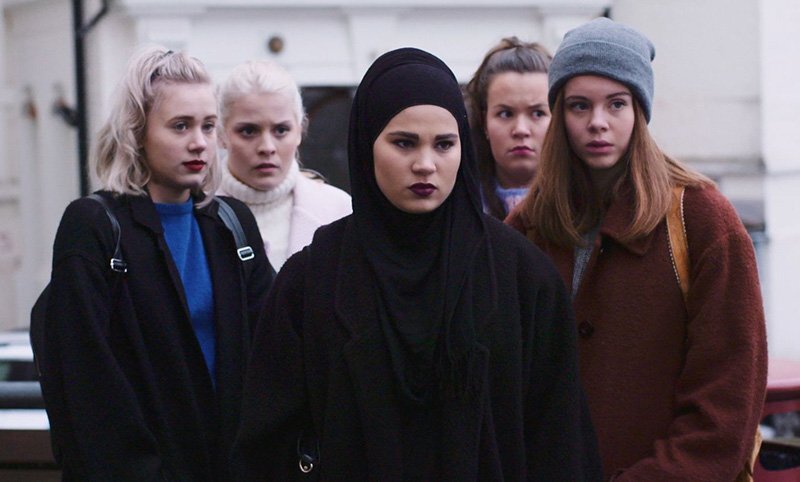
Henry Jenkins (2005) defines transmedia storytelling as “the process where integral elements of fiction are dispersed across multiple delivery channels for the purpose of creating a unified and coordinated entertainment experience.” This strategy was key to Andem and NRK’s development of SKAM. SKAM pioneered a multi-platform approach to storytelling. Short clips, text message exchanges, and Instagram posts were released in real time via the official SKAM website (skam.p3.no). For instance, if a scene in the show took place at 2 PM on a Monday, the corresponding clip would be released at that exact time in the real world. At the end of the week, these fragments were compiled into a full episode, offering a cohesive narrative while maintaining the real-time immersion.
This approach blurred the boundaries between reality and fiction, immersing viewers in the same timeline as the characters. A study by Bengtsson et al. (2018), which included qualitative interviews with Swedish SKAM viewers, highlighted this effect. One participant described, “We were having lunch at school, and they were having lunch at school too … it makes it feel real.”
Beyond the clips, the characters’ Instagram profiles, Spotify playlists, and YouTube channels were carefully curated and updated in real time. These digital touchpoints seamlessly blended into viewers’ daily social media feeds, making the characters’ lives feel authentic and immediate. This integration of various platforms created a “digital universe” that felt deeply personal and relatable to the audience.
Examples of the Instagrams of characters Isak, Eva and Noora.
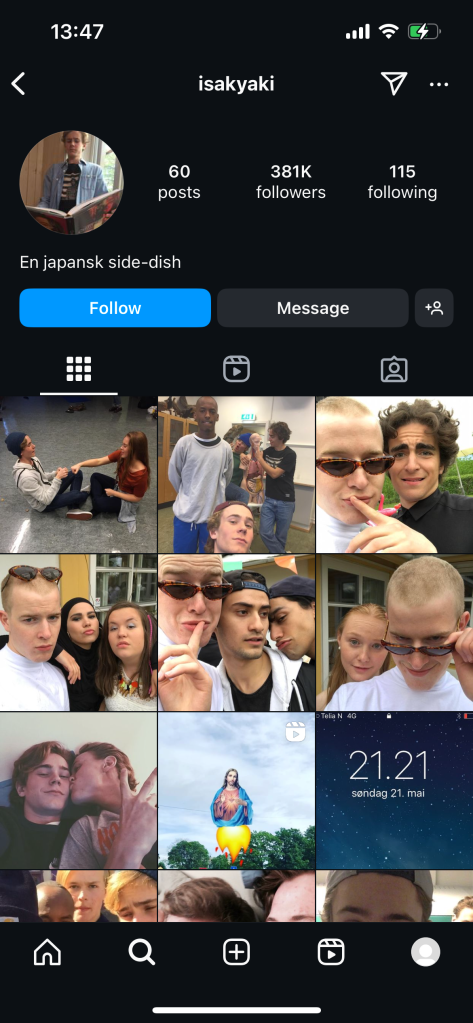
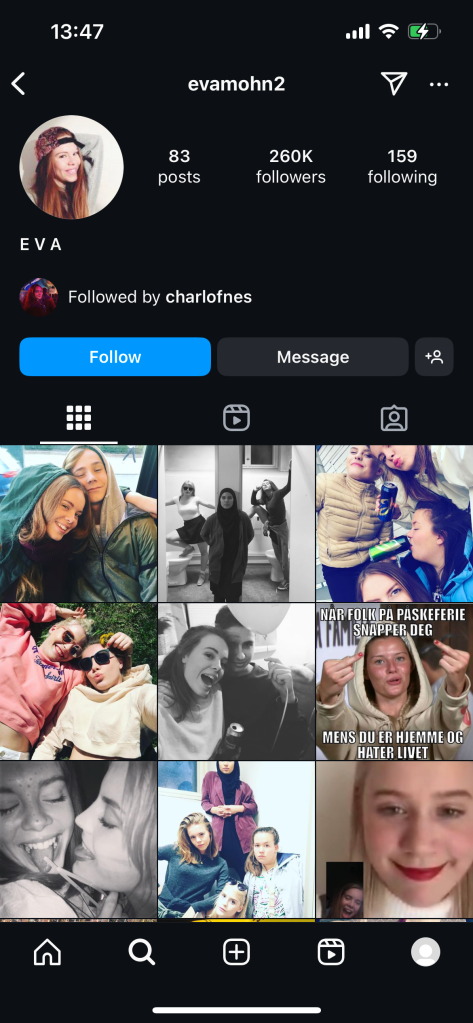
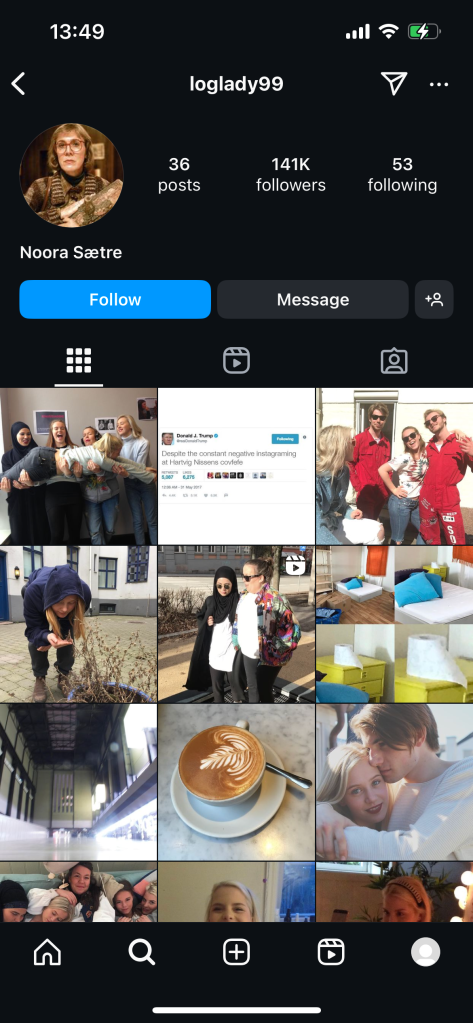
The unpredictability of SKAM’s real-time updates heightened the audience’s immersion. Viewers never knew when a new clip or message would appear, which fostered a sense of excitement and urgency. Jenkins (2019) emphasises that “in immersion, the consumer enters into the world of the story,” this alligns perfectly with SKAM’s approach.
Guttu (2016) described the experience as “collective enchantment,” a phenomenon that could only be fully appreciated in the moment. This sense of shared, real-time engagement contributed to the cultural nostalgia surrounding SKAM, which many fans regard as ending too soon with its four-season run. The show’s unique combination of deep immersion and community-driven engagement has solidified its place as a landmark in transmedia storytelling.
Bibliography:
Bengtsson, S., Berg, K., & Sveningsson, M. (2018). Skam and the Everyday: Authenticity, Nostalgia, and Collective Enchantment in the Digital Age.
Guttu, J. (2016). Collective Enchantment in Skam: The Role of Real-Time Storytelling in Audience Engagement.
Jenkins, H. (2005). Convergence Culture: Where Old and New Media Collide. New York: NYU Press.
Jenkins, H. (2019). The Art of Immersion: Storytelling in a Transmedia World.
NRK (2016). Skam.p3.no. Norwegian Broadcasting Corporation.
Radwa Osman 33779472
 Digital Audiovisual Media Class Blog
Leave a comment