Ruiyao Zhu-33832865
The digital extension of the physical context allows individuals to construct and express their identities across multiple, overlapping environments, often transcending geographical boundaries (Conti, 2024). Driven by digitalization and globalization, YouTube in the post-movie era is not only a platform for video content sharing and trailer distribution, but also a diversified virtual community. Users identify themselves and build a sense of community through content creation and interaction, including people’s expressions and exchanges on different topics. From personal identity to collective culture, YouTube has become an important place for people to explore and express their identity. This blog will analyze how the YouTube community affects users’ identity, as well as the opportunities and challenges presented in this process.
The YouTube community, with its openness and diversity, provides users with a broad space to express themselves and shape their identities. Individuals can use video content to show their unique interests, cultural backgrounds, and lifestyles, and find communities that match their values. For example, in health education, the use of YouTube to spread evidence-based health education shows promise as a way to supplement nursing education and support the populations we serve ((Sara Bynon Neely et al., 2023).
At the same time, YouTube’s algorithmic recommendation function further strengthens community aggregation. A well-known example, mentioned also in the Social Dilemma, is how algorithms might aim to control a young person’s attention by showing them increasingly radicalised or extreme content, raising societal concerns on what and how youth are learning online (Vermeire et al., 2024). By continuously watching videos, users gradually form their own content preferences and join specific interest communities. Whether it is a love of fashion, games, food, or concern for social issues, YouTube provides an exclusive platform for these interests, helping users find a balance between individual identity and collective identity.
On YouTube, identity is not only reflected in the creator’s video content, but also deepened through the audience’s interactive behavior. The act of clicking “like” buttons on a video presents a positive attitude toward the video and is an engagement type that implies active emotional expression compared to just watching the video (Munaro et al., 2021). The comment area, barrage and community functions provide a platform for dialogue between users, enabling a two-way interaction between personal identity and group consciousness. For example, in 2019, YouTube changed its interface and placed the comment section below the video, thereby making it easier for users to see the comments. In addition, users were not able to see the comment section when watching the video in landscape mode but, in 2021, the comment section was updated so that they could watch it together with the video (Byun, Jang and Baek, 2022).
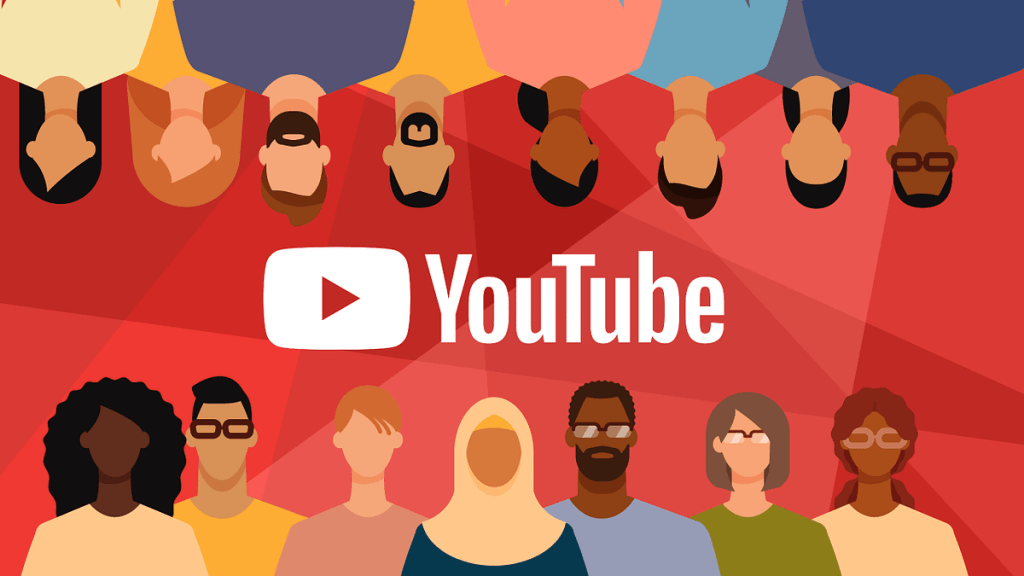
(GigaStar, 2023)
With its unique community model, YouTube has profoundly influenced users’ identity construction and provided users with a platform and space to explore themselves and interact with culture. At the same time, this not only affects users’ personal identity, but also shapes the global cultural ecology in the digital age.
References:
Byun, U., Jang, M. and Baek, H. (2022). The effect of YouTube comment interaction on video engagement: focusing on interactivity centralization and creators’ interactivity. Online Information Review. doi:https://doi.org/10.1108/oir-04-2022-0217.
Conti, L. (2024). Understanding Multiculturalism and Interculturalism in Cross Cultures. pp.1–15. doi:https://doi.org/10.5772/intechopen.1006912.
GigaStar (2023). How YouTube Continues to Drive Positive Change as a Catalyst of Creator Diversity & Inclusion. [online] Medium. Available at: https://medium.com/@GigaStar.Official/how-youtube-continues-to-drive-positive-change-as-a-catalyst-of-creator-diversity-inclusion-a50a67211df1.
Munaro, A.C., Barcelos, R., Francisco Maffezzolli, E.C., Rodrigues, J.P. and Paraiso, E. (2021). To engage or not engage? The features of video content on YouTube affecting digital consumer engagement. Journal of Consumer Behaviour, [online] 20(5). doi:https://doi.org/10.1002/cb.1939.
Sara Bynon Neely, Long, S., Cygan, H. and Kalensky, M. (2023). Broadcast health: Leveraging YouTube for community health education. Public health nursing, 41(2), pp.209–214. doi:https://doi.org/10.1111/phn.13268.
Vermeire, Z., Haan, M.J.D., J. Sefton-Green and Akkerman, S.F. (2024). Platformised Affinity Spaces: Learning communities on YouTube, Twitch and TikTok. Frontline Learning Research, 12(4), pp.1–21. doi:https://doi.org/10.14786/flr.v12i4.1325.
 Digital Audiovisual Media Class Blog
Leave a comment