The song Ditto released by the Korean girl group New Jeans has been popular throughout East Asia in 2022, and the music video has received numerous compliments. The music video not only has a subtly cinematic and creative narrative, as Gina (2017) claimed, but it also has a new aesthetic, especially its portrayal of the current identity of young high school girls in East Asia. This accurately depicts the delicate and subtle flow of emotions of East Asian girls during their high school years and remediates the lost identity of East Asian adolescent girls in the culture industry.
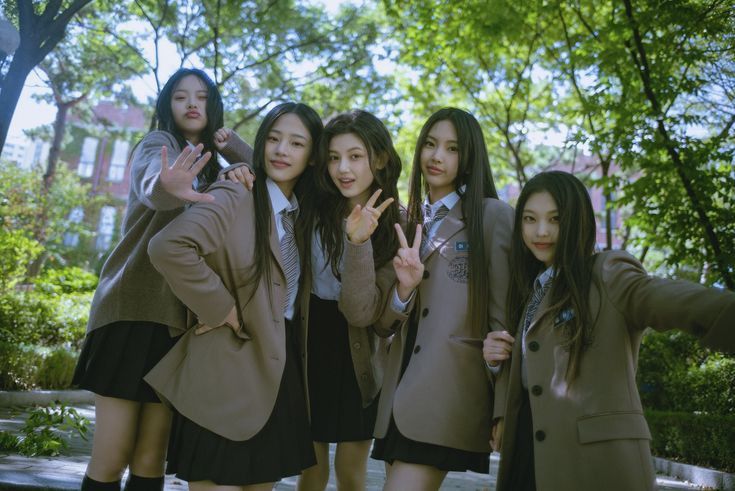
The introduction of Ditto
Ditto’s Music Video tells the story of the joyful, yet sour and painful youth of a high school girl named Hee Soo and her five imaginary friends who were the five NewJeans members. The MV’s first episode is a record of Hee Soo’s happy high school days with the five girls, where they go to class together, play together, and even accompany Hee Soo to meet her favorite boys, then the second episode is a revelation of the harshness of reality, and how it was all a figment of Hee Soo’s imagination. This is also the most ingenious part of Ditto MV’s narrative design, as in the first episode, the infinite joy is laid out, and in the next episode, the bitter reality that joy only exists in Hee Soo’s imagination is revealed. That means Hee Soo and her five sparkling friends are all glittering in imagination, while the introverted and unnoticed Hee Soo can only rely on her imaginary friends to fight off her obscurity.
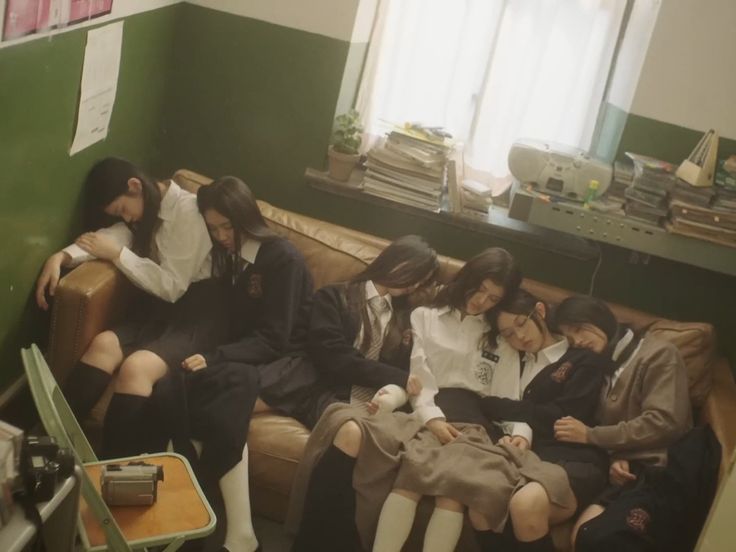
Music Video Link:
Episode 2: https://youtu.be/V37TaRdVUQY?si=0FQ1MFZtqz8BGqp8
Cinematic in Music Video
Ditto cleverly uses narrative to tell the whole story because the last episode only used fragmented moments of togetherness to show how happy Hee Soo is, and the viewer is immersed in the friendship of the little girls along with the song and the plot. The next episode suddenly uses flashbacks to point to Hee Soo’s imaginative moments, exposing the immense sadness of five girls disappearing in the same position in the video. This contrast between the two instantly brings the emotional experience mixed with the music video and the song to a climax, allowing happiness and sadness to be intermingled and sweep in emotions and memories that an entire group of East Asian girls may have experienced in their respective high schools. The combination of music and images in Ditto’s music video is different from the film, even though it involves cinematic camera movements and cuts, but it does not rely on dialogue to build character. According to music video already constructs a new form of aesthetic by combining other media traits (Mathias, 2017), the audio-visual language of Ditto’s MV, which relies on the music and visuals alone to narrate the entire story, is a good use of the music video’s aesthetics.
The remediate of East Asian Representation
Ditto’s music video’s portrayal of Hee Soo is a very clever way to fill in the missing identity of the East Asian adolescent girl in culture and history. Although the identity may be mentioned in some East Asian films, these films only focus more on larger social issues. However, Ditto’s story of a mediocre female high school student figure spending time with her fantasy friends evokes empathy and memories of East Asian women’s experiences of their own adolescent experiences, which illustrates the absence of this identity in the past and proves to be the success of the music video. It is precisely the MV’s capture of the subtle emotions that East Asian girls feel about friendship and love during high school time that allows the MV to capture Hae Soo’s loneliness, elation, and even unspoken imaginings in just a few minutes, erupting with immense emotional power. This is the imagined world of a beautiful friend who, while pretending to be cheerful, is inwardly lonely and longs to be lively, as the East Asian woman remembers from their past high school time.
Meanwhile, an identity like Hee Soo makes up for the lack of identity of younger generation women in the culture industry because the identity of high school girls has always focused on roles that are more tied to social issues as mentioned. There was no focus on the more modern and youthful identity of women. So, the relationship between the image of Hee Soo and New Jeans is more of a reminder of the consolation that star culture brought to East Asian women when they were lonely in high school. This recalls Fetters (2016) asserts that females used to get recognition from the object and found their belonging to the female community. It’s a flashback to memories and establishes that Ditto as a music video should have the same authoritative presence as the film does in media history because it records with its power, a particular female identity.
References:
Korsgaard, M.B. (2017). ‘Music Video after MTV: Audiovisual Studies, New Media, and Popular Music.’ 1st edn. Oxford: Routledge. doi: 10.4324/9781315617565
Arnold, G. et al. (2017). ‘Music/video histories, aesthetics, media.’ New York: Bloomsbury Academic.
Fetters, C. (2016) ‘The Continual Search for Sisterhood: Narcissism, Projection, and Intersubjective Disruptions in Toni Morrison’s Sula and Feminist Communities’, Meridians (Middletown, Conn.), 13(2), pp. 28–55. doi: 10.2979/meridians.13.2.03
Wenyu Li 33831990
 Digital Audiovisual Media Class Blog
Leave a comment