With the popularity of streaming platforms changing the way viewers watch anime and film, Netflix’s Arcane has become a benchmark in the streaming era with its unique narrative style, beautiful graphics and deep characterisation. The upcoming second season not only carries viewers’ expectations, but also provides a new opportunity to explore the concept of “Trans TV”, i.e., diversity, gender fluidity, and narrative innovation.
1.The combination of streaming and narrative diversity
The first season of Arcane has demonstrated how complex character relationships and diverse narratives can be brought to a global audience through streaming platforms. Whether it is the tech-elite culture of Piltover or the poor-class resistance spirit of Zaun, the show has always shown the conflict and integration of culture and society through multiple dimensions.
The second season of the show promises to further deepen these manifestations of diversity. With the characters’ emotions and growth at the centre of the show, viewers can expect more complex characterisation. For example, the emotional tension between sisters Jinx and Vi is not merely antagonistic, but intertwined with nostalgia and pain for the past. The streaming model of one-off or batch releases allows viewers to immerse themselves in these emotions more coherently and thus understand the complexity of the characters.
2.Gender Fluidity and Characterisation: Interpreting the ‘Trans TV’ Element
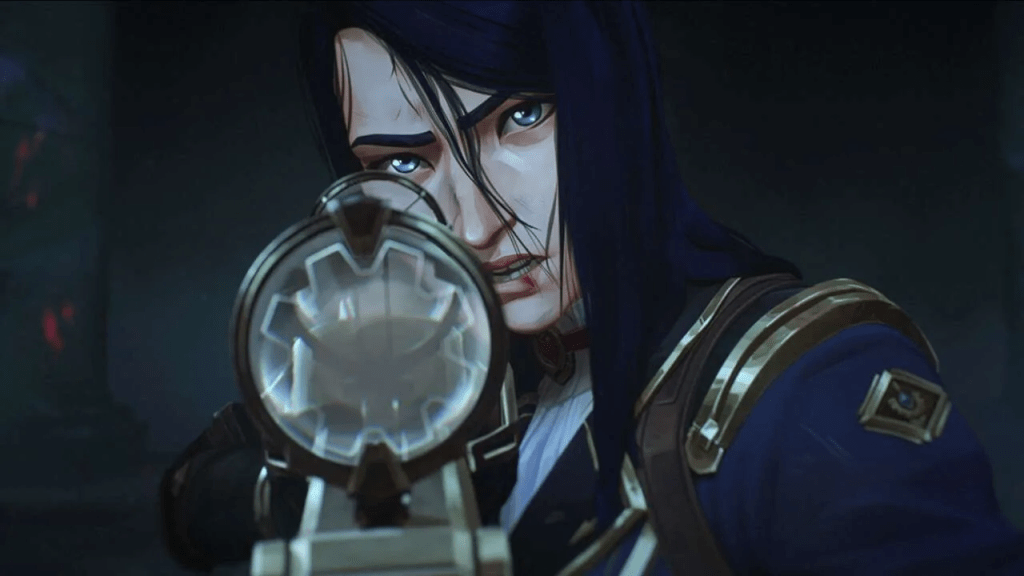
In Arcane, gender representation is not a simple dichotomy, but has a great deal of fluidity. For example, Caitlyn, as a courageous female law enforcement officer, not only embodies the confrontation with traditional gender roles in her profession, but also demonstrates possible same-sex emotional tensions through her interactions with Azure. Azure’s strength and her complex feelings for Jinx blur the line between what is traditionally considered ‘masculine’ and ‘feminine’ in terms of gender.
This trait will likely be further explored in season two. Azure’s struggle between justice and caring for her sister as the link between Piltover and Zaun is at the heart of the narrative, as well as a manifestation of gender fluidity. Through the streaming platform, viewers are able to dig deeper into the emotional layers and diversity of expression of these characters.
3.The immersive experience of binge-watching: a magnifying glass for diverse narratives
The binge-watching mode of streaming media can greatly enhance viewers’ immersion in the second season of Arcane. By watching multiple episodes in one sitting, viewers can experience each narrative thread in its entirety without being interrupted by scattered updates. For example, Season 2 distinguishes itself from Season 1’s weekly updates by becoming a chapter-by-chapter release model (with every three episodes constituting a complete mini-rhythm), which allows viewers to quickly get to the emotional peaks of the characters and seamlessly move through their growth and changing relationships.
This viewing style is especially suited to a character as complex as Jinx. Her transformation from an innocent little girl to the chaotic and pain-filled Jinx, and her psychological and emotional changes can seem even more shocking in a single viewing. Viewers are able to feel the tragic development of Jinx directly, without having to wait for scattered updates to recall her past behaviour.
4.‘Trans TV’ and Cross-Cultural Narrative: Anime Expression in the Age of Globalisation
The success of ‘Arcane’ cannot be separated from its cross-cultural narrative style. It not only shows the conflict between the two cities, but also combines multicultural backgrounds, such as the Viktor embodies the technological romance of Piltover and the industrial anti-utopian temperament of Zaun..With the global reach of the streaming platform, these cultural elements were able to resonate with audiences from different backgrounds.
Season 2 may explore the depth of this cross-cultural narrative further. For example, exploring the place of more non-mainstream groups in society and how these groups survive in the cracks of technology and power. Such a narrative not only echoes Trans TV’s focus on diversity and mobility, but also enables cultural exchange in the context of globalisation through the medium of anime.
Conclusion
The second season of Arcane is not only a highly anticipated anime production, but also a powerful implementation of the concept of ‘Trans TV’ in the streaming media era. Through diverse narratives, gender-fluid characterisation, and cross-cultural backgrounds, this work presents a narrative scroll full of layers and tensions with the support of the streaming platform. As the play unfolds, the audience will experience the infinite possibilities of diversity in the streaming media era through binge-watching.
Post by:MA Donghan
 Digital Audiovisual Media Class Blog
Leave a comment