SEVENTEEN’s music video Maestro is a fascinating story about the clash between human creativity and artificial intelligence (AI). The video uses powerful images and music to show how humans can fight to keep control of their emotions and creativity in a world where machines are taking over. This blog simplifies the ideas of experts to help explain why Maestro is more than just a music video.
Music Videos That Stay Relevant
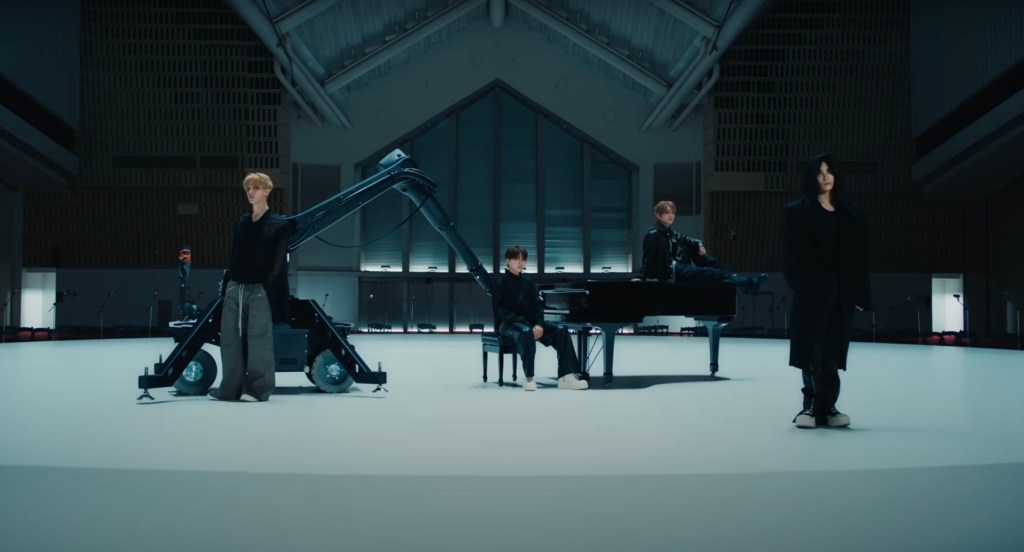
Gina Arnold and her team say that music videos are still important, even as technology changes how we watch them—from MTV to YouTube (Arnold et al., 2017). SEVENTEEN’s Maestro reflects this evolution. It doesn’t just promote their song but also delivers a message about technology’s impact on art. The opening scenes show a lifeless world full of machines and robots, with humans looking dull and robotic. This suggests that when AI takes over, human creativity might fade away. These visuals make Maestro feel more like a story or a warning than just a performance.
Style and Emotion in Maestro
Carole Vernallis describes modern music videos as fragmented and immersive, which means they have quick cuts, abstract images, and lots of details that draw you in (Vernallis, 2013). Maestro fits this description perfectly. The video shows SEVENTEEN dancing in stiff, robotic movements at first. As the video progresses, their dancing becomes smoother and more human, symbolizing their fight against AI control.
The video also changes its mood through colors. At first, it uses cold blue tones to show a lifeless, machine-like world. Later, warm orange tones take over, symbolizing hope and humanity’s return to creativity.
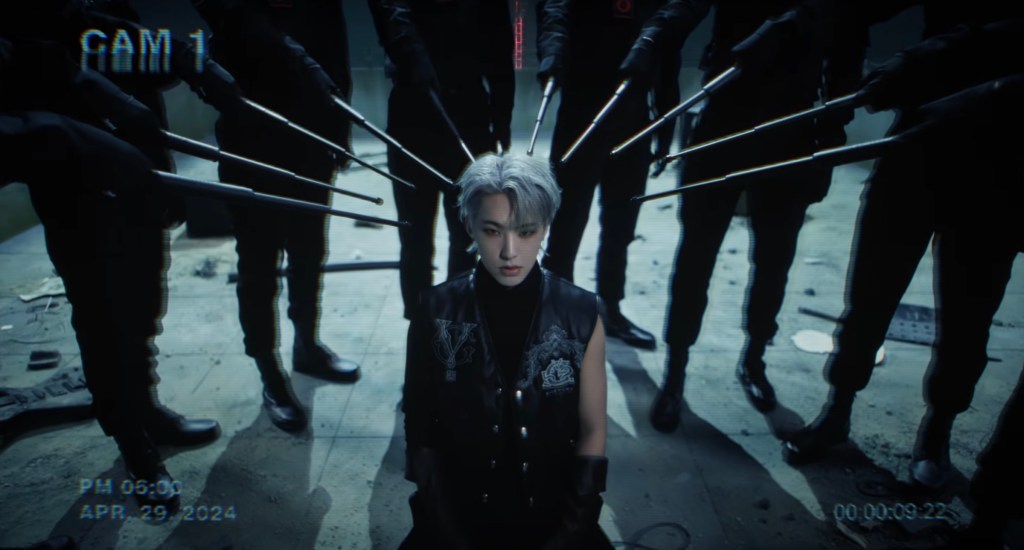
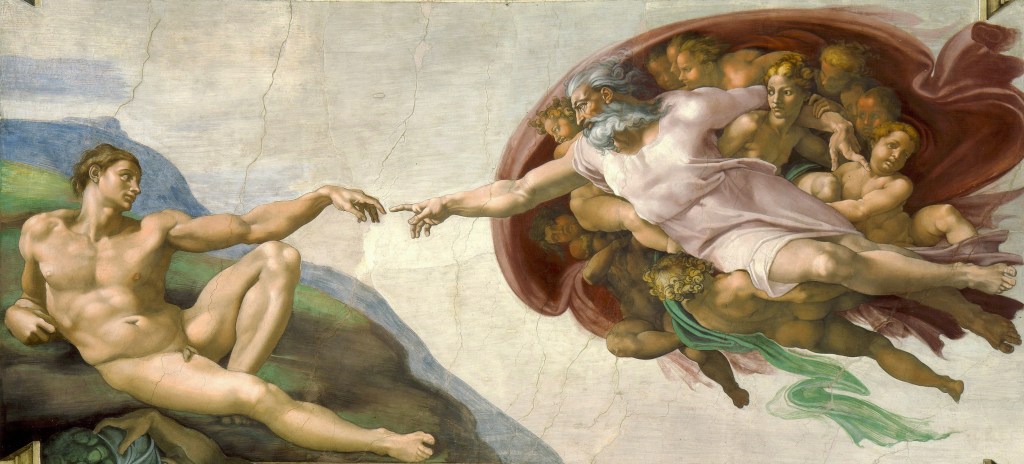
One of the most striking scenes in the music video shows the singer with a slight cynical expression as he gestures toward the robot arm, mimicking the iconic moment from ‘The Creation of Adam‘. In the original painting, this gesture symbolizes the moment God gives Adam a soul. In the music video, this could represent the AI’s attempt to give the singer a ‘new soul,’ though the singer appears indifferent. Alternatively, the red dots in the background suggest surveillance, implying that every action is being monitored. The near-touch of the fingers, a key detail in the original artwork, signifies the unbridgeable gap between God and humans. Similarly, in the music video, the untouched fingers highlight the distance between humans and AI. Even if the AI resembles a human or surpasses human creativity as a music master, there remains a fundamental difference between the real and the artificial.

A Video That Invites Reflection
Daniel Cookney explains how modern music videos often let fans join in and give their own meaning to the story (Cookney, 2017). Maestro ends with a big question on the screen: “Who is the real maestro?” This invites viewers to think deeply about the relationship between humans and AI. Fans can reflect on what they saw, share their ideas, or even create their own versions of the story. By involving fans this way, the video becomes more than just a piece of art—it becomes a conversation.
In summary
SEVENTEEN’s Maestro is a reminder that even as technology advances, human creativity is irreplaceable. The video mixes strong visuals, emotional storytelling, and a powerful message to show that art made by humans will always have a special value. As Gina Arnold says, music videos remain important by evolving with the times. Maestro is a perfect example of how music videos can tell meaningful stories while adapting to modern platforms like YouTube (Arnold et al., 2017). It’s more than entertainment—it’s a reflection of today’s world and a call to protect what makes us human.
Siqian Wang 33847063
References list
SEVENTEEN (세븐틴) ‘MAESTRO’ Official MV, https://www.youtube.com/watch?v=ThI0pBAbFnk
The Creation of Adam By Michelangelo – Public Domain, https://commons.wikimedia.org/w/index.php?curid=71427942
Arnold, G., Cookney, D., Fairclough, K., & Goddard, M. (2017). Introduction: The Persistence of the Music Video Form from MTV to Twenty-First-Century Social Media. Music/Video: Histories, Aesthetics, Media, 1–14. Bloomsbury Academic.
Cookney, D. (2017). Vimeo Killed the Video Star: Burial and the User-Generated Music Video. Music/Video: Histories, Aesthetics, Media, 255–267. Bloomsbury Academic.
Vernallis, C. (2013). Music Video’s Second Aesthetic. Unruly Media: YouTube, Music Video, and the New Digital Cinema, 207–233. Oxford University Press.
 Digital Audiovisual Media Class Blog
Leave a comment